
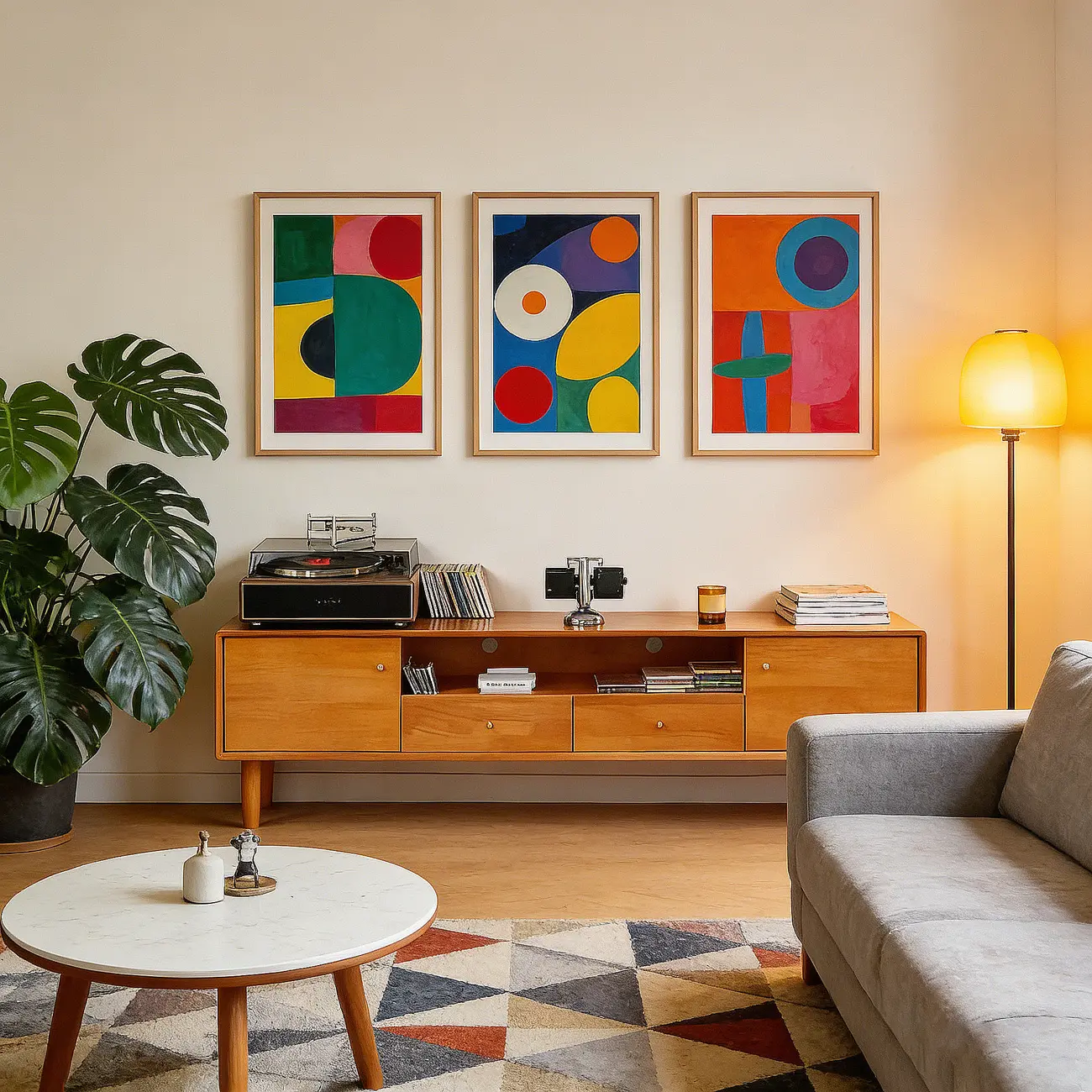
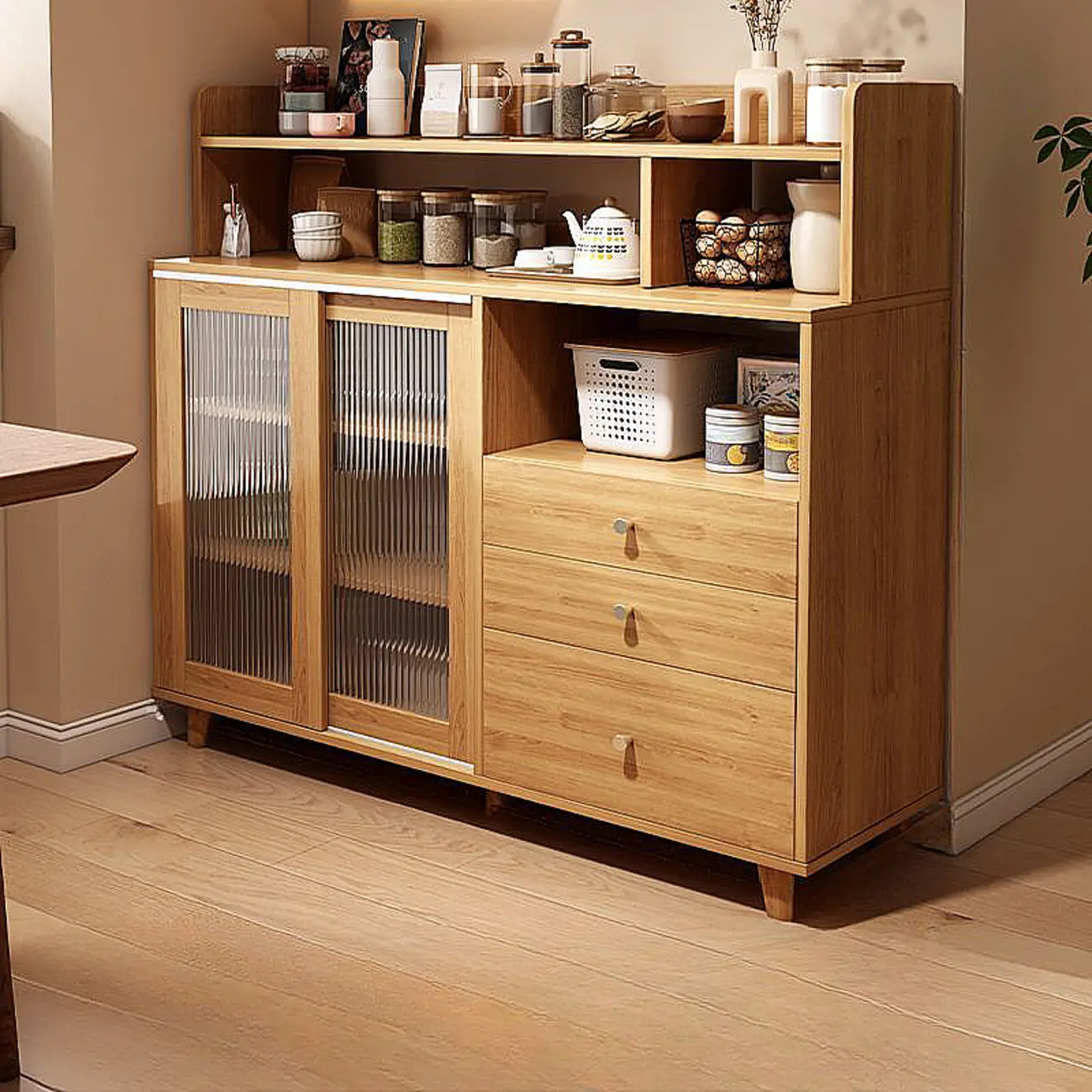

Choosing the right size bookcase or bookshelf is critical to both functionality and aesthetics. Whether you're setting up a home reading area, an office, or a living room, choosing the wrong size can lead to wasted space or unsightly placement.
Today we'll learn how to choose the right bookcase & bookshelf dimensions to get the most out of them!
Know about Bookcase & Bookshelf Dimensions
When it comes to dimensions, we'll start with the height, width, and depth of the bookcase to give you a basic understanding.
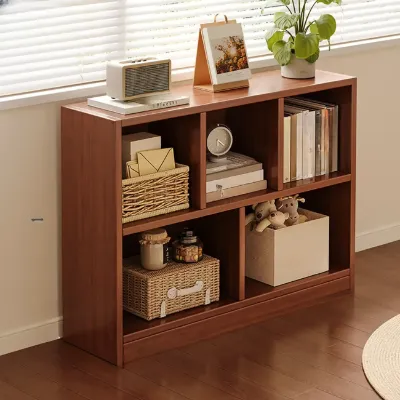
Bookcase & Bookshelf Height
The height of a bookshelf is the length from the bottom to the top. There are three typical heights of bookcases to match different needs.
-
Dwarf Bookcase (36-48 inches): Dwarf bookcases are the safest small bookcases and are often used in small spaces such as toddler classrooms, children's rooms, and apartments. Because of its height, it is very easy to access, and for children, it can be reached without tiptoeing. But the storage space is limited.
-
Medium Bookcase (60-72 inches): This is the most common height and fits standard 8-9 foot high ceilings. Medium bookcases are suitable for most spaces, such as living rooms, home offices, and bedrooms. Books and decorations fit well, and in the case of bookcases with doors, file storage cabinets.
-
High Bookcase (84 inches or more): This high bookcase is suitable for a large number of book collection needs. It can maximize the use of vertical space; storage capacity is very large. Only the highest layer is not easy to access; you can place the infrequently used things there.
Bookcase & Bookshelf Width
Bookshelf width is also one item that determines whether the bookcase is the right size. The width affects the capacity of the bookshelf as well as its footprint, so choose carefully in order not to overcrowd your space!
-
Narrow Bookshelf (under 20 inches): a narrow bookcase is the equivalent of a small storage cabinet and does not just store books. It fits in the corner of the kitchen, the corner of the room, next to the TV, etc., allowing you to utilize any nook for storage, organization, and display.
-
Standard Medium Bookshelf (20-50 inches wide): This is the most common width of bookshelf. It has a large capacity and can meet the daily use of most families. A 36-inch-wide bookshelf can hold about 30 hardcover books.
-
Wide Bookshelf (more than 50 inches wide): a wide bookshelf is suitable for a large collection of books, TV, and game console storage and is the exclusive wide room organizer. But it takes up a lot of wall space.
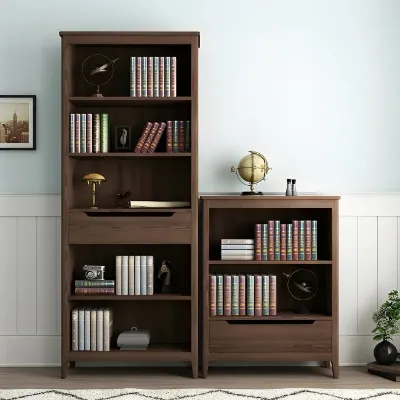
Bookcase & Bookshelf Depth
-
Shallow Bookcase (6-10 inches): Commonly used for floating shelves and narrow spaces. Ideal for paperbacks, magazines, children's books, or decorative displays.
-
Medium Depth (10-12 inches): The medium depth is the most versatile, perfectly suited for 95% of regular books, novels, textbooks, magazines, hardcover books, etc. without the risk of overhanging. It has the best space utilization, storing 30% more books than shallow shelves and saving more aisle space than deep shelves.
-
Deep bookcase (12-16 inches): A deep bookcase can store anything you want. Hold oversized art books, vinyl records or double stacks. Books, decorative items and organizers can all be mixed and stored, making it great storage for large spaces!
You guys have learned about some of the standard and common bookcase sizes. I'm sure you already have an answer in mind for the right bookcase! Next, let's take a more detailed look at how to choose the right bookshelf size!
Explore More Bookcases & Bookshelves:
- Arched Bookcase
- Narrow Bookcase
- Open Bookcase
- Glass Door Bookcase
- Metal Bookcases
- Bookshelves & Bookcases Must Have
- Wood Bookcase
- Bookcase with Drawers
- Bookcase with Doors
How to Pick the Right Bookshelf Dimension for Your Space
How to pick the right bookshelf dimension? Follow our few steps to measure your space and get the best bookshelf dimensions!
Step 1. Measure Your Space
Measure your space to reserve a spot for your bookcase. This will ensure that it won't be out of proportion and crowd the space.
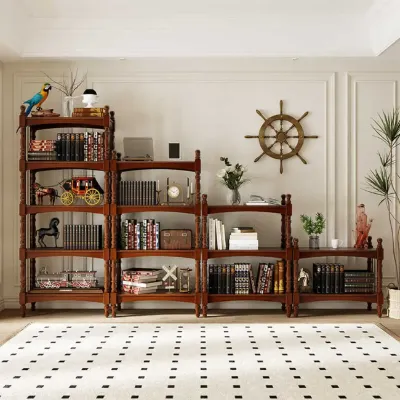
📏 Key Measurement Points:
- Height: measure the height from floor to ceiling and subtract 8-12 inches; this prevents the bookcases from making the space feel oppressive.
- Width: measure the usable width of the wall and subtract 4-6 inches; make sure to leave a gap on both sides.
- Depth: Determine the depth based on the items you are placing, while taking care to leave 32 inches of space in the walkway in front of the bookcase.
|
Book Type |
Ideal Depth |
Best For |
|
Paperbacks/Magazines |
8-10" |
Narrow spaces/hallways |
|
Standard Hardcovers |
10-12" |
Living rooms/offices |
|
Art Books/Collections |
12-16" |
Display storage |
Above we get the approximate value of the bookcase size. If it is a small space, you can subtract the minimum value from the dimensions of the space to get the maximum bookcase size. For example, if the ceiling height is 110 inches, subtract 8 inches to arrive at a maximum bookcase height of 102 inches. You can then go down in this range to find the right bookcase!
Step 2. Calculating Book Capacity
Given that they are bookcases, they primarily hold books. For specialized collections, bookstores, libraries, etc., we give some book capacity measurements.
- Number of books per shelf = Shelf width in inches ÷ Book thickness in inches
Example:
- Shelf width 32 inches, book thickness 0.8 inches → 40 books per shelf
- Total capacity of 5 shelves ≈ 200 books
However, for different book thicknesses, most book thicknesses are measured to be sufficient to accommodate your book collection. If you want to be more spacious and store other things, you can calculate with the thickest books.
Step 3. Recommended Solutions for Different Spaces
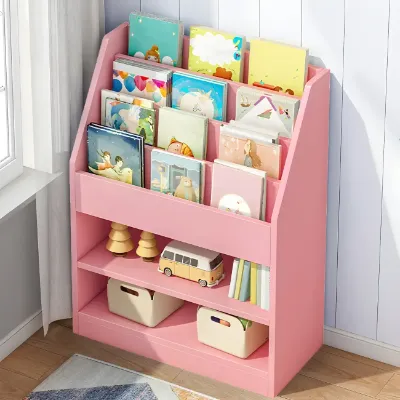
-
Study/Bedroom Bookcases → Narrow Tall (16-24 inches wide, 10-12 inches deep, 60-72 inches high). Most commonly used books are placed in the 48-66 inch height range, with decorative items or organizers on top.
-
living room main wall bookcases → through the top of the combination-type design (height from the ceiling 2 inches clearance, depth of the lower 12 inches, the upper not 8 inches, the width of the wall according to)
-
Children's room bookcase → low cabinet (width 24-36 inches, depth 10 inches, height: <48 inches). The edges are rounded corners; the anti-collision design is best to ensure safety.
-
office bookcase → short and wide (width 30-36 inches, depth 12-14 inches, height 28-30 inches, flush with the desk). You can choose bookcases with locks and drawers for files.
-
Bookstore, library bookcase → high and wide type bookcase (width 36-48 inches, depth 14-16 inches, height 72-84 inches). Using a double-sided display structure, rational use of space to accommodate and display many books.
Step 4. Avoid Pit Checklist
Don't overlook these small details to make your bookcase size more accurate!
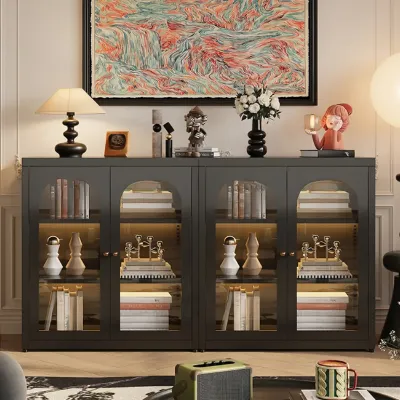
- Check the range of door opening and closing; the bookshelf is ≥ 12 inches from the reserved space of the door frame.
- Leave enough width for the walkway; leave ≥32 inches access in front of the bookshelves (36 inches is recommended for the main access).
- Bookcases in front of floor-to-ceiling windows are ≤36 inches high to avoid blocking light.
- Avoid the location of outlet switches and leave ≥3 inches of maneuvering space.
- Focus on measuring the diagonal dimensions of the room to avoid snagging at corners.
- Consider possible future additions to your book collection and leave 20% of the space available.
Conclusion
I'm sure you've got a handle on how to choose the right bookshelf size. By choosing a proper bookshelf size, you can not only accommodate more things but also decorate the space in a more aesthetic way!
Have any questions? Feel free to contact us. Homeyfad has a variety of bookcase styles; there is always one you will like!
FAQs
Q: How to maximize space on your bookshelf?
A: Use vertical dividers to create double rows, storing lesser-used books behind. Install stackable shelves or hanging baskets underneath for extra storage—every inch counts.
Q: What is the best wood for a bookshelf?
A: Solid hardwoods like oak, maple, or walnut offer durability and timeless appeal for long-lasting bookshelves. For budget-friendly options, high-quality plywood with veneer provides stability while resisting warping.
Q: What's the difference between a bookcase and a filing cabinet?
A: Bookcases are primarily used for storing and displaying books. Their design emphasizes aesthetics and open access, making them suitable for homes and study rooms.
Filing cabinets, on the other hand, focus on document classification and secure storage. They typically feature locks and drawers, making them suitable for offices or archival management.
