
-.jpg?w=900&h=642)
Arranging living room furniture around a TV sounds simple—until you actually try to do it.
In this guide, you’ll learn how to arrange living room furniture around a TV in a way that works no matter the size or shape of your space. 10 inspirations for you!
Common Mistakes When Arranging Furniture Around a TV
Before discussing living room layout, let's examine three common mistakes people make when arranging furniture around the TV. Is your home like this?
--0.webp?w=600&h=631)
-
Placing the TV Too High: Installing a TV too high not only causes neck strain but also makes the living room appear top-heavy.
-
Pushing All Furniture Against the Walls: This will make the center of the living room look empty and will block the view.
-
Make the TV the centerpiece of the room: Placing the TV in the absolute center of the living room can look monotonous and rigid. The TV should be in the center of the seating area.
Basic Rules for Arranging Furniture Around a TV
Remember these guidelines before choosing a living room layout.
Choose the Right Viewing Distance
The ideal sofa-to-TV distance depends on screen size:
-
55-inch TV: about 7–9 feet
-
65-inch TV: about 8–10 feet
-
75-inch TV: about 9–12 feet
Keep the TV at the Correct Height: When seated, your eyes should land near the center of the screen. If you must mount the TV higher, slightly tilt it downward.
Angle Seating Toward the Screen: Every main seat should have a clear view of the TV. Chairs don’t need to face it directly, but they should be angled toward the screen.
Best Furniture Layouts Based on Living Room Size
Different spaces require different approaches. Below are the most effective layouts based on room type.
1. Classic Symmetrical Style
Core Layout: The TV wall serves as the visual focal point, with a three-seater or corner sofa placed directly in front of it. Single sofas or armchairs can be placed symmetrically on either side, creating a semi-enclosed feel.
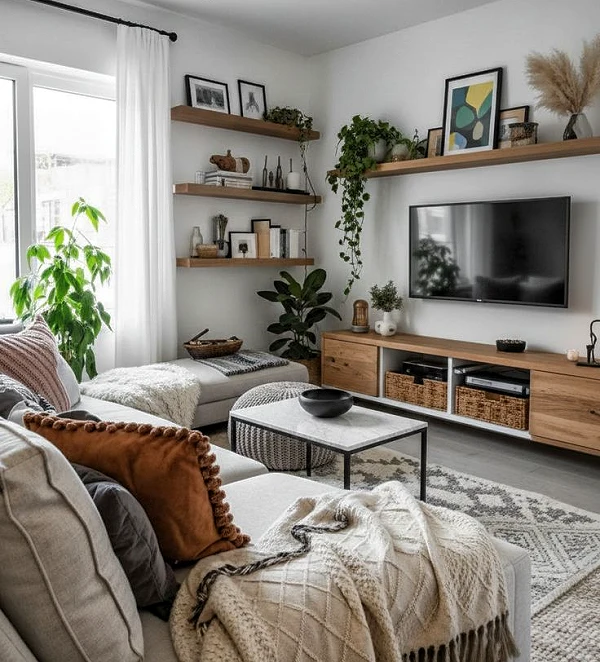
Suitable for: Those who value the TV viewing experience and prefer a neat and orderly traditional living room.
2. L-Shaped Casual Style
Core Layout: Utilizes an L-shaped corner sofa, with its long side facing the TV wall and its short side extending to the other side of the room.
Suitable for: Modern families, those who enjoy relaxing in a reclining position, and those who need space that maximizes seating capacity.
3. Double Sofa Perpendicular Style
Core Layout: Two identical two-seater sofas are placed perpendicularly at a right angle, one facing the TV directly and the other sideways. A side table is placed at the corner where they meet, and a rectangular or oval coffee table is placed in the center.
Suitable for: Living rooms that prioritize a balance between conversation and movie watching, and those with a near-square layout.
4. Parallel Dialogue Style
Core Layout: Two sofas (or one sofa with two armchairs) are placed facing each other, with the TV mounted on one wall (usually the side not along the main traffic flow).
-.webp?w=600&h=605)
Suitable for: Living rooms where entertaining guests is frequent, and conversation is more important than watching TV.
5. Flexible Combination Style
Core Layout: Instead of a traditional large sofa, multiple modular sofa units (such as two-seaters, single-seaters, and ottomans) or 2-3 coordinated armchairs and lounge chairs are freely combined.
Suitable for: Spaces where people like variety, have a modern style, and family members have their own preferences.
6. Central Focal Point Style
Core Layout: The sofa (especially a large L-shaped or U-shaped sofa) is placed with its back to the room entrance or in the center of the room, leaving a walkway behind it. The TV wall is directly in front of the sofa.
Suitable for: Open-plan apartments or large living rooms that require visual zoning.
-.webp?w=600&h=593)
7. Television positioned above or to the side of the fireplace
Core layout: When the television and fireplace share a wall, place two comfortable armchairs or a small two-seater sofa facing the television/fireplace, and then add a long sofa at an angle (e.g., 135 degrees) to the side of the armchairs.
Suitable for: Living rooms with a fireplace where you want to integrate two focal points and create a warm, welcoming atmosphere.
8. Floating Zoning Style
Place a long sofa or low cabinet with its back to the TV, creating a separate walkway or work area behind it.
Maintain a complete visual connection to the TV wall. Place a coffee table in front of the sofa, creating a clear and modern zoning.
Suitable for long, narrow spaces that need to serve multiple functions, achieving functional separation.
9. Corner Enclosure Style
Place the TV diagonally in a corner of the room, with sofas or armchairs arranged in a fan shape facing the corner.
Breaking away from traditional wall layouts, creating a relaxed and irregular casual atmosphere.
-.webp?w=600&h=594)
Suitable for unconventional apartment layouts or living rooms where you want to minimize the TV's presence.
10. Theater-Style Style
In a home theater or high-ceilinged space, arrange sofas or chairs in a staggered arrangement to create a tiered viewing area.
Ensure unobstructed views for those in the back row, and use rugs and side tables to enhance the sense of space.
Designed specifically for spaces seeking the ultimate viewing experience, offering a highly immersive experience.
How to Make the TV Blend into Your Living Room DesignIf you don’t want the TV to dominate the room, try these ideas:
These techniques help the screen feel intentional rather than intrusive. |
Final Thoughts
There's no single perfect solution for arranging living room furniture around the TV.
If you're not satisfied, try a different arrangement. Follow basic TV rules to adjust until you feel comfortable!
What's missing from your living room? Click on HomeyFad to browse our furniture and lighting collections and discover the perfect living room furniture for you!
For inspiration or questions, feel free to contact us!