
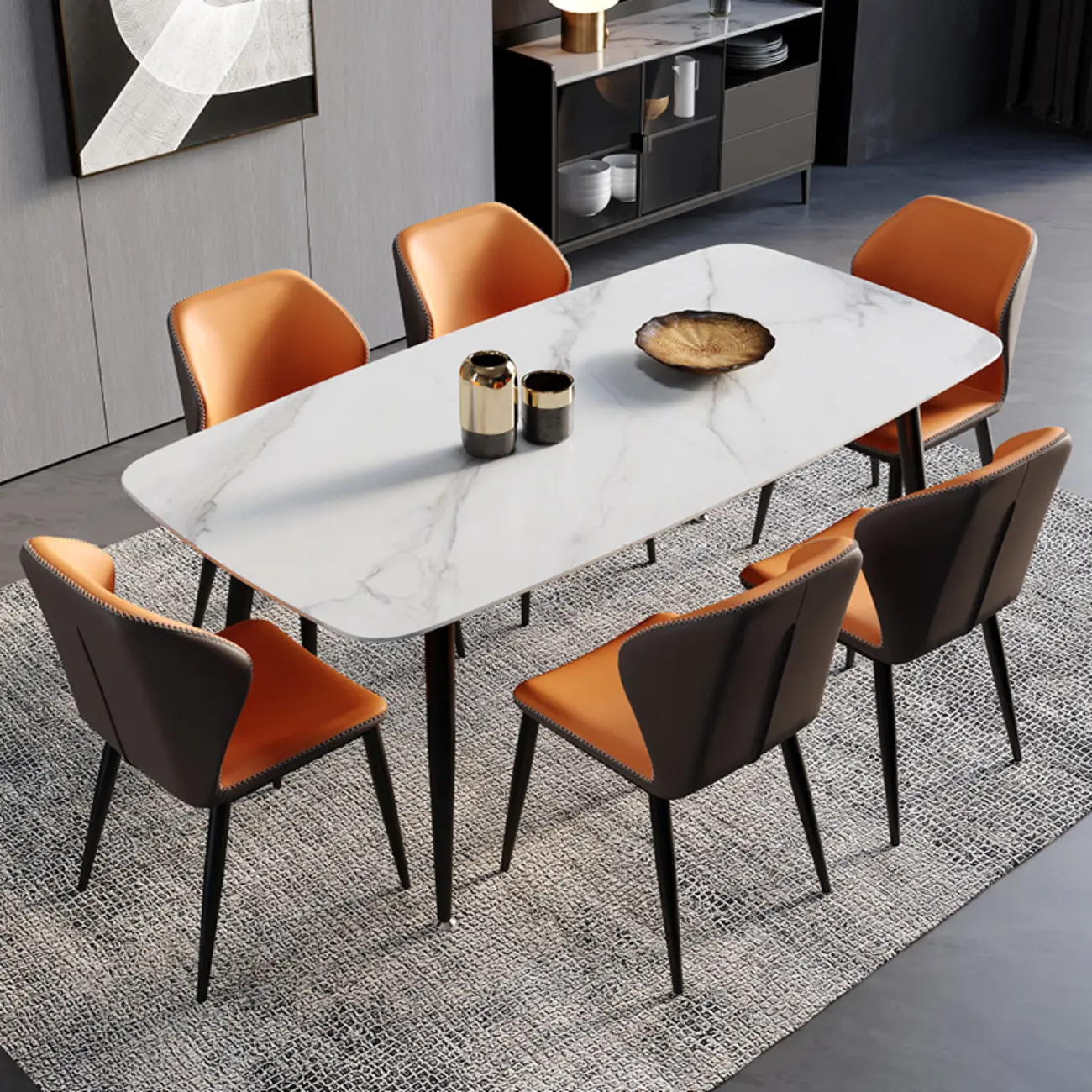
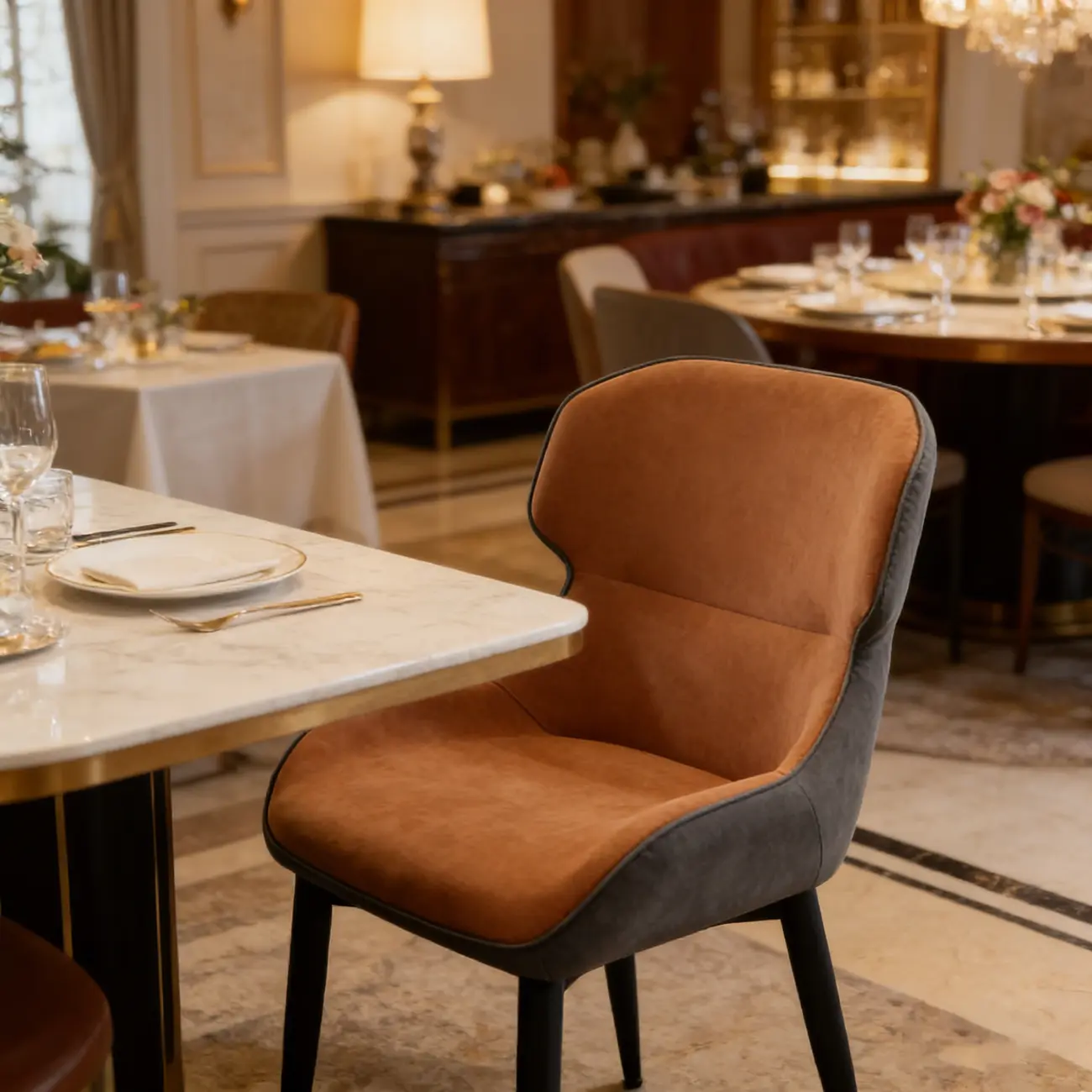
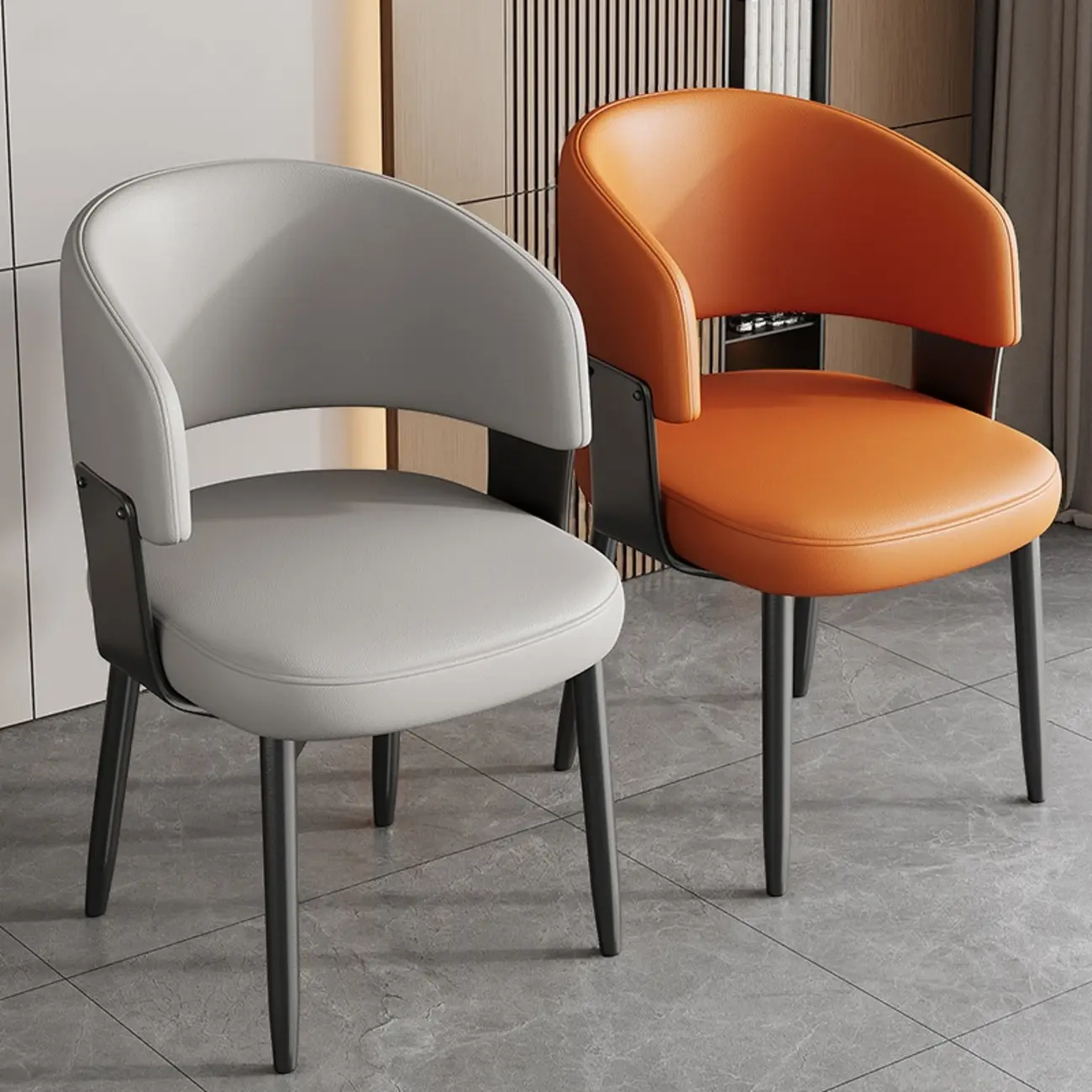
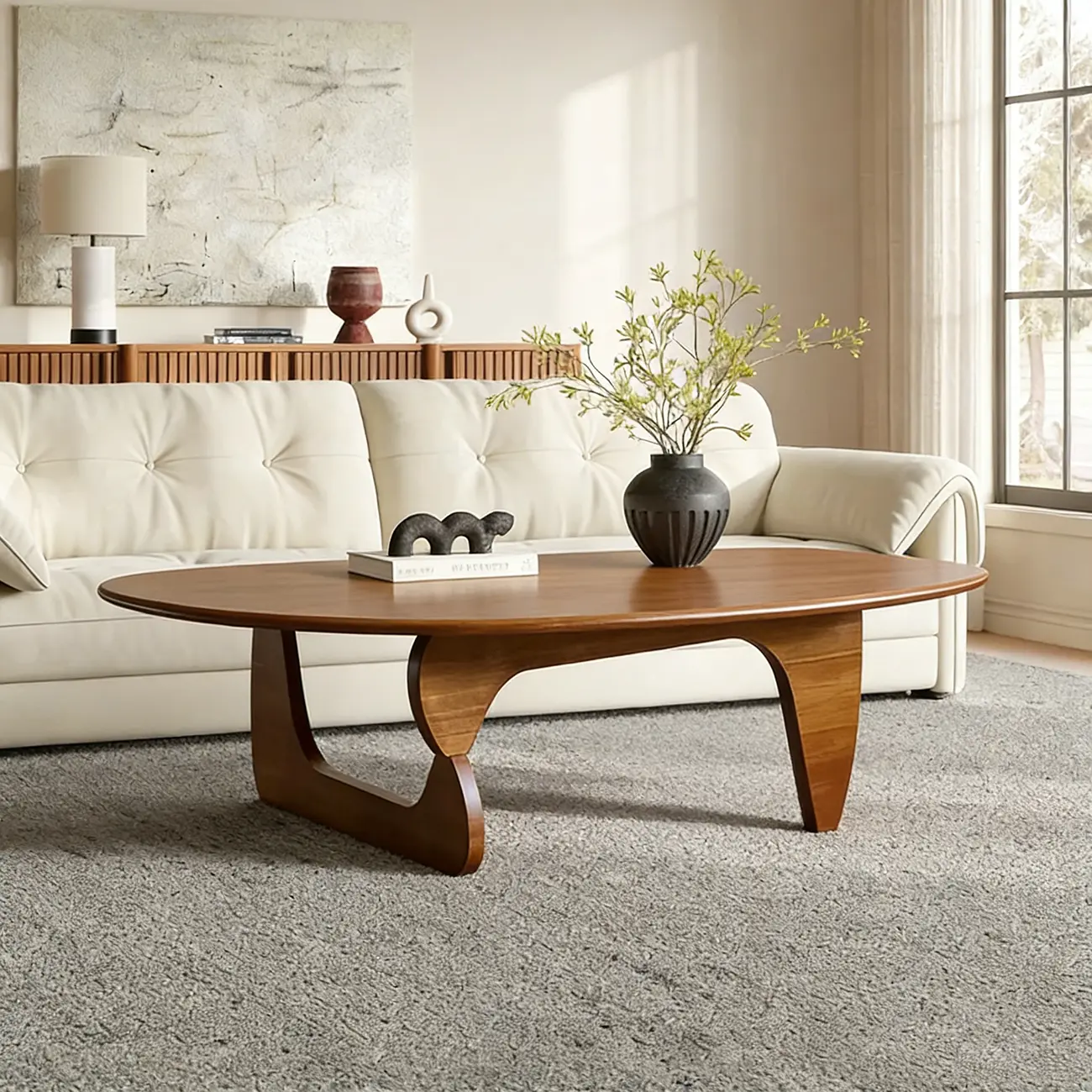
You should never rely on guesswork when selecting the ideal rug size for your living room. Without a doubt, choosing the right rug size for living room spaces can make or break your design and overall look of your space.
Read this guide to learn how to choose the right rug size for the living room, furniture placement with rugs, and so much more.
5 Common Rug Sizes for the Living Room
These 5 standard dimensions, paired with placement guidelines, will ensure your living room is designed perfectly. Let's check them out.
1. 5'x7' Rug
This small living room rug, size of 5 feet by 7 feet, suits rooms under 150 sq ft. You can center it beneath your coffee table with all the sofa and chair legs positioned off the rug. You should maintain 18-24 inches of exposed flooring around all edges to prevent a cramped feel.
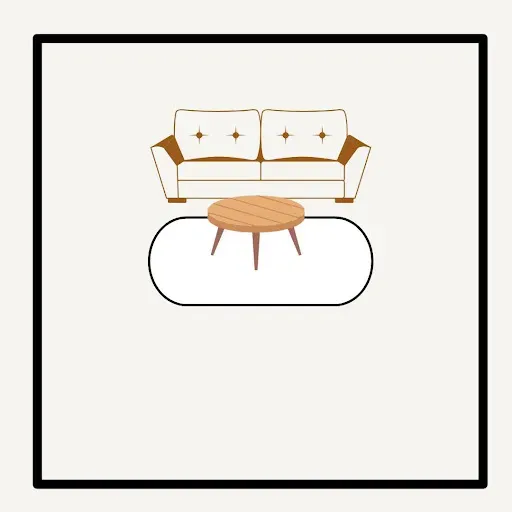
This rug size is ideal for apartments and reading nooks. As this placement creates a defined focal point without overwhelming the limited space.
When choosing a living room rug size for tight areas, you should prioritize open floor zones around seating groups to enhance perceived square footage.
2. 6'x9' Rug
So this rug size will be your versatile midsize rug option. These rugs are usually 6 feet by 9 feet for 150-250 square ft spaces. You can position the rug to secure the front legs of sofas and accent chairs, extending 6-8 inches beyond furniture arms.
-2.jpeg?w=512&h=512)
This rug placement idea for the living room will unify seating while allowing the back legs to rest on bare floors. With such rug placement, you should leave 24-30-inch walkways around furniture for circulation.
It's perfect for family rooms as it balances openness and provides a connected look. For optimal living room rug dimensions, you should align the rug length parallel to your sofa.
3. 8'x10' Rug
This is the most popular standard rug size for living room designs. These rugs are 8 feet by 10 feet and accommodate 250-300 square feet. It's a good rug size option to go with if you have L-shaped sectionals in your living room. You can also extend the rug 8-12 inches wider than your sofa to frame side tables.
More design options for this rug size will be available depending on the placement of your furniture. This will be a go-to choice if you have an enclosed layout.
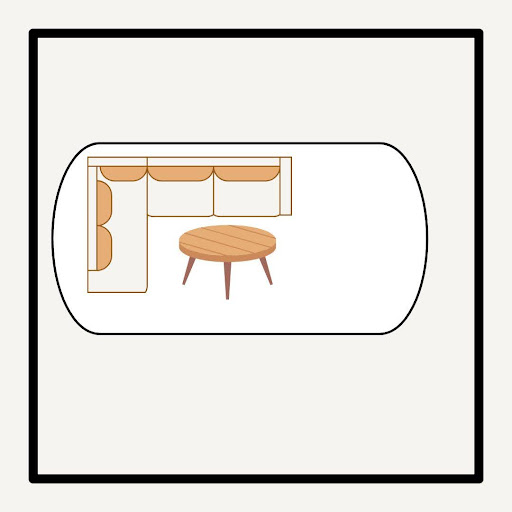
And if you have an open-concept room, you can choose to put front legs only on the rug. With the front legs only option, you should maintain 18-24 inches between rug edges and walls. When measuring for a living room rug, ensure it clears door swings and traffic paths.
4. 9'x12' Rug
This rug size is an essential option for large living rooms. These rug sizes are 9 feet by 12 feet for spaces over 300 square feet. You can place all furniture legs on the rug, like your sofas, chairs, and coffee tables, to create a cohesive conversation zone.
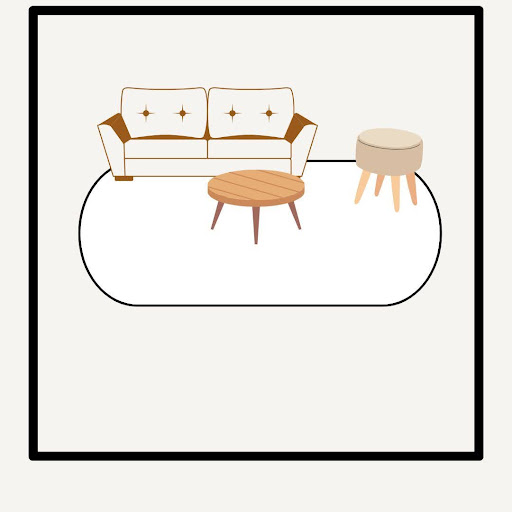
This rug size guide for living space recommends 24-36 inches of exposed flooring around room perimeters. It's an ideal rug size for open-plan homes as it will prevent furniture from "floating," and for sectionals, you should make sure the rug extends 12 inches beyond each end.
5. 10'x14'
Oversized luxury 10-foot by 14-foot rugs are a good option for rooms exceeding 350 sq ft. They will fully cover seating areas and walkways. You can center all furniture on the rug, extending 36-48 inches beyond large sectionals.
This best rug size for sofa configurations in spacious settings creates a gallery-like foundation. You should try to maintain 30 inches minimum clearance from walls to avoid the wall-to-wall carpet illusion. And use bold pattern rugs for connecting vast areas.
Rug Size Rules for Small vs. Large Living Rooms
As we know, a one-size rug can not fit in different-sized rooms. So you need to follow some specific rules for rug sizing based on your room measurements. Let's find out the key rules you need to follow for a small vs a large living room.
|
Feature |
Small Living Room |
Large Living Room |
|
Recommended Size |
5'x7' or 6'x9' |
9'x12' or 10'x14' |
|
Placement Style |
Floating (legs off) |
All-legs on |
|
Wall Clearance |
18-24 inches |
24-36 inches |
|
Furniture Rules |
Sofa legs off; coffee table centered |
All legs on; extend 24"+ beyond sectionals |
|
Pattern Advice |
Light colors, small designs |
Bold patterns; deep textures |
Rules for Small Living Rooms
For small-sized living rooms, like about 150 sq ft, you need to opt for small living room rug size options like 5x7'and 6x9'. These dimensions will prevent overcrowding your small space.
You can float the rug centrally beneath the coffee table, keeping all furniture legs off the rug. This will create a visually breathing room. And for clearance, you should leave 18-24 inches of exposed flooring around all rug edges. This will create the illusion of extra space.
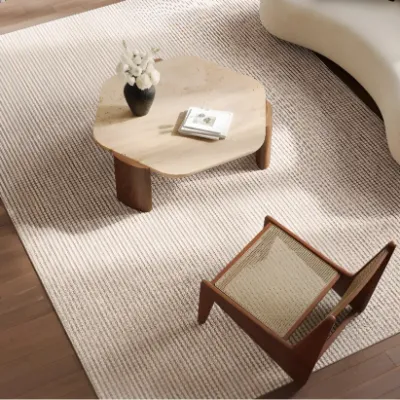
Here is another design tip for your small living room rugs. Try to choose light colors and small-scale pattern rugs to visually expand the area. You can also go with low-pile rugs as they ease cleaning in tight zones.
For example, in a 10x12 room, a 6'x9' rug centered under a coffee table leaves 24" pathways on all sides and also makes your space look spacious.
Rules for Large Living Rooms
On the other hand, if you have a large living room of ≥300 sq ft, then you go with large size rugs. For such spaces, you can choose rug size solutions like 9'x12' or 10'x14'. These will anchor expansive seating groups.
You can also use all-legs-on rug style with such rugs. Your sofas, chairs, and tables are fully on the rug to unify the space. And for clearance, leave 24-36 inches between rug edges and walls to frame the area without mimicking wall-to-wall carpet.
For such large rooms, you can choose bold patterns and textured pile rugs to add warmth. If you have sectional sofas, then you should extend rugs 24-36" beyond the sectionals to define zones.
Let's suppose you got a 15'x20' open-concept living room space, the a 10'x14' rug under a sectional creates distinct conversation areas.
How to Choose the Right Rug Size for a Living Room
To help you select the perfect rug size for living room spaces, we have given you some key steps below to follow. Let’s check them out.
Step 1: Measure Your Space
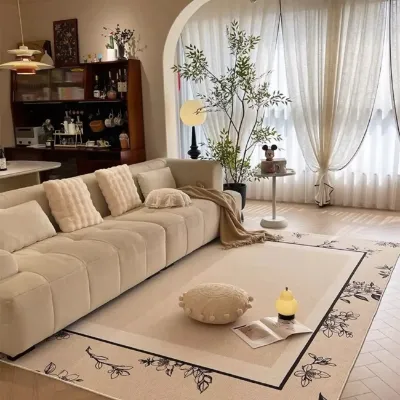
You should begin by recording your room's exact dimensions. Then subtract 36 inches total (18 inches per parallel wall) to calculate maximum rug coverage while maintaining essential borders.
Next, measure key furniture that you will position around/on your rug. Your sofa's width and adding 16 inches to accommodate side tables and a coffee table, the proportions.
Finally, map high-traffic walkways, leaving at least 24 inches of clearance between furniture edges for safe movement. This foundational measuring for the living room rug process will eliminate any guesswork.
Step 2: Match Size to Layout Style
Your furniture arrangement dictates the optimal rug placement living room. For enclosed seating groups in large rooms, you can choose all-legs-on placement and go with rug sizes 9'x12' or 10'x14'. This way, every piece sits fully on the rug, creating a unified conversation zone.
In medium open-concept spaces, you can put the front legs of your furniture on a rug. For this purpose rug size 8'x10' will be perfect.
And for small rooms under 150 sq ft, you can go with a floating placement style. Such a room size can easily fit 5'x7' and 6'x9' rugs. You can center the rug under the coffee table with all legs off, preserving openness.
Step 3: Avoid Top 3 Mistakes
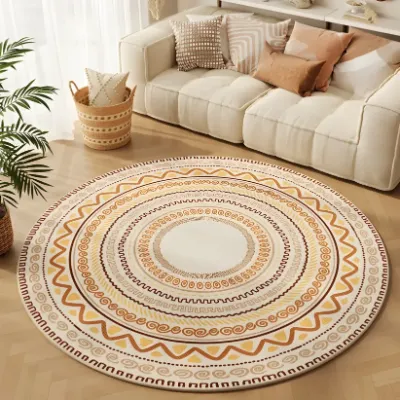
Three crucial errors can sabotage living room rugs, and you have to avoid them at all costs. First, choosing a rug too small and doesn’t extend beyond the sofa arms. This will chop the space into disjointed islands.
Another point is wall-hugging. By this, we mean your rug sitting within 12 inches of the baseboards. It will look bad, like mimicking cheap carpeting.
Moreover, you should not ignore traffic flow. If you don't keep in mind the traffic flow around your living room, sitting this way will result in sub-18-inch walkways that can cause tripping. To avoid these mistakes, you should always size up your rug if uncertain about size.
Step 4: Enhance with Visual Tricks
You can also optimize your rug’s impact through design psychology. How can you do this, you ask? Well, you can use light-colored rugs with subtle patterns to visually expand small rooms. And if you want to define zoning in your open layout space, then you can go with dark borders and geometric motifs.
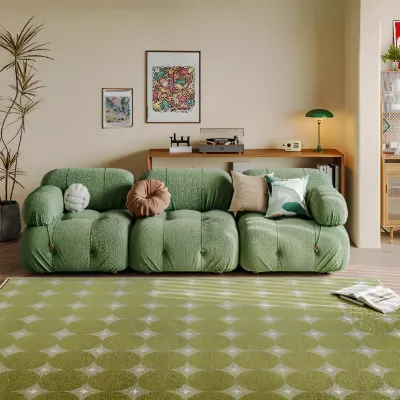
Moreover, you can go with low-pile textures to ease furniture movement in high-traffic areas, whereas you can choose plush piles to add a luxury touch to spacious settings.
In large rooms, layering natural fiber base rugs with decorative tops will add dimensions without clutter. For the best rug size for sofa pairings, make sure patterns scale proportionally.
Transform Your Space with a Perfect Rug From HomeyFad
Now you can choose the right size rug for your living room easily. Don't forget to do the right measurements and keep in mind your room dimensions before the purchase. And follow the tips we shared in this blog for selecting the right size rug.
Looking to learn more decoration ideas and furniture information? You can check out our blog. Got any furniture-related questions? You can contact our team. And if you want to buy rugs and other furniture for your home, come to Homeyfad.
FAQs
Q1: What if my living room is an irregular shape?
A: For L-shaped or oval rooms, follow the primary seating area's dimensions. Tape the floor to visualize coverage, prioritizing key furniture groupings over room contours.
Q2: How much should a rug extend beyond a sectional sofa?
A: Aim for 24-36 inches beyond the outermost edges. This prevents a "floating" look and anchors the entire conversation area.
Q3: Do rug sizes include fringe?
A: No. Standard sizes (5'x7', 8'x10', etc.) refer to the pile area only. Fringe adds extra length—confirm measurements before purchasing.

 Add Us On Google