
(1).png?w=1920&h=650)
-21.png?w=2797&h=2024)
There is no doubt that a chandelier adds stars to any home decor. It's a functional piece of decor that also gives your space a luxury look. But getting the right size chandelier for your space, especially the dining room, can be head-scratching. As with such statement pieces, a little wrong measurement can make the whole room feel off.
And that's what we help you do with this guide. This guide cuts through the confusion. We are providing you with the correct sizing for a chandelier for a dining room, as well as tips on finding the ideal dining room chandelier size for you.
A Quick Guide to Common Chandelier Sizes
Before we go into calculations, let’s talk about general chandelier sizes.
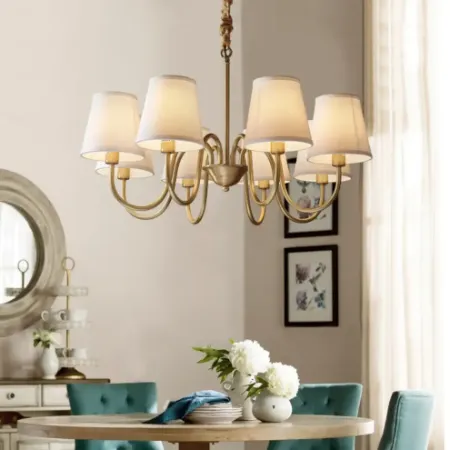
- Small: This size chandelier is less than 20 inches. These compact fixtures work beautifully in cozy spaces. You can consider a small chandelier for a bathroom, a home office, and a child’s bedroom.
- They provide ample light without crowding the area. You can also put together several small chandeliers in a larger room for a balanced modern look.
- Medium: These chandeliers can range in size from 21 to 26 inches. This is the sweet spot for many standard bedrooms and guest rooms. A medium chandelier fills the visual space of a standard 12 x 12 room without dominating it.
- Large: They are about 27 to 34 inches in size. These chandeliers make any room stand out. Their scale commands attention and provides excellent illumination for these active spaces.
How to Choose the Perfect Dining Room Chandelier Size
Selecting a chandelier for over your table involves three key measurements. Let's review them.
1. Measuring Your Dining Table
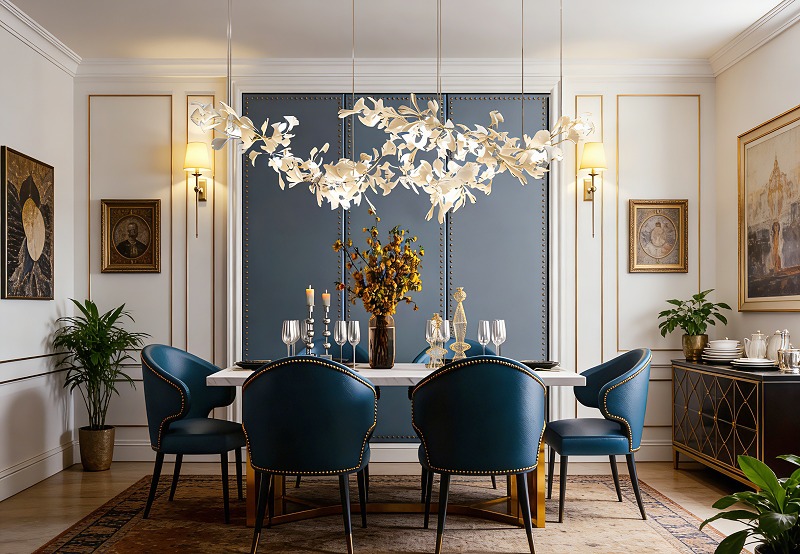
Your table is the chandelier’s partner. Their sizes need to go with your chandelier. A simple trick is to pick a chandelier that's about half to two-thirds as wide as your table. Let's suppose you got a 48-inch-wide table. That would go well with a chandelier that is 24 to 32 inches wide. This proportion will make sure the light feels substantial enough for the table but leaves plenty of room for place settings. And it also helps avoid guests bumping their heads on the low chandelier.
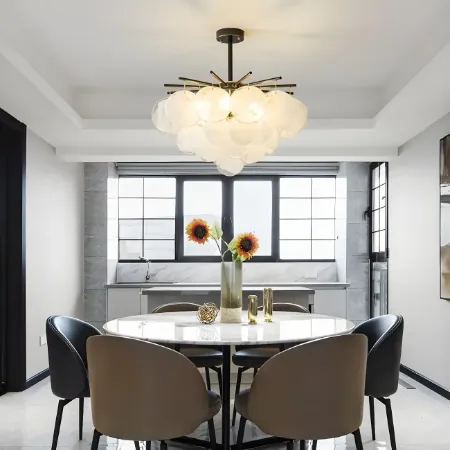
Moreover, you can also match the shape of the fixture to your table. A linear chandelier and a row of pendants will look best over a long rectangular table. Whereas a round chandelier will go well with a round table, and a square chandelier would go well with a square table.
2. Considering Your Room’s Dimensions
You also need to measure your dining room chandelier height once you have measured your dining table. You need to make sure that your new chandelier fits the room itself. A simple calculation will give you the perfect diameter. You can also just add the length and width of your dining room in feet. That number, then converted to inches, will give you the ideal chandelier width.
Let's suppose your dining room is 12 by 14; summing them up, you get 26 feet. Therefore, a chandelier around 26 inches in diameter would be an excellent fit for the overall space. This formula guarantees your fixture feels connected to the room.
3. Factoring In Your Ceiling Height
Finally, let us talk about height. You need to factor in height for both the fixture itself and its placement. A standard eight-foot ceiling can handle any chandelier. You should always leave 30 to 36 inches between your chandelier and dining table. This hanging gap provides you with a clear sightline across the table.
Where to Hang Your Chandelier in the Dining Room
You can figure out where to hang your chandelier with these rules.
Hanging Height: The 30-36 Inch Rule
You have to hang your chandelier at a height where its end point is 30 to 36 inches above the dining table. This range is the standard way of hanging a chandelier in a dining room. Because it will provide enough clearance for you to see the person sitting across from you.
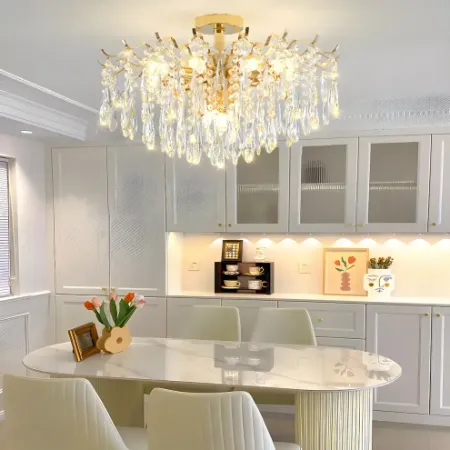
Don't forget to leave space for those stunning tall centerpieces. You want your gorgeous floral arrangements to have plenty of room. You should leave about 30 inches of clearance for a standard eight-foot ceiling. Got higher ceilings? You can go up to 36 inches. This extra space makes the whole setup feel connected and intentional.
Centering: Over the Table, Not the Room
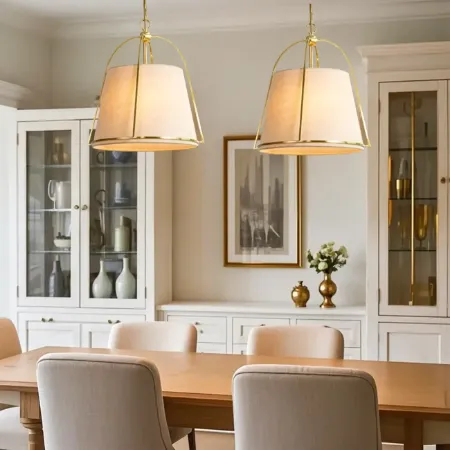
This is the most common chandelier-hanging mistake people make. Your chandelier should be in the center of your dining table. But that does not mean it should be right at the center of the room. As most dining tables are placed slightly off-center to allow for walking room around a sideboard.
Your chandelier will look disconnected and awkward from the table if it is hung in the middle of the ceiling. The table is the chandelier's partner, so everything should be centered around that.
General Chandelier Sizing for Other Rooms
The same rule you use for the dining room will apply to choosing a chandelier for any space in your home. The goal is always to balance and proportion.
You should start with the trusted formula for living rooms, bedrooms, and entryways. And that formula is to add the room’s length and width in feet. Then the sum of that should be converted to inches. And it will give you a strong starting point for the chandelier's diameter. For example, a 14 x 16 living room would point you toward a 30-inch-wide fixture.
The most important rule in these spaces is safety and clear moving around. You should maintain a minimum of seven feet of clearance from the floor. This will prevent anyone from bumping their heads.
Find the Best Chandelier for Your Dining Room with HomeyFad
No doubt, the right chandelier for your dining room depends on your personal style and some key measurements. With this guide, you can now confidently select a fixture that will make your dining room stand out beautifully.
Are you ready to find your perfect match? You can explore a stunning collection of dining room chandeliers at HomeyFad. And for more expert tips and design inspiration, check out our other articles.
FAQs
Q: What's the rule for chandeliers in rooms without tables?
A: You should just add your room's length and width in feet. That number in inches is your ideal chandelier width.
Q: Can a chandelier light a room by itself?
A: Yes, it can. But that light would not be enough for all tasks. You can pair it with other light sources like sconces or recessed lighting.
Q: Can I mix chandelier styles with my decor?
A: Definitely—mixing styles creates exciting contrast and adds personality to your space.

-.jpg?w=900&h=638)
-.jpg?w=871&h=667)
--5.jpg?w=800&h=506)
-.jpg?w=800&h=584)
.png)

 Add Us On Google