
(7).png?w=1920&h=650)

Ready to upgrade your sleep? Skip the research fatigue! This no-fluff guide delivers exactly what you need:
First, a quick-reference list of standard bed sizes.
Then, a streamlined overview of the 10 key bed types.
Finally, this is your get-to-the-point guidance on selecting the best bed for your physical comfort. Find your ideal bed efficiently.
6 Types of Bed Sizes
First of all, let's do a quick rundown of standard U.S. bed sizes you’ll come across.
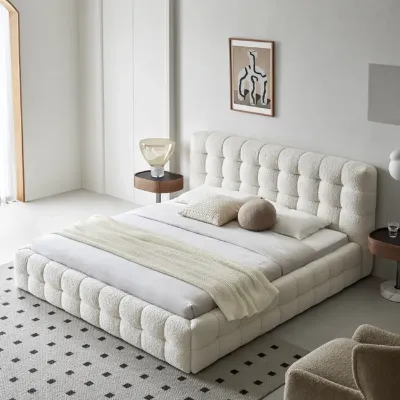
- Twin Bed: It's a perfect bed size for kids and tight spaces. This bed’s size is 38" x 75".
- Twin XL: This best size has extra length. It is about 38" x 80" and is ideal for dorms and taller teens’ rooms.
- Full (Double): It's a cozy bed size for one adult and snug for couples. The bed’s size is 54" x 75".
- Queen: This bed size is the most popular pick. It's great for couples and solo sleepers wanting space. The size is 60" x 80".
- King: This bed size is perfect for couples' rooms. Its size is 76" x 80".
- California King: This bed size has a longer frame and is 72" x 84". A great bed for extra-tall sleepers.
10 Bed Types You Need to Know
Every person has different needs when it comes to beds. Let's discuss 10 bed types to help you find your match fast:
1. Platform Bed

This bed has a low-profile frame and has no box spring. It fits modern spaces and tight budgets perfectly.
This bed is a perfect choice for minimalists and modern decor lovers, too.
2. Storage Bed
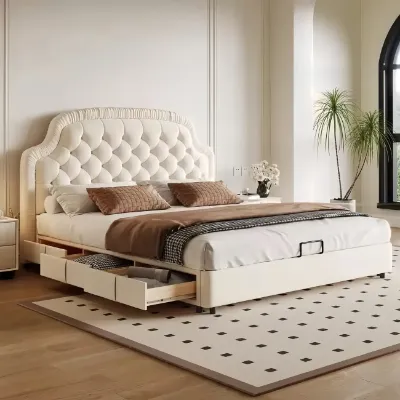
This storage bed style has built-in under-bed storage. It's a lifesaver choice for small bedrooms needing organization.
It's the best for small-space dwellers and parents to store kids' toys and for chronic organizers.
3. Canopy Bed
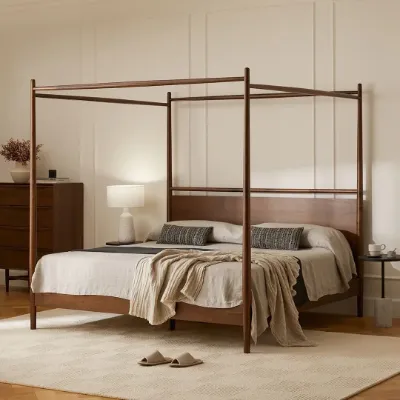
These beds have four posts with an overhead frame. It creates a luxury focal point in spacious master bedrooms.
This bed size is best for those wanting a luxury statement or romantic bedroom vibe.
4. Sleigh Bed
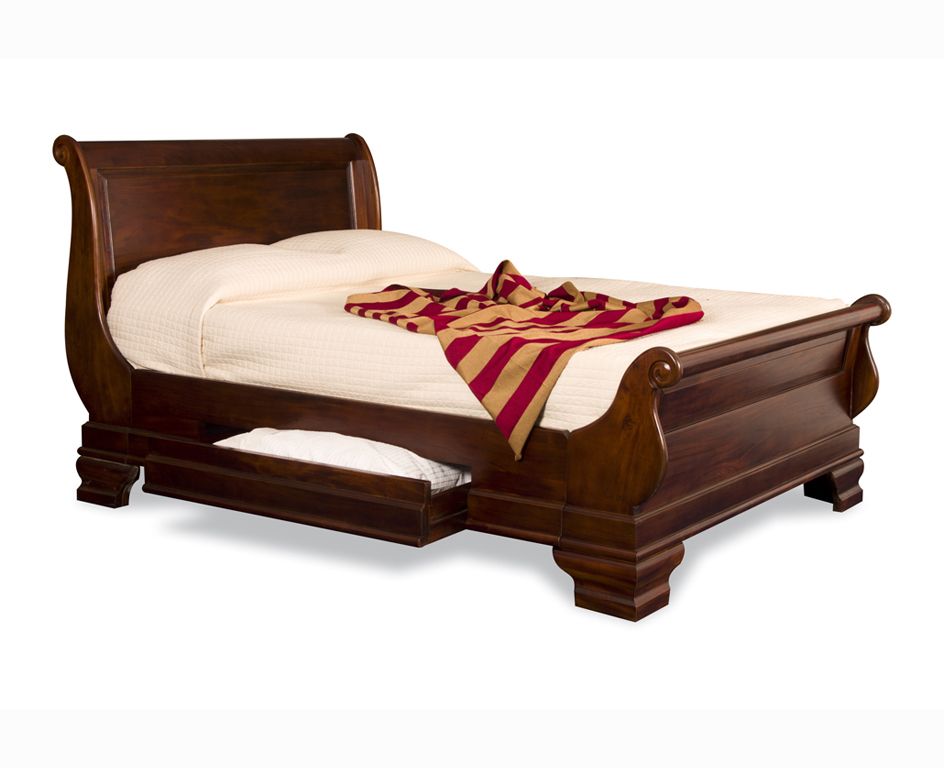
Sleigh bed style has a curved headboard and footboard like a sled. It's a classic pick for traditional decor lovers.
5. Adjustable Bed
As the name suggests, it's a bed that can be adjusted based on your needs. It has a motorized base that lifts the head/feet. So, it's a perfect choice for back pain sufferers, readers, and TV watchers.
6. Daybed
A daybed is a bed that can double as a sofa by day. It's a perfect option for guest rooms and studio apartments.
7. Loft Bed
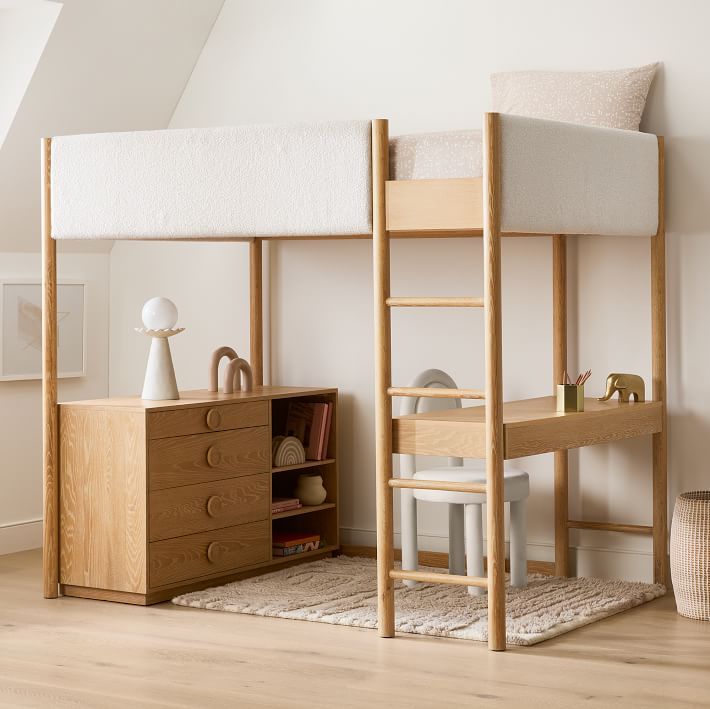
These beds are elevated beds with usable space below. It will maximize square footage in your kids’ rooms and dorm rooms.
8. Murphy Bed
This bed style folds vertically into the wall/cabinet. So it's an ultimate space-saver for tiny homes and offices.
9. Four-Poster Bed

Tall posts (no canopy). It adds grandeur to high-ceiling rooms, which is why it has a timeless appeal.
10. Divan
This bed has a simple upholstered base and mattress. It's a practical choice for adults wanting a fuss-free setup and a bed that's easy to move.
What Type of Bed Is Best for Your Body? How to Choose
Now that you know different bed sizes and styles, let's discuss some tips you should use for choosing the best bed for your body.
1. You Should Always Prioritize Your Body’s Needs
Every person’s body is different and has different needs. So, if you have back/neck pain, then you should opt for an adjustable base bed and a firm platform bed with orthopedic support.
Do you have stiff joints? Then you should choose low-profile platform beds that are easy to access and higher beds for less bending.
Moreover, if you have any allergies, then you should avoid upholstered bases like divans. You should go with sealed wood/metal frames that resist dust mites.
2. Match Your Bed with Your Space

Do you have small rooms? Then you should go with twins, daybeds, and Murphy beds to maximize the square footage of your rooms.
For tall-ceiling rooms, you can go with four-posters and canopy beds to add vertical balance.
And if storage is your main concern, then you can go with drawer storage beds and lift-up ottomans, beating bulky dressers.
3. Factor in Your Lifestyle
For couples, go with queen/king sizes and split-adjustable bases to prevent sleep battles.
Do you have frequent guests in your home? Then sofa beds and trundles offer flexible hosting.
Got kids/teens? For that purpose, loft beds free up play/study space below.
Conclusion
Choosing a bed isn’t about trends; it’s about you. Your body’s needs, your space’s limits, and how you live daily all should be highly considered before choosing a bed. Whether it’s a space issue, back pain, or stiff joints, the right match is out there.
Remember, you should always prioritize support over style. Ready to find your match? You can explore more furniture in every style at HomeyFad.
FAQs
Q: What’s the actual difference between a platform bed and a divan?
A: Platform beds are low frames (often wood/metal) supporting mattresses directly. Divans are upholstered bases (usually with a box spring)—softer looking but trap more dust.
Q: I have back pain, but I hate how adjustable beds look. Any workaround?
A: Absolutely. Pair a firm platform bed with an adjustable mattress (like a latex hybrid). Or hide an adjustable base with an upholstered headboard.
Q: Can a storage bed work on carpet?
A: Yes, but drawer storage beds need 2-3” clearance. For plush carpet, choose lift-up ottoman beds—they open vertically.
Q: “Low-profile” sounds great, but I’m tall. Will I regret it?
A: Possibly. If you’re over 6’, test sitting up! Platform beds (14-18” high) may feel low. Add a thicker mattress or opt for mid-height frames.
Q: Which bed is best for back pain?
A: Adjustable beds (custom positioning) or firm platform beds with orthopedic mattresses (latex/hybrid). Avoid sagging bases!



--3.jpg?w=800&h=450)

.png?w=1440&h=810)

--7.jpg?w=800&h=450)

 Add Us On Google