














Without a doubt, your headboard is a functional furniture piece. But more than that, it's also the center of attention of any bedroom.
And for choosing that ideal headboard, you should understand different headboard sizes and how you can match them with your bed style.
That's why in this blog, we will help you understand the headboard dimensions for every bed type. So without further ado, let's get into it.
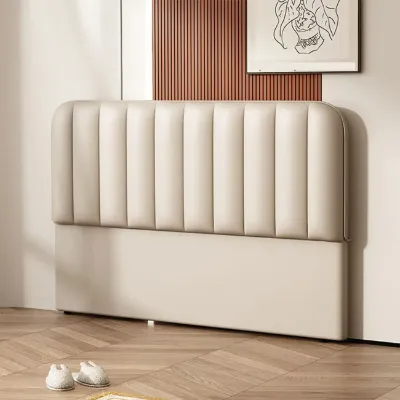
Bed Size & Headboard Compatibility Chart
Some beds don't come with a matching headboard when you buy them, so you'll need to buy a headboard based on your bed size. Here's a quick table of headboard sizes for common bed types!
|
Bed Types |
Mattress Size (in) |
Recommended Headboard Width (in) |
Ideal Height (in) |
Ideal Height (cm) |
|---|---|---|---|---|
|
Twin |
38×75 |
38-42 |
20-36 |
51-91 |
|
Twin XL |
38×80 |
38-42 |
24-40 |
61-102 |
|
Full/Double |
54×75 |
54-58 |
30-48 |
76-122 |
|
Queen |
60×80 |
60-64 |
36-54 |
91-137 |
|
King |
76×80 |
76-80 |
40-60 |
102-152 |
|
California King |
72×84 |
72-76 |
36-56 |
91-142 |
|
Super King (EU) |
72×78 |
72-76 |
40-60 |
102-152 |
Core Calculation Formula
- Headboard Width = Mattress Width + 2-4 Inches
- Headboard Height = Mattress Thickness × 2-3 Times
Sample Calculation
Queen-Size Bed (60" Wide)
→ Headboard Width = 60" + (2-4") = 62-64"
Mattress Thickness: 11" (Common Standard)
→ Headboard Height = 11" × (2-3") = 22-33"
4 Common Headboard Dimensions
1. Twin Headboards

The double headboard fits both twin and twin XL beds, as they are the same width. Twin headboards are a good fit for small spaces with precise dimensions. The standard width for these headboards is 41 inches. It's an ideal size for a 38-inch twin mattress. And if you use thick comforters, then you should consider extending to 43 inches to accommodate bedding bulk.
Moreover, the height of the twin headboard standard option is 14 inches above the mattress, providing pillow support. And in low-ceilinged rooms, a 10- to 12-inch low-profile design preserves wall space.
You should use adjustable legs to bridge gaps from mattress toppers. And you can also wall-mount the headboard to save floor space and prevent wobbling.
Don't forget to make sure the headboard height stays under 75 inches for visual balance.
2. Full Headboards
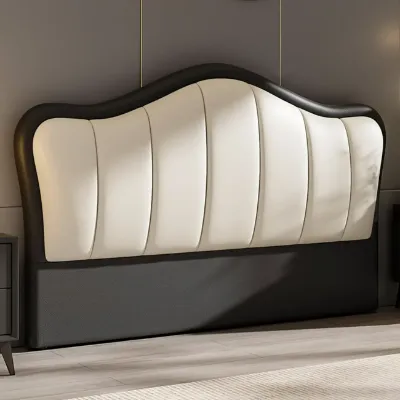
Full headboards balance proportion and function for single sleepers and cozy couples. The standard 56-inch width of these headboards aligns perfectly with 54-inch full mattresses. For plush duvets and layered bedding, you should opt for the 56- to 58-inch range to prevent a shrunken look.
The height of these headboards will typically extend 28 inches above the mattress. It's ideal for reading support. And in tighter spaces, a 12-inch low-profile version maintains functionality while freeing wall space for decor.
You should insert foam wedges behind the headboard to eliminate mattress gaps. And use a 62-inch queen headboard if unavailable, as bedding disguises the 6-inch overhang. You can also wall-mount it to bypass frame compatibility issues in rental spaces.
3. Queen Headboards

Queen headboards deliver tailored proportions for the best-selling bed size. The standard 62-inch width cleanly frames a 60-inch queen mattress. When using bulky bedding like Euro shams and down duvets, you can expand to 64 inches for seamless visual alignment.
Now, if we talk about the height of these headboards. The height defaults to 28 inches above the mattress, a sweet spot for back support during reading. You can also make a design statement with 50+ inch heights in vaulted rooms. You can also choose a minimalist 40-inch profile for smaller spaces.
To avoid any blunders, you should attach rubber bumpers to corners to protect walls from scuffs. And select adjustable-height models to accommodate changing mattress depths. You should also make sure there is a 4-inch clearance between the headboard and the nightstands.
4. King Headboards: Eastern vs. California

King headboards demand precision due to critical size differences between Eastern and California styles. The Eastern king (standard king) requires an 80-inch width to frame its 76-inch mattress, while the California king fits a narrower 74-inch width for its 72-inch mattress.
Never interchange these types—even a 6-inch mismatch causes instability and visual discord.
These headboards' height typically spans 58 inches above the mattress, creating a grand focal point. In rooms with 9+ ft ceilings, amplify the drama with 65-70 inch statement heights.
You should use universal brackets to attach non-matching headboards. For California kings, verify 84-inch mattress length clearance. And opt for upholstered styles (4" thick) to bridge minor gaps.
Headboard Dimensions for Different Materials

Your headboard's material directly impacts its dimensions, functionality, and ideal bed pairings. Here are the headboard dimensions for different materials:
Upholstered headboards: In such headboards, leather and velvet fabric add plush comfort with 2-4 inches of thickness. Their fixed padding offers minimal height flexibility but excels on queen and king beds where back support matters.
Wood headboards: Many headboards, some in oak, maple, and plywood. It maintains classic 2- to 4-inch profiles. And for medium height adjustability via legs, it makes them versatile for full and queen beds in traditional spaces.
Metal Headboards: Headboards also come in metal. Metal designs, wrought iron, and brass stay lean at 2 to 4 inches thick. Their high adaptability suits twin beds or small rooms where space-saving is critical.
Headboard Dimension Match System—2 Steps to Perfect Fit
You should eliminate sizing guesswork with this foolproof system. You should follow these steps to match the headboard dimensions to your bed and space flawlessly:
Step 1: Match Width to Your Bed and Bedding
You should start with your mattress width.
For a twin bed: 38"; a headboard of 41" is ideal.
For a full-size bed of 54", a 56-inch headboard is perfect.
For a queen-size bed of 60, a headboard of 62 inches should be preferred.
With a king-size bed of 76 inches, a headboard of 80 inches should be perfect.
California Kings are like 72, and a headboard of 74 inches goes with it.

You should add 1 to 4 inches for bedding bulk:
-
+1" for thin quilts
-
+2" for down duvets
-
+4" for oversized comforters
And don't forget to leave 2-4 inches per side for nightstands
Step 2: Match Height to Your Room
You should also measure your ceiling height. For a low-ceiling room of about 8 ft, you should choose headboards under 40. And for a standard 8 to 9 ft., you should use bed-specific heights like twin: 14", queen: 28", and king: 58", and for a high-ceiling room of more than 9 ft. You should opt for 50- to 70-inch statement pieces.
Find the Best Headboard with HomeyFad
Choosing the right dimensions for your headboard will surely change your whole bed and room. With this guide, now you can easily choose the perfect fit for your bedroom.
Looking to find the best headboard? We have! Check out HomeyFad's website. You can also read our blog for more information.
FAQs
Q: What are standard full-size headboard sizes?
A: Full headboards run 56-58" wide × 28" high. For small rooms, opt for a space-saving 12" low-profile height.
Q: Can a full-size headboard fit a queen bed?
A: No—queen beds need 62-64" widths. However, a queen headboard can fit a full bed (6" overhang hides under bedding).
Q: Why does the width of a queen headboard exceed the mattress?
A: It accounts for pillows/blankets. Standard overhang is 1-2" per side (max 4" total).

 Add Us On Google