
-.png?w=900&h=550)
Throw pillows can change a room in minutes, but choosing them? That's another story. That still trips people up. Sizes. Colors. Patterns. Suddenly, a simple task feels big.
Pillow styling can feel tricky until you realize it follows a few simple principles. Once those clicks are made, the whole process becomes genuinely enjoyable. This guide walks you through everything you need to know to choose decorative throw pillows for your home.
1. Start with A Color Palette
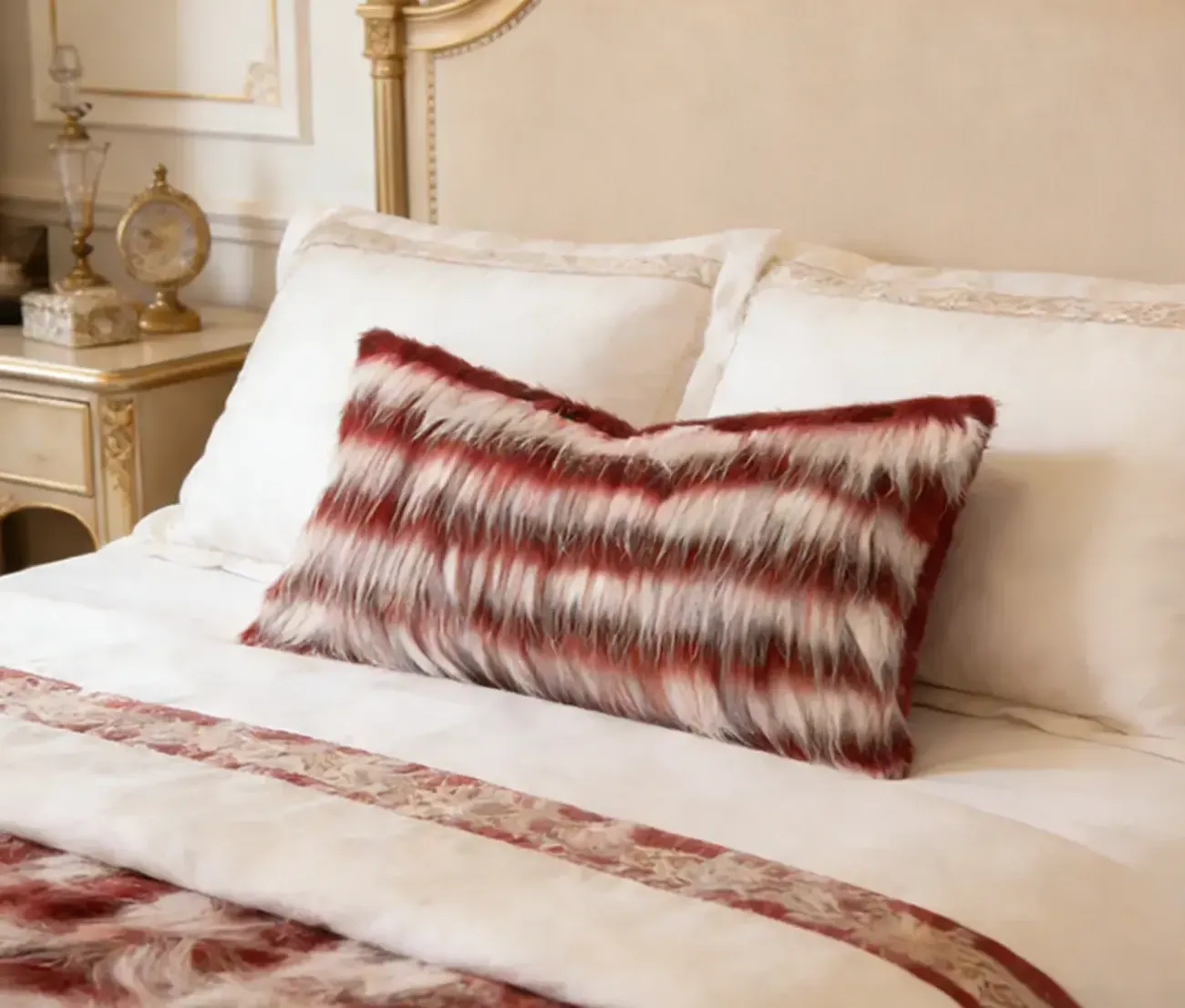
Don't worry about patterns just yet. Pick your colors first. A clear color plan is what makes pillows look like they belong together. Look around your room. Grab a shade from a rug, a painting, sheet or a blanket you already have. Pick two or three colors from that piece. Let those guide you.
Try Opposite Colors for a Bold Look
-
Colors that sit across from each other, like rust and blue, create a nice contrast. They make a sofa feel lively and fresh.
-
Or keep it soft. Use colors that sit side by side, like blush and peach. They blend quietly and make the space feel calm; that's it. Nothing complicated.
-
Once you have your colors, stay inside that range. When all your pillows speak the same color language, the whole room feels intentional without any extra effort.
2. Master the Pattern Mixing Formula
Mixing patterns feels intimidating, but a simple three-part formula removes all the guesswork. Once you know it, you will use it on every sofa and bed in your home.
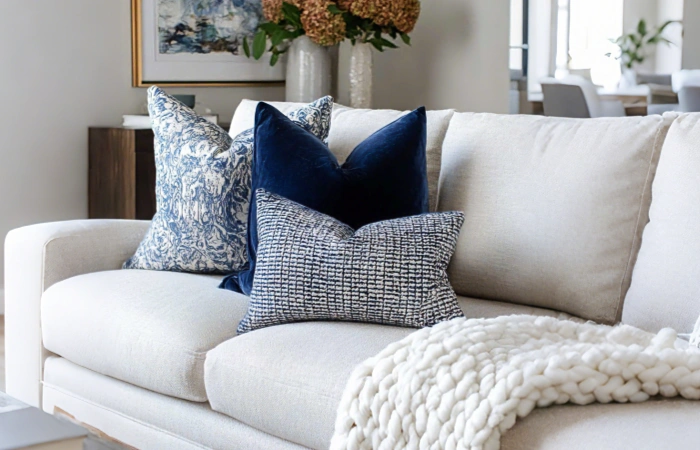
The Foolproof Trio: One solid pillow, one large-scale pattern, and one small-scale pattern. This combination balances rest and adds personality and detail perfectly. The solid grounds the group and gives the eye a break. The large pattern draws attention and adds character. The small pattern bridges the two and keeps the arrangement from feeling flat.
Keep Colors Consistent: Every pillow in the mix should share at least one color. That common thread links them together and prevents the combination from feeling chaotic.
3. Get the Throw Pillow Sizing Just Right
Pillow size is one of those details you don't notice until it's wrong. Here are some throw pillow sizing rules you should know for different furniture:
On A Standard Sofa
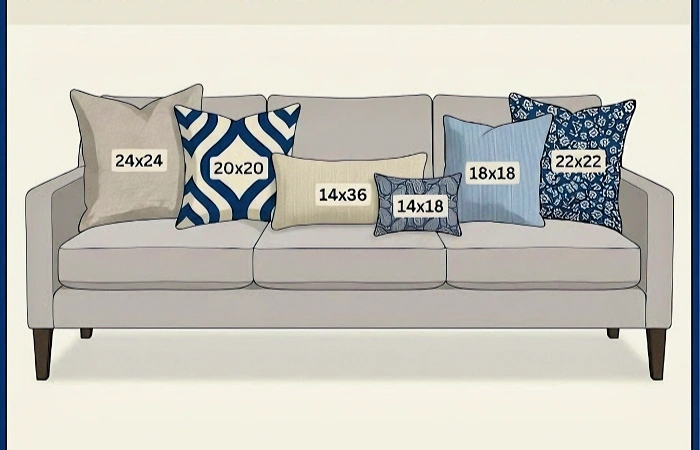
Start wide and tuck a 24-inch pillow in the far corner, then a 22-inch one on the other side. Next comes a 20-inch, then an 18-inch. If you like the layered look, a lumbar pillow, something around 14 by 36 or 14 by 18 inches, sits nicely up front. That flow of sizes feels balanced and never cluttered.
If your sofa is deep or you have a sectional, pillows can get lost on furniture this size. Stick with 22 inches at the very least and let 24-inch squares anchor the corners. That way, the arrangement feels substantial, not swallowed.
For A King Bed
--18.webp?w=700&h=450)
Think about the background first. Stand two 26-inch pillow shams against the headboard, then work your way forward with a 24-inch, 22-inch, and then 20-inch pillow. A long lumbar, roughly 16 by 46 inches, finishes it off. The layers create a soft hotel-like feel.
For A Queen Bed
The same 26-inch Euros start things off. After that, slide in a 24-inch and an 18-inch pair of pillows before topping them with a lamp. A 16 by 32 inch, maybe a smaller 14 by 18 inch, works well here.
An Accent Chair
--18.webp?w=700&h=450)
An accent chair only needs a little tidy lumbar pillow, about 14 by 18 inches, to do the job. It adds just enough cushion for comfort and a dash of style without crowding the chair.
HomeyFad's pillows come in the very sizes that make these layouts simple to pull together, so you're never left digging for the right fit.
4. Create Balance with Symmetry
Symmetry brings instant calm to a pillow arrangement. When both sides mirror each other, the whole setup feels orderly and easy on the eyes. Most of the time, this is where you want to start.
Our brains like things that match, like an even number of pillows on each end of a sofa, which gives a room a grounded, polished feel without trying too hard.
So place two pillows on the left, two on the right, and one lumbar square in the middle. It's balanced but still interesting.
And if your room already feels collected and relaxed, then try one extra lumbar on just a single side. The key is that the rest of the space supports the uneven choice, so it reads as intentional, not messy.
5. The Secret to a Plush, Luxurious Pillow is the insert
A beautiful cover means nothing if the pillow itself goes flat. The insert does all the heavy lifting from shaping the corners to making a seat feel inviting.
-
Feather-Down Blends: A mix of 95% feathers and 5% down gives you that soft, squeezable feel plus the structure to hold its shape. It's the go-to for a reason.
-
Down Alternative: If allergies are a concern, a quality synthetic fill works well. It's still plush, just with a slightly different hand.
-
Always Size Up: Here's the trick few people talk about; you should buy an insert that's two inches larger than your cover. A 20-inch cover gets a 22-inch insert. The extra fill pushes out the edges and keeps everything looking full, never limp.
6. Seasonal Swaps Without Buying All-New Pillows
--8.webp?w=700&h=450)
You don't need a whole new set of pillows every few months; a small rotation of covers can shift the mood while keeping costs and closet space down.
Build a Core Anchor Group
Start with two or three pillows in a natural texture—think warm linen or soft cotton. These stay on your sofa year-round.
Spring and Summer Refresh
When warm weather hits, swap in a couple of lighter pillows with white stripes, a fresh botanical print, and maybe a sun-washed pastel to change the whole feel.
Fall and Winter Coziness
As the days get short, bring in something rich like chocolate velvet, creamy bouclé, and maybe a pillow with a little fringe detail, which adds warmth and weight. This way, you're not storing piles of cushions or starting.
7. Styling Pillows for Different Furniture Shapes
Pillows don't work the same way on every sofa and chair. Look at the furniture's shape and let that guide how many you use and where they sit.
Tight-Back Sofas
These have a firm upholstered back with no loose cushions of their own. Pillows here are purely decorative, so you can go a little fuller with your arrangement. A five-pillow grouping looks right at home.
Loose-Back Cushion Sofas
When a sofa already has plush back cushions, adding too many pillows starts to compete. The seat can feel shallow, and the whole thing looks busy. Be selective; like, two or maybe three pillows are often plenty.
8. Chairs and Sofas with Unique Shapes
Some pieces have details worth showing off. A curved arm, a sculptural silhouette, and even a built-in bolster already do a lot of visual work. Let those features breathe. One or two pillows are enough to complement the design without covering it up.
Discover The Perfect Throw Pillow at HomeyFad
Throw pillows are one of the easiest ways to make a room feel finished, and you don't need a design background to get them right. A simple color palette; a solid and pattern mix that share a hue; and pillows sized down from the corners—that's really the whole formula. Once you have it down, switching up your space for a new season is as simple as unzipping a cover.
The HomeyFad pillow collection brings together the soft shapes, clean lines, and warm neutrals that make pulling off these looks straightforward. Take a look and see what feels like home.
FAQs
Q: What size should I choose?
A: On a sofa, start with 24-inch pillows on the ends and scale down to a lumbar, and on a bed, anchor the back with 26-inch euro shams.
Q: What material should I choose?
A: Cotton is easy to clean, velvet adds richness, and performance fabrics hold up best in homes with kids or pets.
Q: How many should I choose?
A: A pair feels crisp and minimal, while three to five pillows create a full, more styled look.
Q: What color suits the sofa?
A: Pull colors from a rug or piece of art, then let pillows add a pop to a neutral sofa or complement a colored one.
Q: Which pillow insert is better?
A: A feather-down blend feels luxurious and keeps its shape, but always choose an insert two inches larger than your cover.

 Add Us On Google