
--8.jpg?w=1000&h=500)
Let’s be honest, your sideboard has turned into the family dumping ground. Mail piles up on one end, keys land somewhere in the middle, and by Friday, there’s a random sock sitting next to a dead plant.
You tidy it, but within days the chaos returns. It stings a little because this piece could actually pull the room together.
The fix isn’t about buying more stuff. Styling a sideboard comes down to a few simple rules that keep things tidy without feeling sterile, and we will cover all those in this blog.
Basic Rules for Decorating a Sideboard
You should start with a few basic rules to keep your sideboard from looking messy.
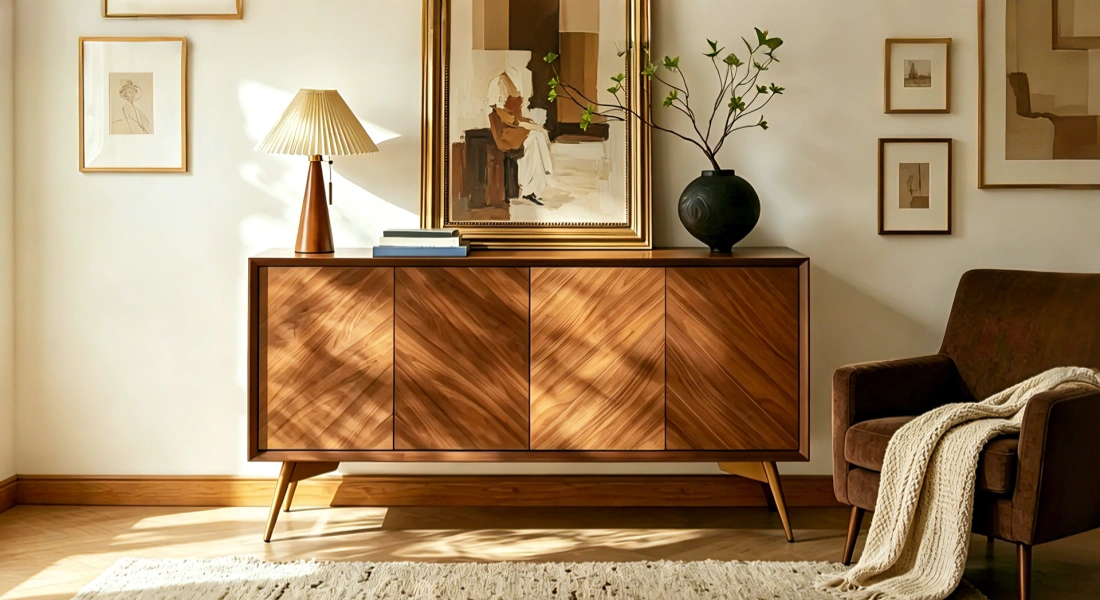
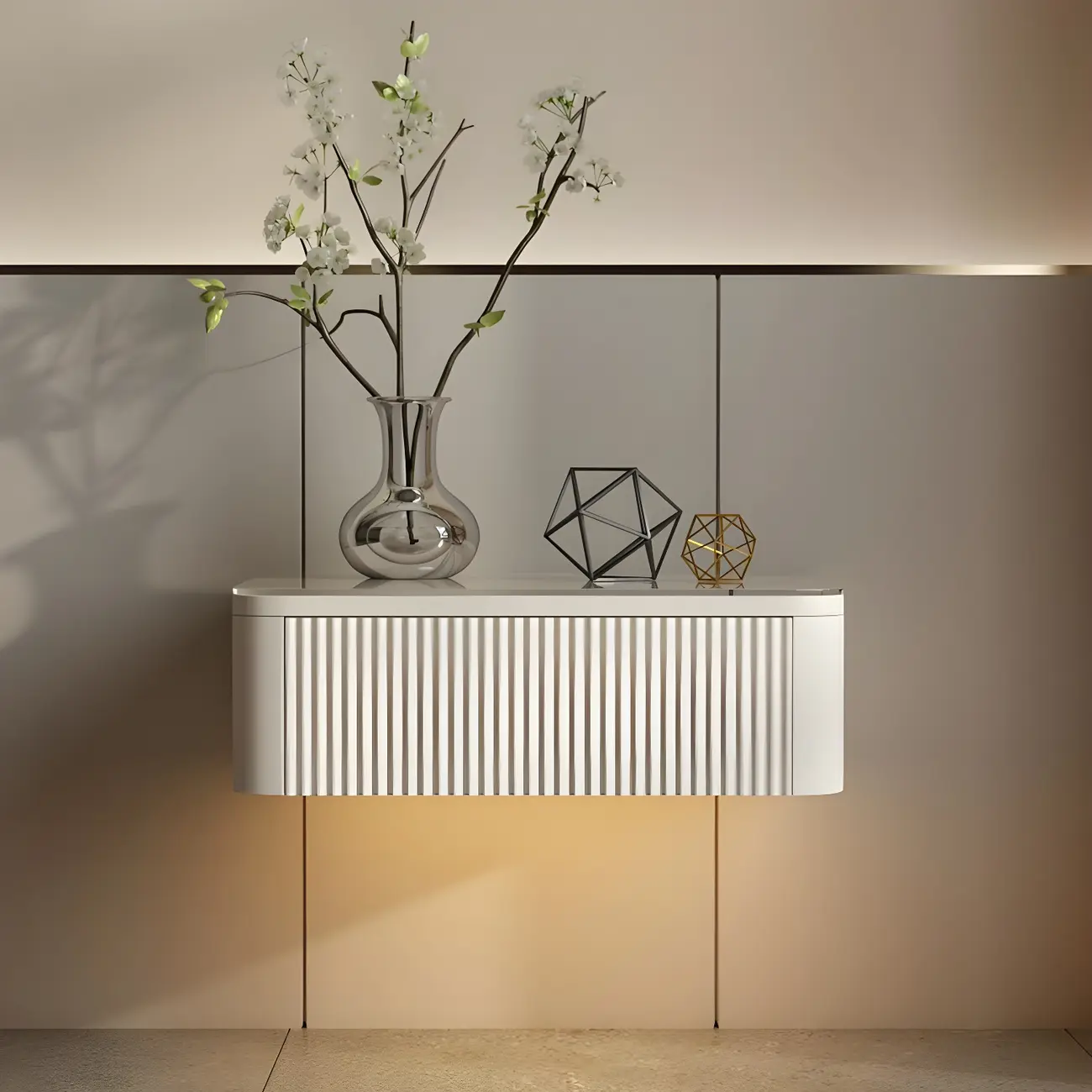
Split the surface in your mind into 3 sections. You can put your stuff into two of them and let the third breathe, like for a 60-inch sideboard. You’re looking at two groupings, about 18 inches wide, with some space between them. That blank zone gives the whole arrangement a calmer feel, almost like it can exhale. You don’t need to fill every inch of the sideboard; start with four or five pieces total. Walk away, come back, and see if something actually feels missing.
Various heights to maintain visual balance. The eye gets bored when everything sits at the same level. Your tall stuff goes in the back like a lamp and a piece of art leaning against the wall, and medium things fill the middle, maybe a potted plant and a couple of books. And low objects should go up front, like a candle, a small tray, and something grounded. Placing your sideboard decorations like this keeps the whole thing from feeling flat.
Pick one anchor. You also need a focal point, like something on the wall above, that ties the whole look together. A large piece of art, a mirror hung just right, and even a textile. Pick one anchor. Build around it and let everything else play a supporting role.
Symmetry vs. Asymmetry. Now decide on symmetry. Matching lamps on both ends with art centered above reads as calm and pulled together. That works in dining rooms where order feels good. Another decoration option is to go with an asymmetrical layout with a lamp on one side and a cluster of small objects on the other, so both can work as long as the visual weight balances out. Don't forget you can always shift things until it settles.
What to Put on a Sideboard
No doubt you can put anything on your sideboard for decorations, but here are some of the top picks you can go with:
-
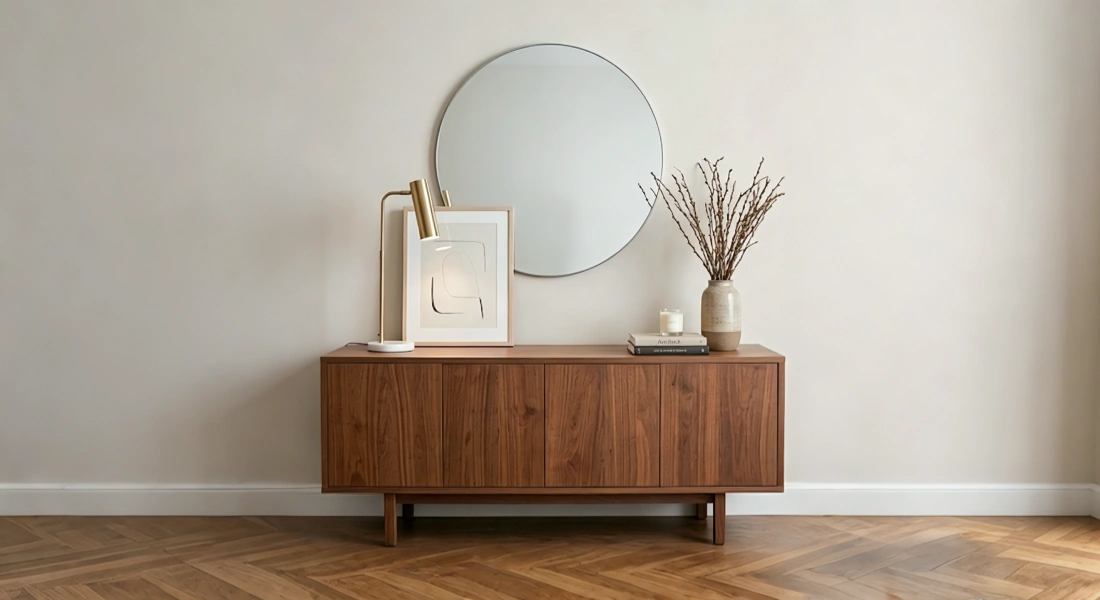
Wall Art or Mirror: Start with the wall right above the sideboard. Hang a large piece of art, maybe a mirror about two-thirds the width of the furniture. That gives the whole setup some backbone.
-
Table Lamps or Lighting: A table lamp does double duty—height and soft light in a single move. Plain pillar candles in simple glass holders bring evening warmth without any wiring hassles.
-
Plants or Flowers: Plants earn their spot, too. A vase of fresh eucalyptus lasts weeks and softens the hard edges of wood and metal. If your track record with plants isn’t great, even a decent faux stem in a ceramic vase fools almost everyone.
-
Books & Decorative Objects: Coffee table books pull visual weight and height, so you can stack two flat books and set a small candle on top. Also, you can toss in something personal like a framed photo, a souvenir from a trip, and maybe a weird little flea market find so the display doesn’t feel stiff and showroom-perfect.
-
Trays or Storage Baskets: You can also put a tray on your sideboard, as a tray keeps the daily clutter from spreading everywhere, like keys, remotes, and loose change. You can pick one about a third of the sideboard’s length. And if there’s a lower shelf, then you can put a basket down there to hide spare linens, cords, and whatever else you don’t need on display.
Sideboard Styling Ideas by Room
The way you style a sideboard shifts depending on where it lives. A living room setup can be a little more layered and playful. A dining room version pulls double duty. Entryways need to work hard without looking cluttered.
Sideboard for Living Room
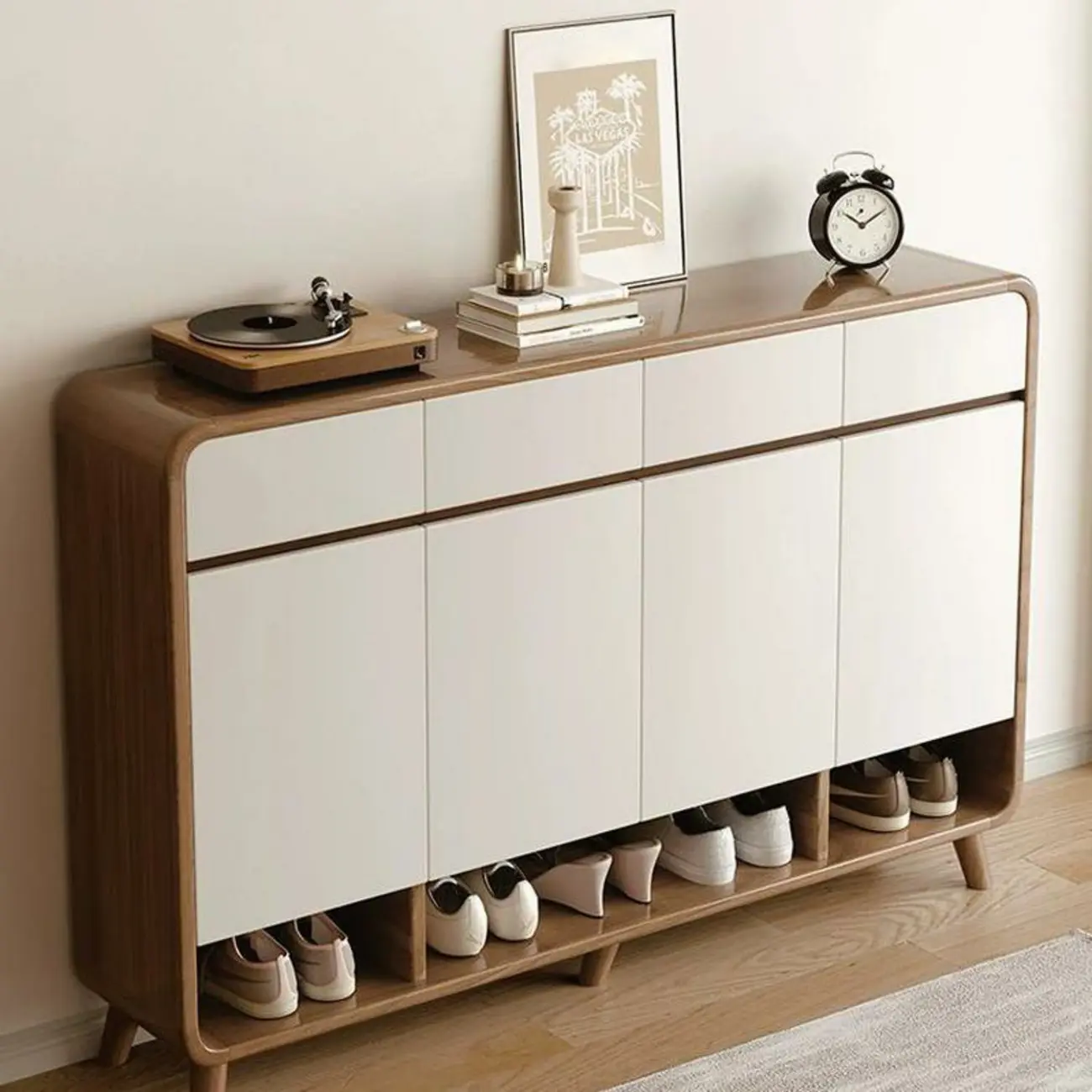
This is where your sideboard gets to be a bit of a showpiece. Give the wall above it some real attention. You can hang a big piece of art, a type of art that you can lean back and enjoy from the sofa. Then add a lamp on one side as a side piece. A lamp does wonders here as it gives a soft glow in the evenings and gives the whole setup some vertical breathing room. You can also place a few books under the lamp if you need to adjust the height.
On the other side, you can put a ceramic vase with some dried branches, which will keep things from looking too stiff. Then just finish the look with a candle in a simple glass holder and a small framed photo propped against the wall.
Sideboard for Dining Room
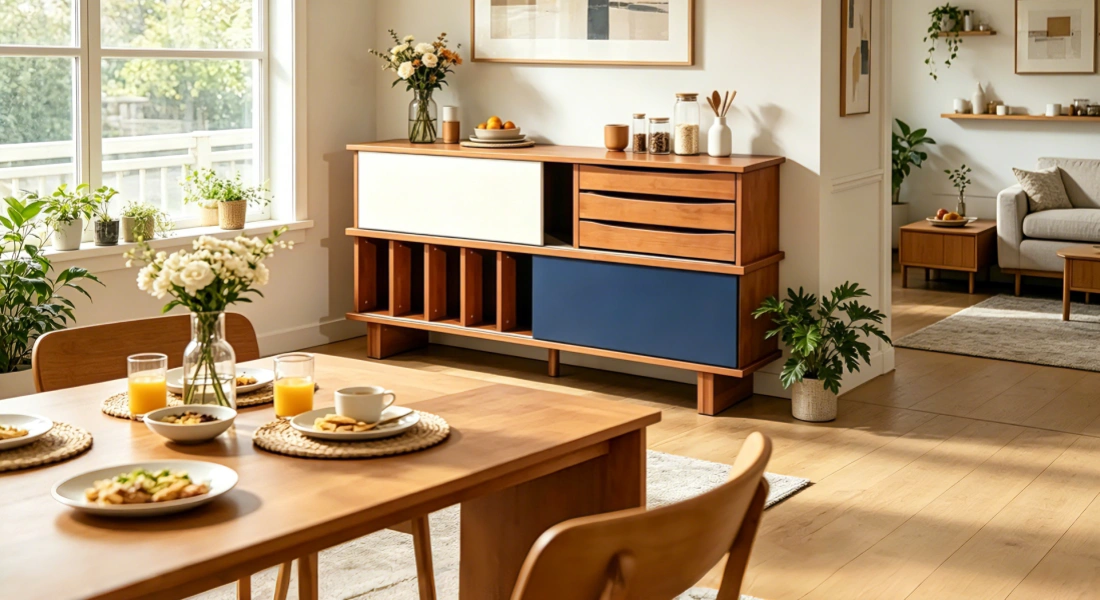
A dining room sideboard earns its keep during meals. You'll want enough open surface to set down a heavy platter without knocking over a lamp. I like to keep one end styled with a tall buffet or map and then leave a good stretch of clear counter in the middle. When guests come, that's where the serving bowls land.
At the far end, a low tray keeps salt shakers, a pepper mill, and maybe a bud vase tucked together so they don't wander. Store your extra plates and cloth napkins in the cabinet below. That way, you can pull everything out fast without needing to rearrange a still-life of decorations. The sideboard works with you rather than just sitting there looking nice.
Sideboard for Entryway
Keep it simple here. The entryway sideboard catches whatever comes through the door, like keys, sunglasses, and loose mail. A shallow bowl or a small tray placed toward the front gives all that stuff a home. A mirror above is practically mandatory. It reflects whatever daylight you have and lets you check your teeth before heading out.
Skip the big lamps. A small scented candle does the job, and if the sideboard has a lower shelf, then line up a couple of woven baskets for shoes and winter gear. You want this spot to feel welcoming in the five seconds you stand there, not busy.
How to Style a Sideboard with Lighting
No doubt lighting plays a crucial role in deciding whether your sideboard fades into the wall or glows at night.
-
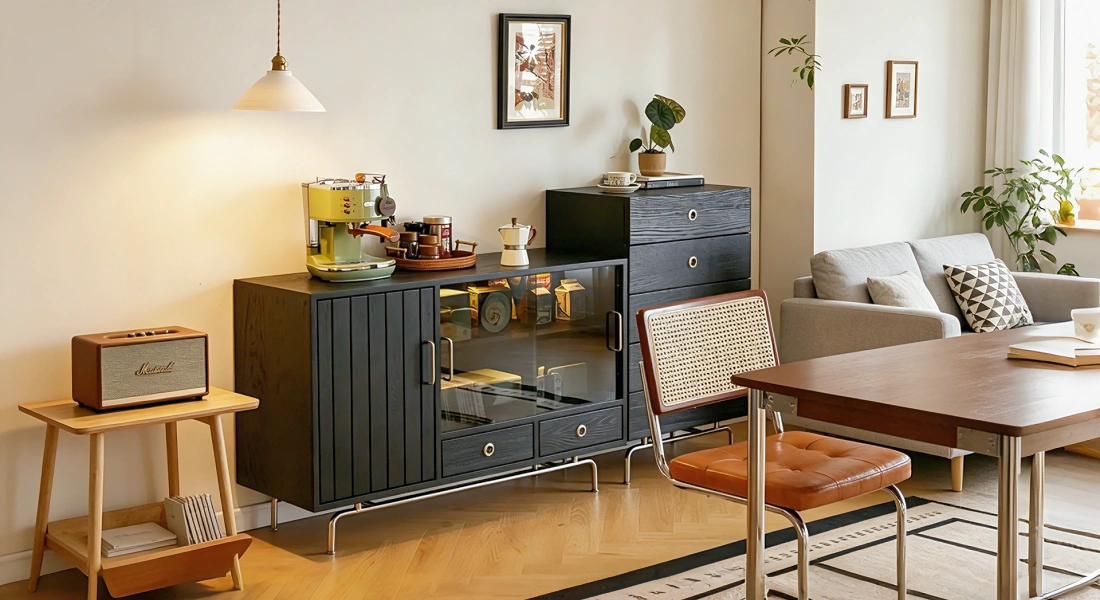
A single table lamp on the surface does more than any ceiling fixture can. It pools light, low and warm. In a dining room, a tall buffet lamp anchors one end while leaving the rest open for serving dishes. In a living room, pair a lamp with a big piece of art; this way, it becomes a soft focal point after dark.
-
Candles earn their spot without any wiring. A couple of plain pillar candles in glass holders on a tray bring that flicker when the sun goes down. Set them near a mirror, and the light doubles.
-
Use pendant lights to illuminate specific areas. Choose a small pendant light and hang it above the sideboard for task lighting. This is especially suitable for families who place coffee machines or bartending tools above their sideboards, allowing you to illuminate the space when needed.
Don't rely only on the overhead light. A sideboard looks best when at least one light source lives right on top of it, close to eye level.
Discover Quality Furniture For Your Home at HomeyFad
Your sideboard doesn't need to be complicated. Give it a focal point on the wall, some height variation, and a little breathing room. Then layer in the stuff that actually means something to you. The piece should work for your daily life, not just sit there looking pretty.
And if you are thinking of shopping for a sideboard, you can check our HomeyFad. You can also contact us for any inquiries and details.
FAQs
Q: Can I use a sideboard as a TV stand?
A: Yes. If the height feels comfortable for viewing. The cabinets underneath keep all the cord mess hidden, which is a nice bonus.
Q: What's the best way to style a long sideboard?
A: Avoid lining up small items end to end. Create two distinct groupings with breathing room in between—maybe a third if the piece is extra long. That approach keeps things calm instead of chaotic.
Q: Should I put a rug under a sideboard?
A: It's not necessary, but a rug can help define the zone, especially in an open floor plan where the sideboard floats against a wall.

 Add Us On Google