
(1).png?w=1920&h=650)
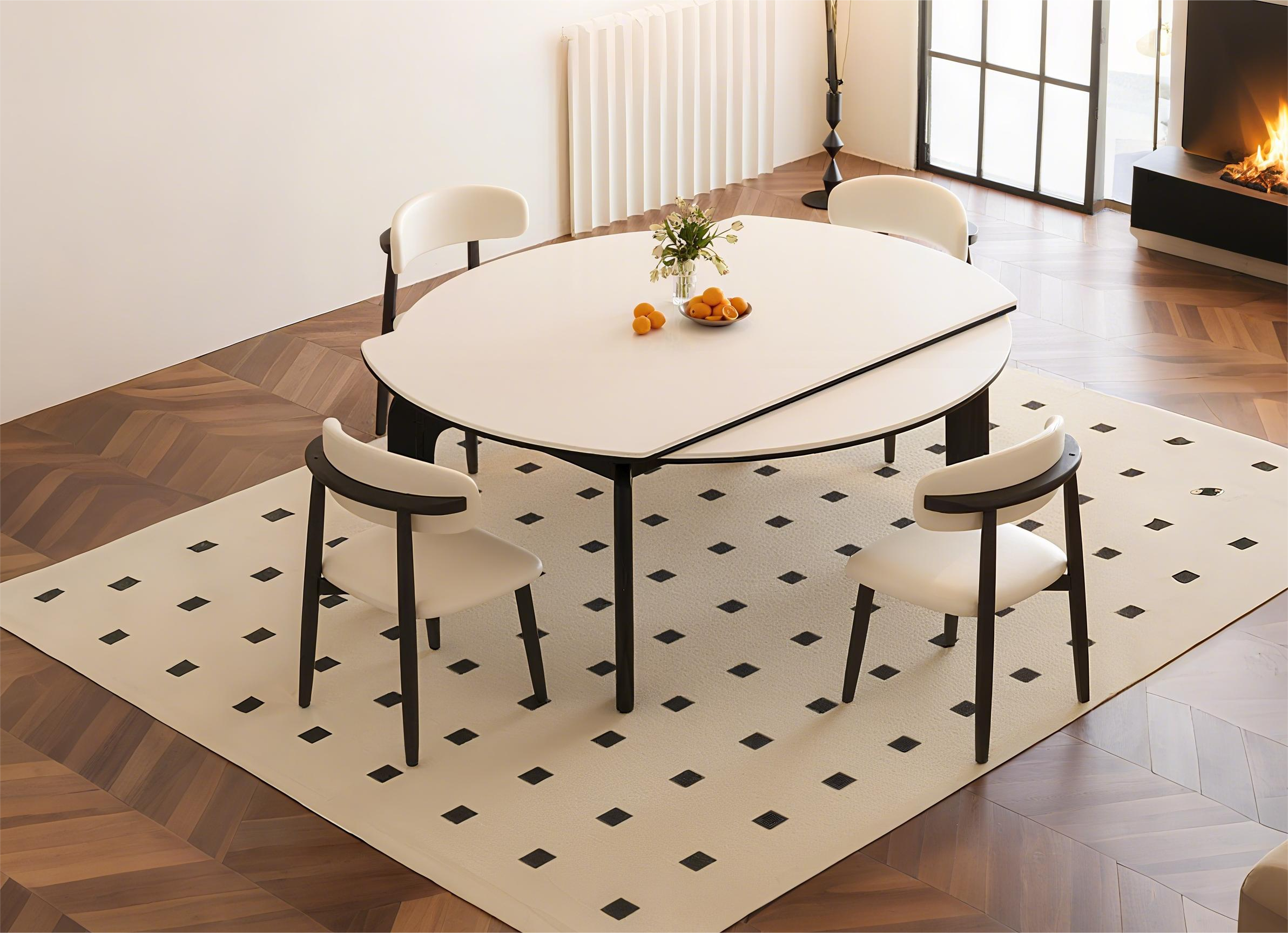
When shopping for a dining table, you’ve likely found yourself stuck between two classic shapes: rectangle or round.
Let’s break down the 8 differences between rectangular and round dining tables. Based on your dining space’s practical needs, you can find the perfect dining table for your home.
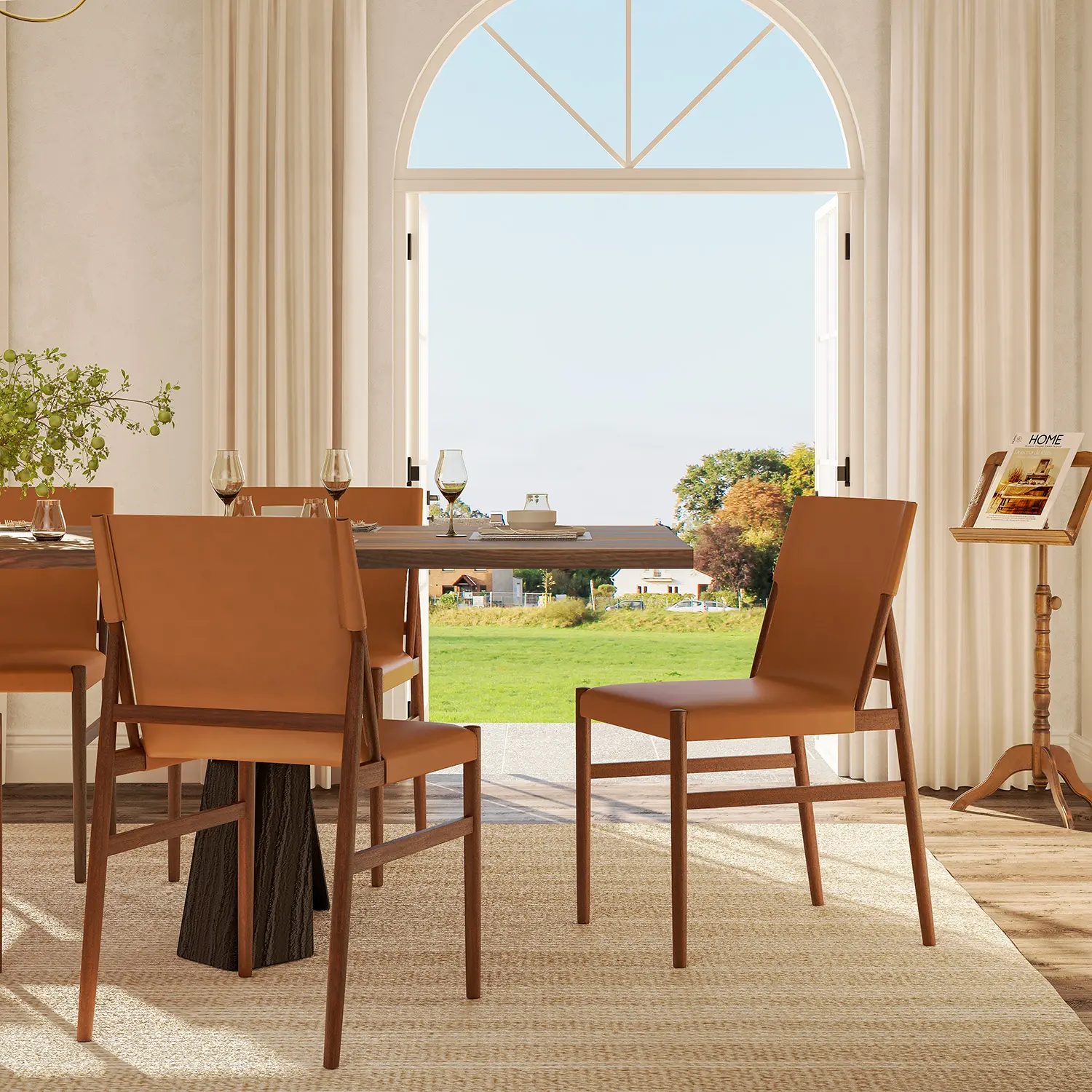
Rectangular Dining Table
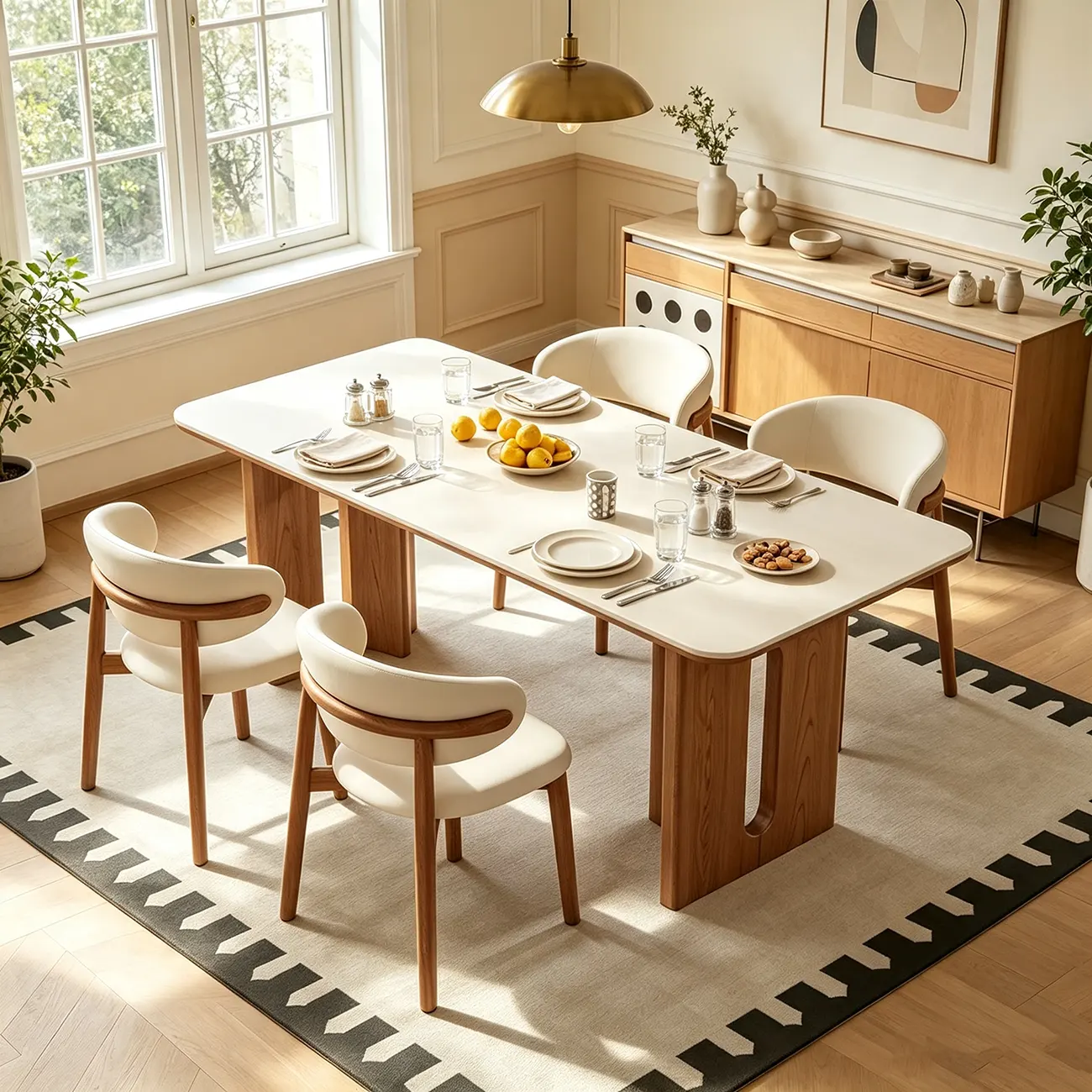
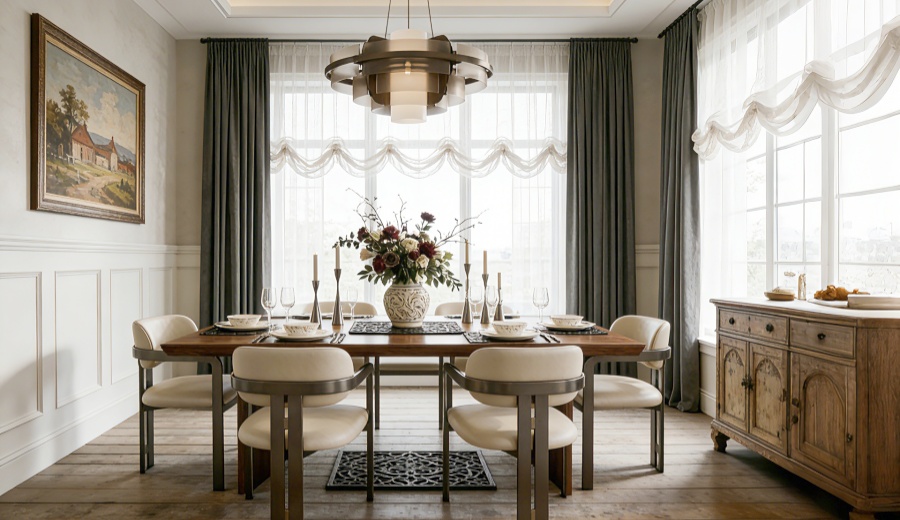
The rectangle dining table is a traditional staple for formal dining rooms and the most common choice overall.
With its strong seating capacity, it’s often the go-to for large families. That makes it ideal for long, narrow spaces (think: New York apartments), formal dinners, and holiday gatherings.
-
It can be placed against a wall or centered without wasting space.
-
High capacity, accommodating more people.
-
Clean lines that blend easily with various styles.
|
Table Length (inches) |
Compact Seating |
Notes |
|
47" |
4 people |
Classic 4-person table, ideal for small families or apartments. |
|
55" |
4-5 people |
Seating 5 requires adding a person on the long side |
|
63" |
6 people |
Standard 6-person table |
|
71" |
6-8 people |
Very spacious for 6; Seating 8 requires a close arrangement. |
|
79" |
8-10 people |
formal dinner for 8 people; informal gathering for 10 people. |
|
87" |
10-12 people |
Excellent for large families or those who entertain frequently. |
|
94"+ |
12+ people |
Requires a huge dining room. |
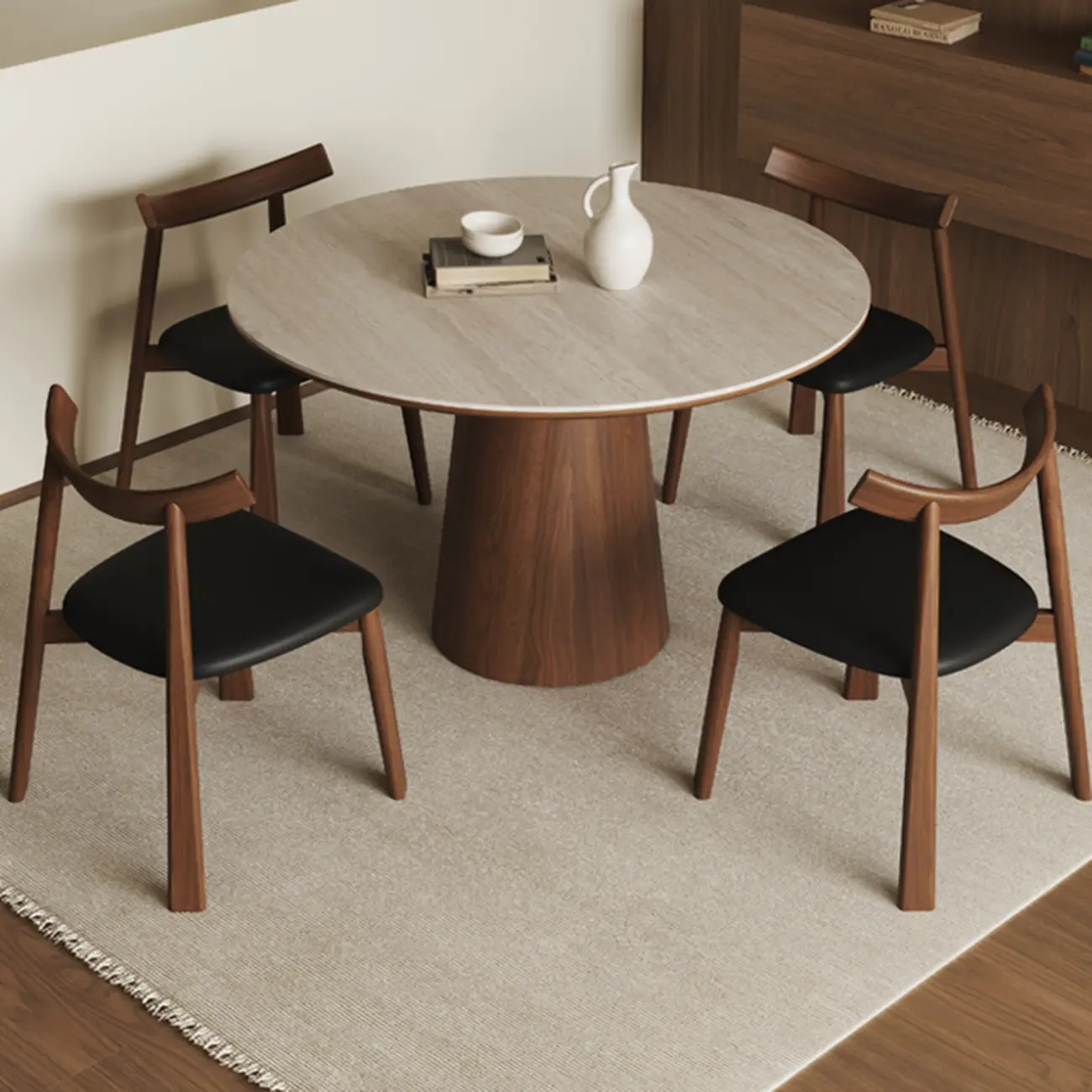
Round Dining Table
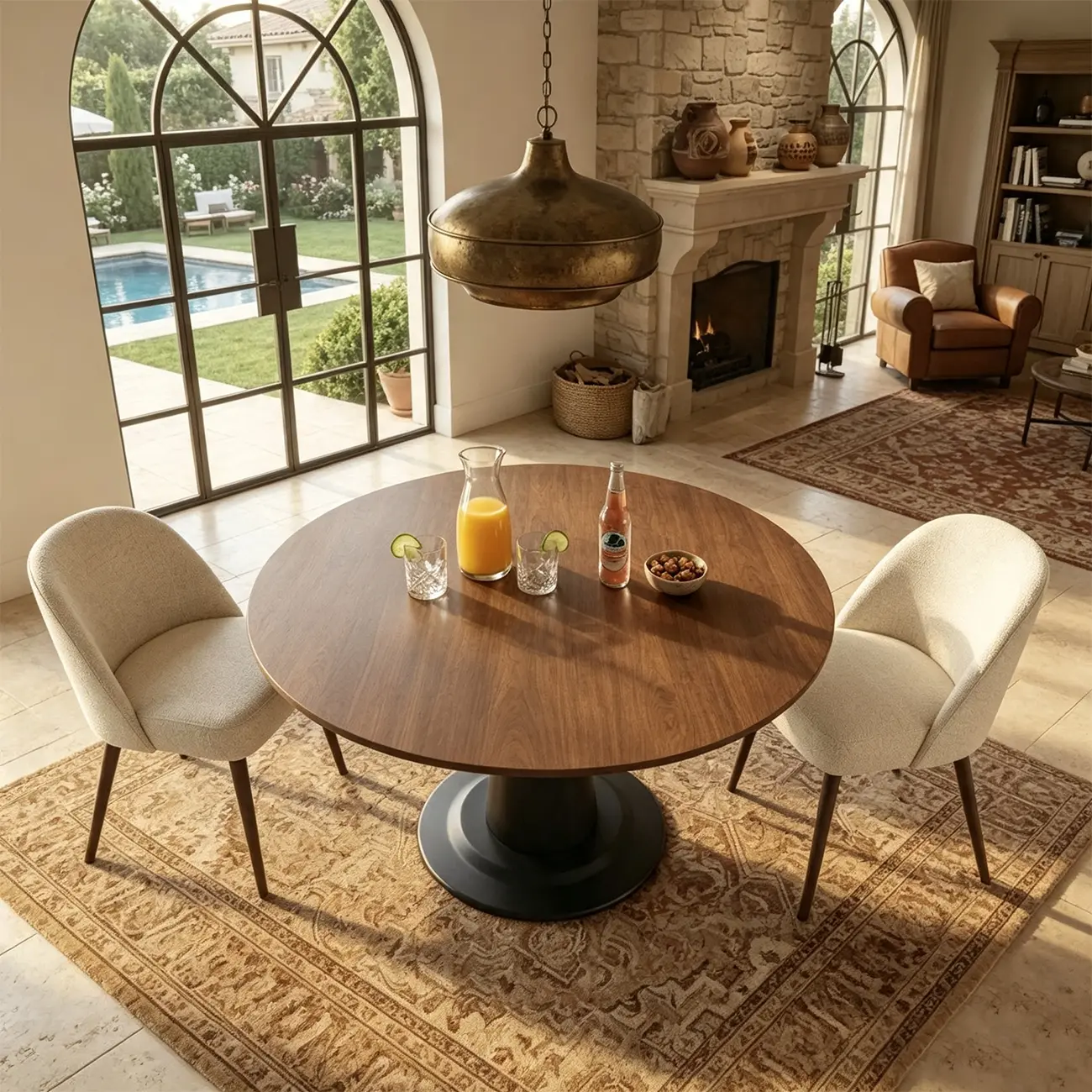
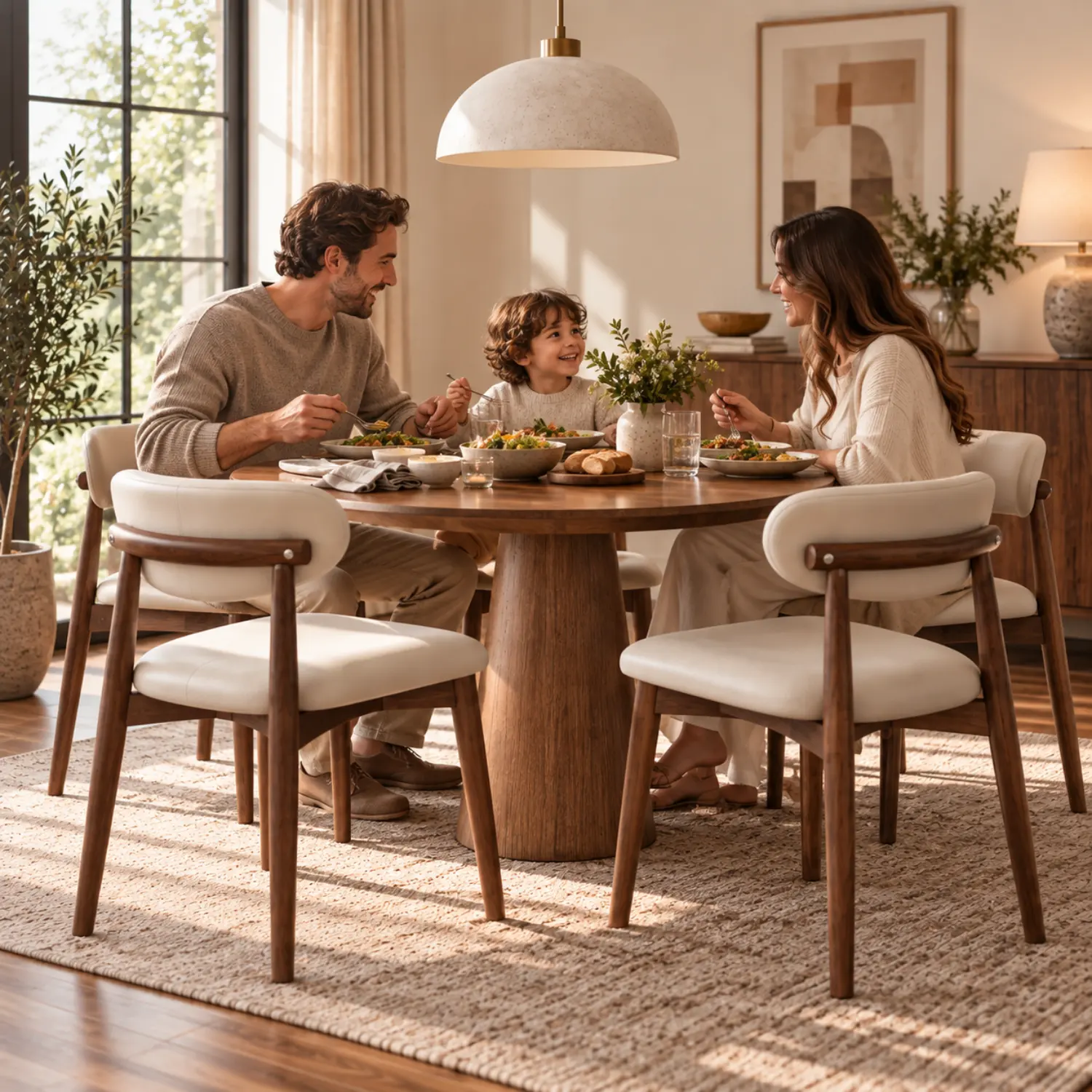
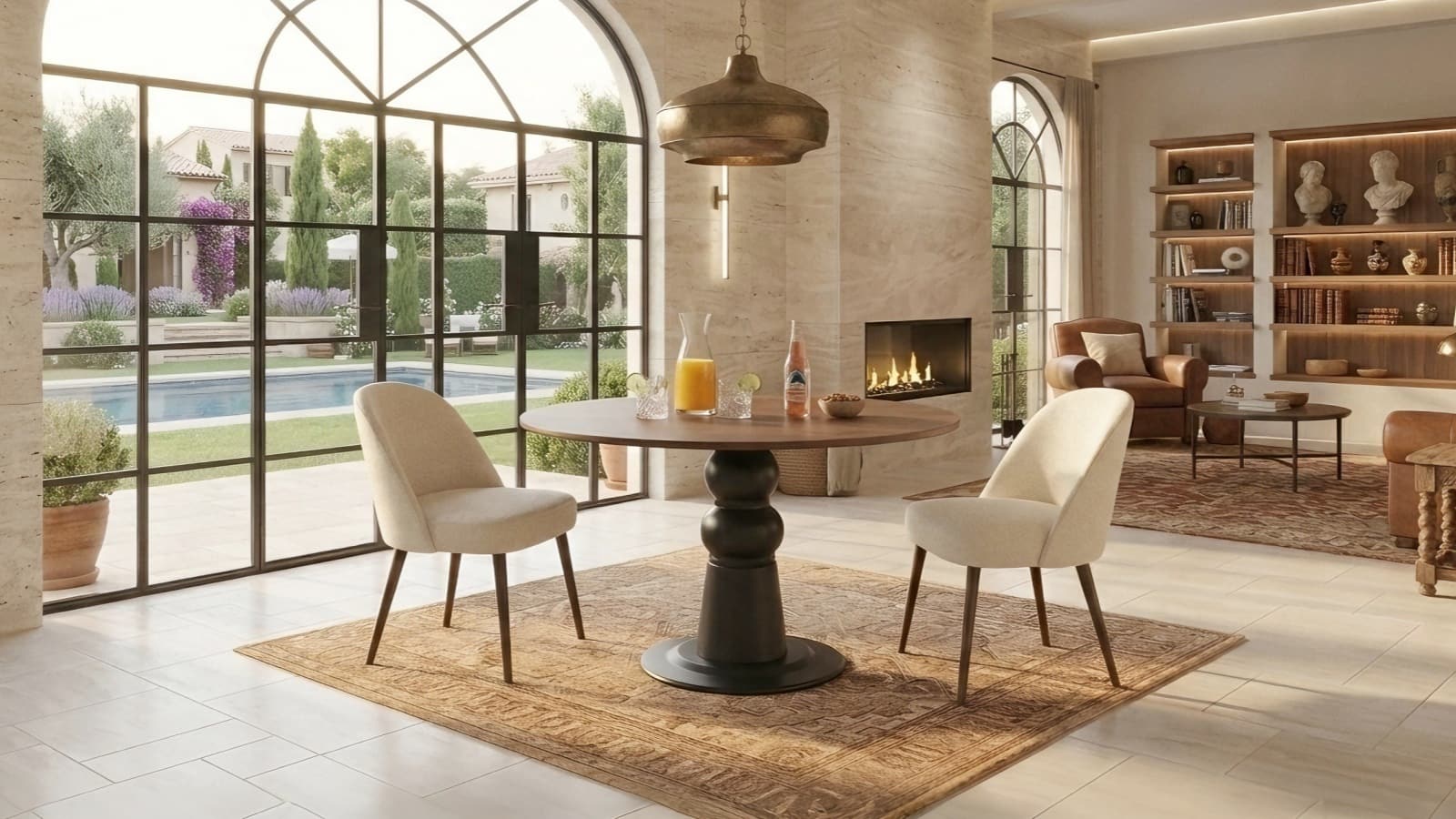
The round dining table is a favorite for small spaces, maximizing efficiency. It easily creates a warm and peaceful atmosphere since everyone sits close together in a circle.
But for some small spaces, a round table may not be suitable.
-
Equal distance between all diners, promoting conversation and a cozy vibe.
-
Suitable for small homes and square dining areas, reducing congestion.
-
Visually fluid curves soften spaces dominated by straight lines.
|
Compact Seating |
Minimum Desktop Diameter |
Comfortable Desktop Diameter |
Minimum Diameter of Required Room |
|
3-4 people |
90 cm (36") |
100-110 cm (40-43") |
3.0 meters (10') |
|
4-5 people |
110 cm (43") |
120 cm (48") |
3.3 meters (11') |
|
5-6 people |
120 cm (48") |
130-140 cm (52-55") |
3.6 meters (12') |
|
7-8 people |
140 cm (55") |
150-160 cm (60-63") |
4.2 meters (14') |
Rectangle vs. Round Dining Table: 8 Key Differences
Let's compare the main differences between rectangular and round dining tables. You can compare them based on your dining room to see which one is more suitable for you!
|
Feature |
Rectangle Dining Table |
Round Dining Table |
|
Overall Atmosphere |
Formal, structured, efficient |
Casual, intimate, inviting |
|
Space Efficiency |
Ideal for long, narrow dining rooms. Maximizes lengthwise space. |
Best for square or large rooms. Requires more open surrounding space. |
|
Seating & Social Dynamics |
Conversation can be linear; people at the ends are far apart. |
Everyone can see and speak to each other easily, fostering inclusive conversation. |
|
Seating Capacity |
Generally, seats more people in the same amount of floor space (utilizing the long sides). |
Seats fewer people in an equivalent floor space. |
|
Safety |
Has sharp corners, creating a potential hazard for young children and seniors. |
No corners, making it the safest option for families with small children. |
|
Flexibility & Placement |
It can be placed flush against a wall to save space. Many extension options are available. |
Inefficient when placed against a wall (wastes seats). Best as a room centerpiece. Very few extension options. |
|
Style & Flow |
Features strong, linear lines. It can create traffic jams in tight spaces. |
Softens a room's flow. Allows for easy movement and seating from all sides. |
|
Ideal For |
• Formal dining and entertaining • Modern/industrial decor • Long, narrow rooms • Doubling as a workspace |
• Casual family meals & conversations • Small, friendly gatherings • Households with young children or seniors • Square rooms |
Rectangle vs. Round Dining Table: How to Choose?
After understanding the differences, evaluate your space and needs using these guidelines:
1. Consider Your Dining Room Space
Measure your dining room space and record the length and width dimensions. A 36-inch clearance space must be left around the dining table to ensure free passage.
Subtract 36 inches from both the length and width dimensions of the reserved space for the dining table. The resulting value is the maximum size of your dining table. (Note: The edges of the dining table should also maintain a 36-inch clearance from adjacent furniture. For more details, refer to the “ Sizing a Dining Room Table” blog.)
If the length and width dimensions differ significantly, a rectangular dining table is the perfect choice for you!
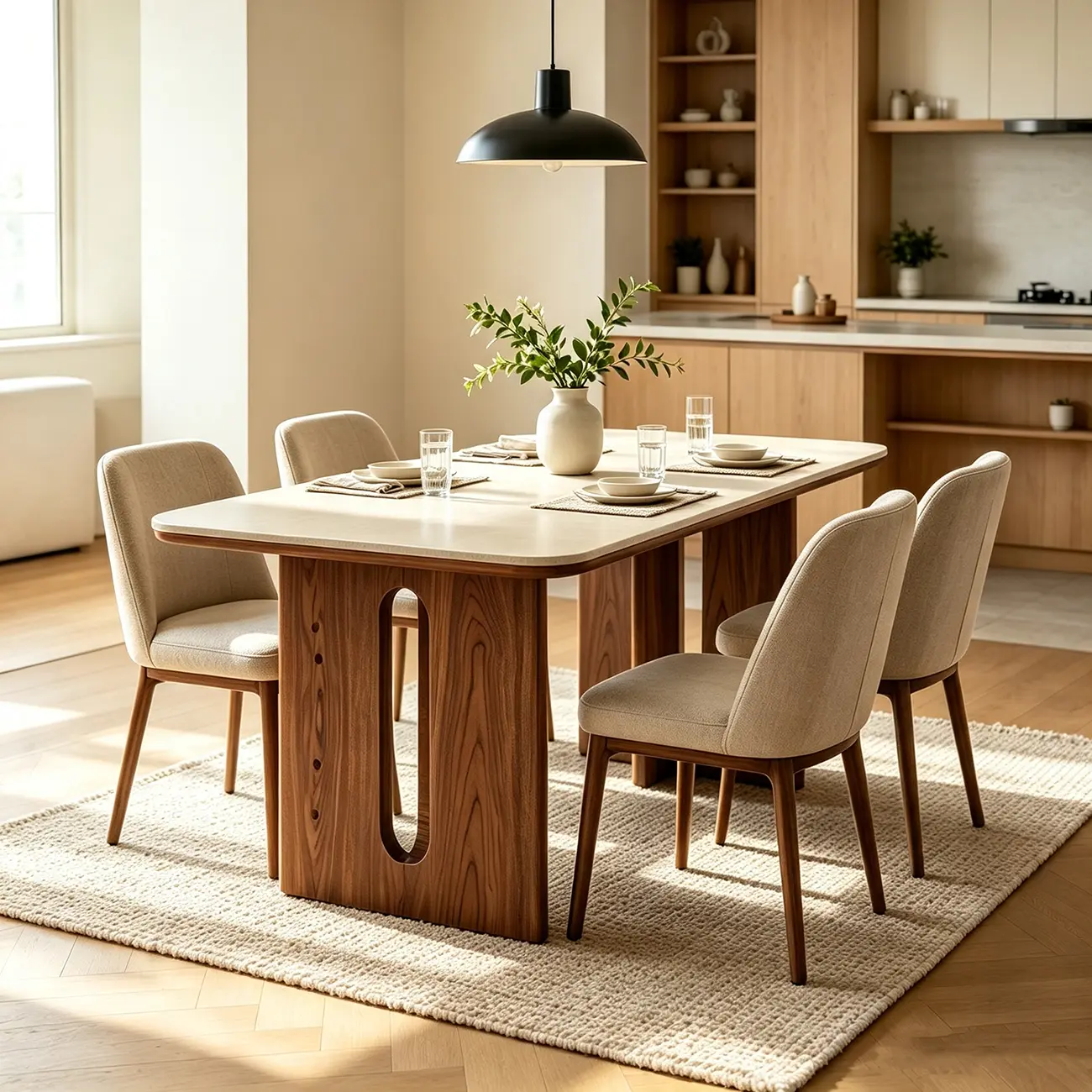
Less than 30 inches (76cm)? Congratulations, you’ve won:
- Chair-to-wall collisions
- The entire table shakes when someone stands up
- Aprons brushing everyone’s shoulders when serving food
For small spaces, choose a foldable dining table. Various folding designs can save you space.
2. Number of Permanent Residents in the Household
Select a dining table based on the number of permanent residents in the household.
- 1-2 people: Choose a round or rectangular dining table.
- 3-4 people: Preferably a round dining table (90-120 cm), then consider a rectangular dining table (120 x 80 cm).
- 5-6 people: Preferably a rectangular dining table!
- More than 6 people: Choose an extendable dining table!
If you can't decide, opt for an extendable dining table or oval dining table. An extendable dining table combines rectangular and round designs. When there are more people, simply extend it for use—it's very convenient!
3. Consider Dining Room Shape
Choose a rectangular dining table if:
- Your dining room is clearly long and narrow.
- You need to place one side of the table against a wall or island to save space.
Choose a round dining table if:
- Your dining room is square or open-plan.
- Your home is small, and you need to avoid sharp corners that make the space feel more crowded.
- The table needs to be placed in the center of the space, and a round table allows for a more fluid flow of movement.
4. Style Preferences
- If you prefer modern, minimalist, sleek, formal, or traditional styles, choose a rectangular dining table.
- If you prefer warm, soft, vintage, or medieval styles, choose a round dining table.
These are general guidelines—not rules! Love vintage but prefer a rectangle? Seek retro designs with dark wood or carvings
Conclusion
Rectangle dining table vs. round dining table: which one speaks to you? Whatever you choose, prioritize ample space for comfortable movement.
At Homeyfad, find your ideal dining table today! Enjoy a first-order discount now!
FAQs
Q: What are the disadvantages of round dining tables?
A: While round tables are conducive to intimate conversation, their larger diameter takes up more floor space than rectangular tables, making them unsuitable for smaller rooms.
Q: What materials are most durable for dining tables?
A: Natural wood dining tables and marble dining tables are both very popular styles. They're perfectly adequate for family dining rooms and are very durable.
Q: Does a round table look good in a rectangular room?
A: Absolutely! A round table can soften the sharp angles of a rectangular room and create a pleasing contrast. However, make sure the table's diameter is proportional to the width of the room to avoid appearing overcrowded.
-19.png?w=1300&h=1300)
-.jpg?w=900&h=506)
--14.jpg?w=800&h=577)
-.jpg?w=800&h=585)
-.jpg?w=800&h=571)

 Add Us On Google