
(1).png?w=1920&h=650)
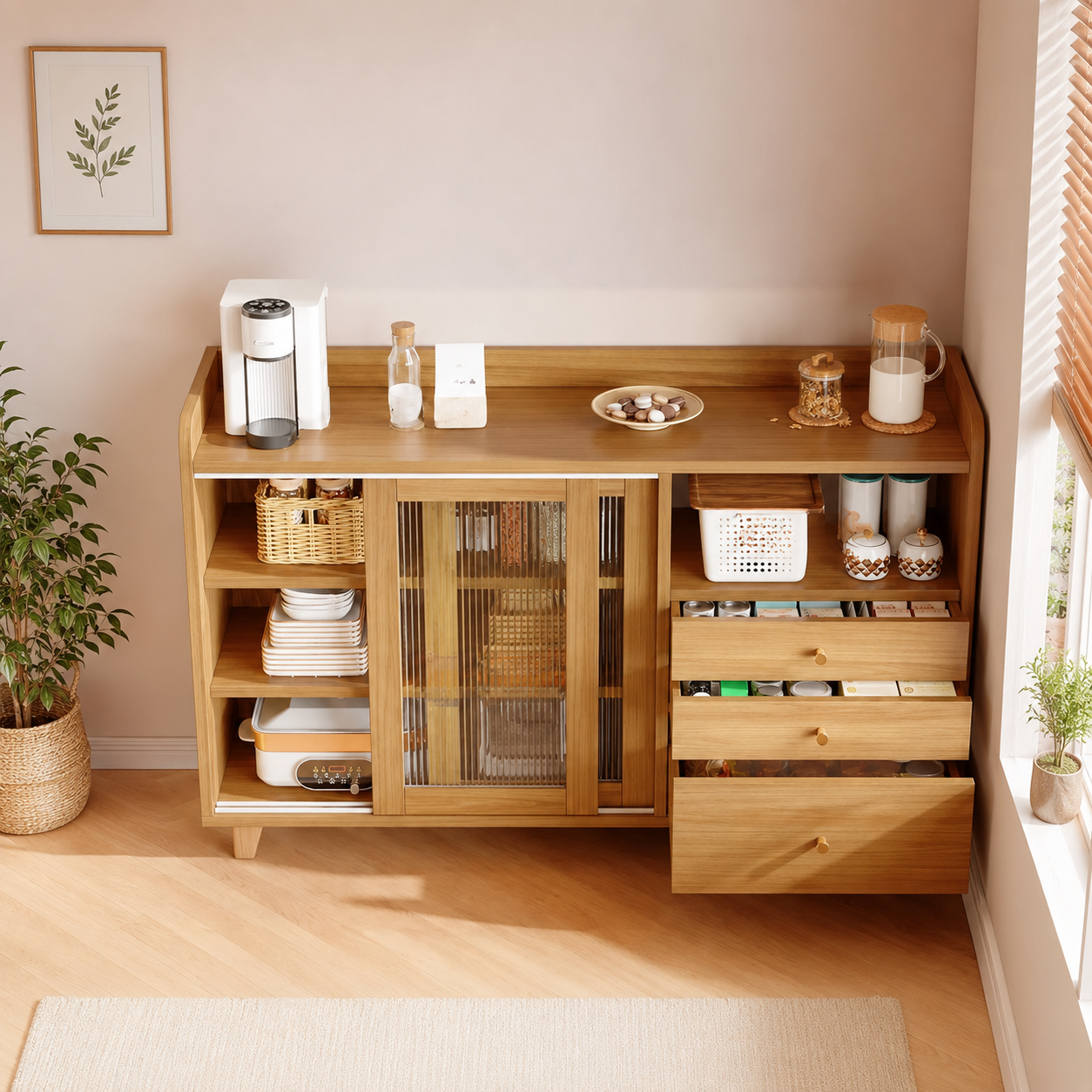
When you visit an online store and see more than 200 types of sideboards, you will be dizzy! How can we choose a suitable sideboard?
I used to put a lot of effort into choosing them for my home. A hidden sideboard or an open sideboard? Or an accented sideboard for a living room?
I will assist you now! This guide will give you everything about choosing a sideboard. That depends on how you will use it, where you will put it, and what you need to store.
What Is a Sideboard and Why Do You Need One?
A sideboard is a long, low storage furniture piece. It provides both usability and visual appeal. It typically includes cabinets, drawers, or shelves. It is often placed against a wall.
Traditionally, people used sideboards in dining rooms to store tableware and serve food during meals. Today, they serve a much broader purpose. People can find them throughout the home.
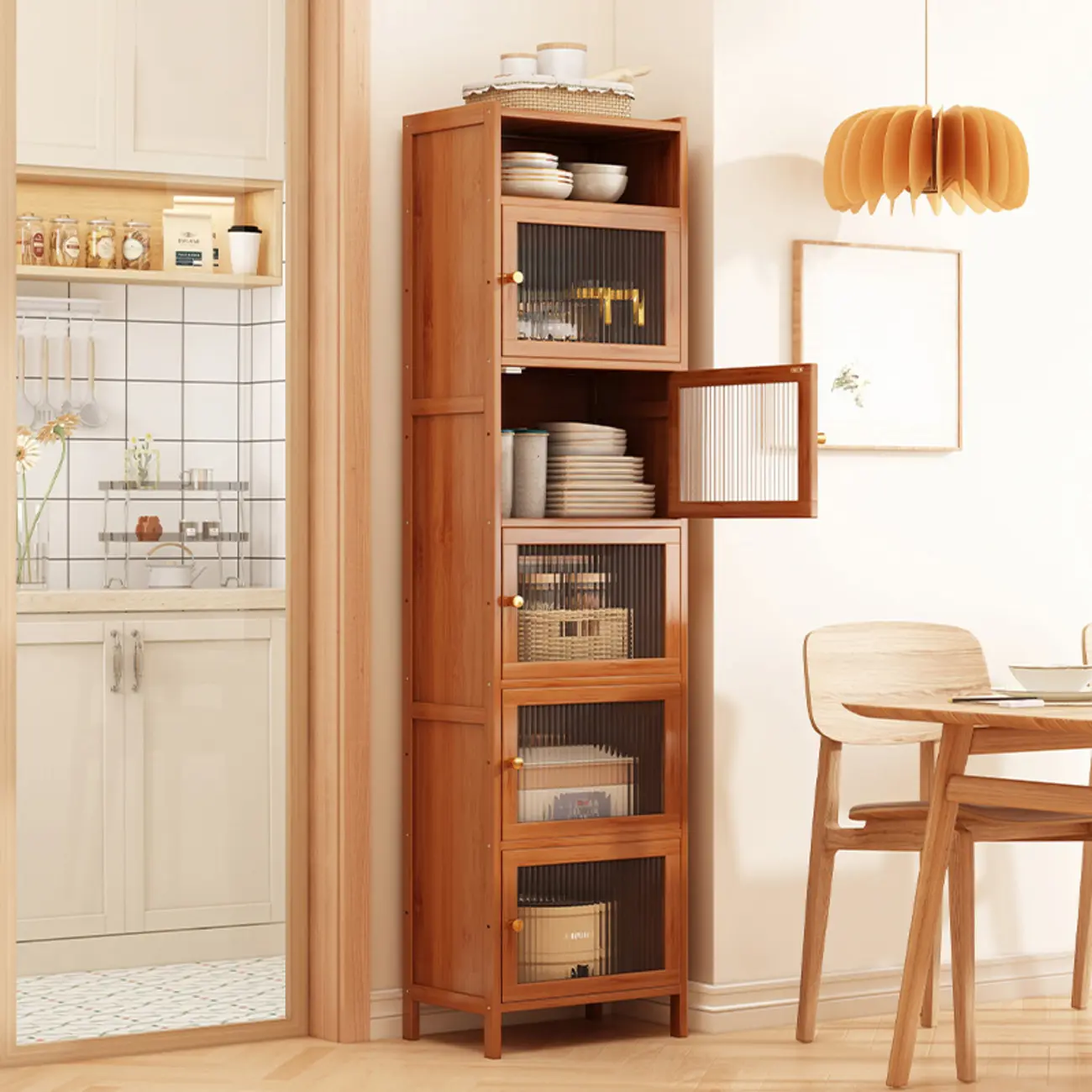
A well-chosen sideboard can:
- Add valuable storage space
- Keep everyday items organised
- Provide a surface for décor and displays
- Improve the overall style of a room
- Serve multiple functions depending on placement
Whether you're designing a dining room or a living room, the right sideboard can improve both usability and aesthetics.
Key Factors to Consider When Choosing a Sideboard
1. Size and Proportion
When choosing the right size sideboard, I think you can start by understanding how you plan to use it.
A good rule is to pick a dining sideboard. It should be about two-thirds to three-quarters the length of your dining table. This looks nice. It provides enough storage for your dining items.
What if you live in an apartment or have a small dining area? A space-saving sideboard that is 40 to 55 inches wide can provide storage without making the room feel crowded. This will be nice when you use it, but you should think of the size of your area first when you buy it. Is it spacious enough to put inside a sideboard?
60 inches or wider often works best for dining rooms or open-concept homes, such as a buffet sideboard. It provides storage and makes a nice focal point in the room.
You may think about the furniture in the living room. If you put the sideboard under a TV, then you can pick one that's wider than the TV to look balanced.
Remember to leave space in front of the sideboard so you can walk by comfortably. You should have at least 24 to 36 inches of space to walk in front of the sideboard. This way, you can open the doors and drawers easily.
2. Storage Needs
People always think it's wrong to choose a sideboard based only on how it looks, not on how much storage they need.
The best sideboard is one that matches what you need to store. When you choose a sideboard, you should consider how you use it first.
If you store plates, bowls and glasses, you can choose one with cabinets and shelves that you can adjust. This design keeps your dining items organised and safe.
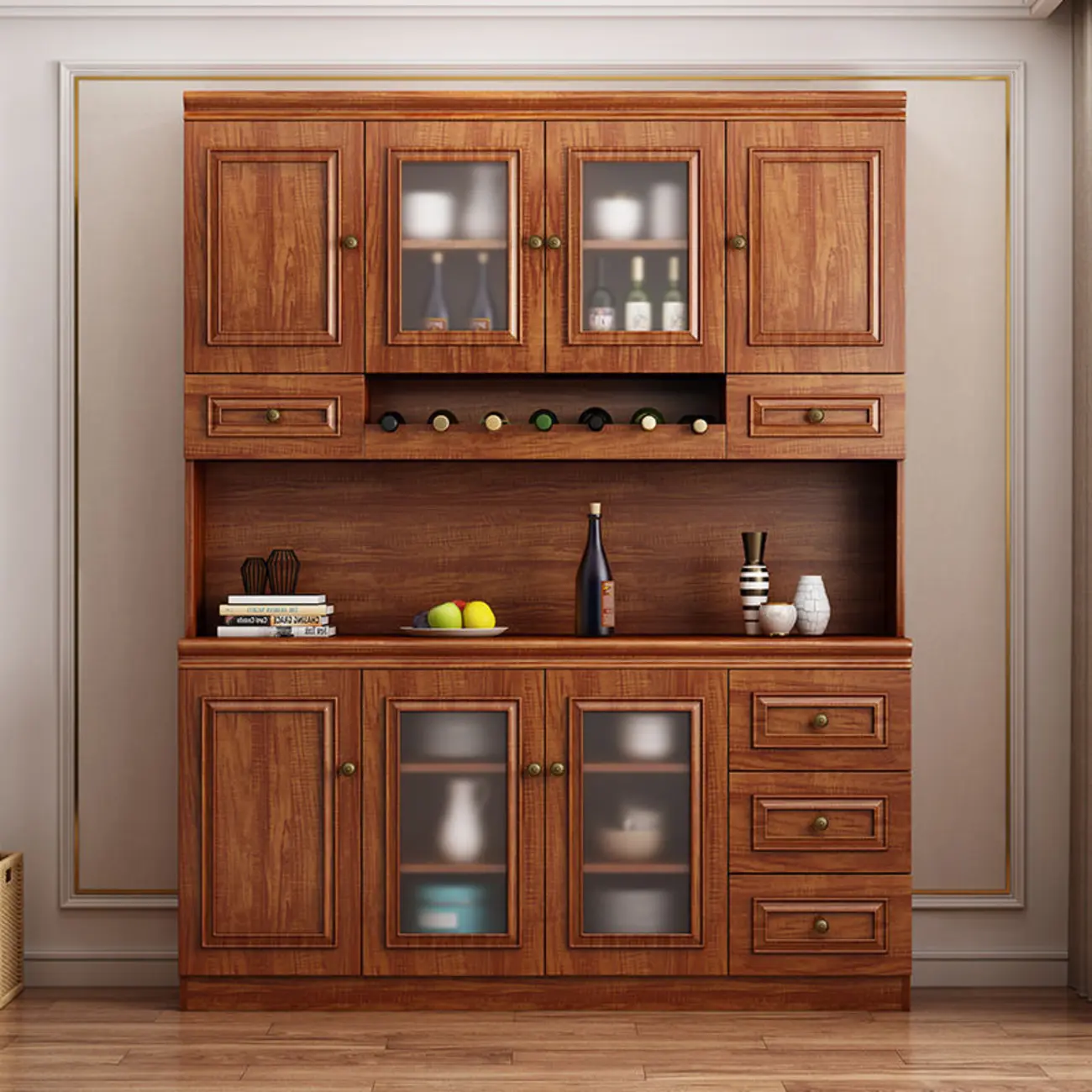
When frequently using smaller items such as cutlery, table linens, candles, coasters, or serving utensils, I recommend that you look for a sideboard cabinet. It includes multiple drawers. Drawers make it easier to access frequently used items without creating clutter.
A sideboard that combines cabinets with open shelves provides storage and display space. The cabinets can hide things you do not want to see. The open shelves can display your favourite things.
People who like to entertain on a sideboard with a tabletop surface can choose a special one. It can serve drinks, desserts or meals. A convenient choice.
Before you buy a sideboard, just think about what you will put inside it. The closer the storage layout matches your needs, the more useful the sideboard will be.
3. Material and Durability
The material of your sideboard affects both its appearance and durability.
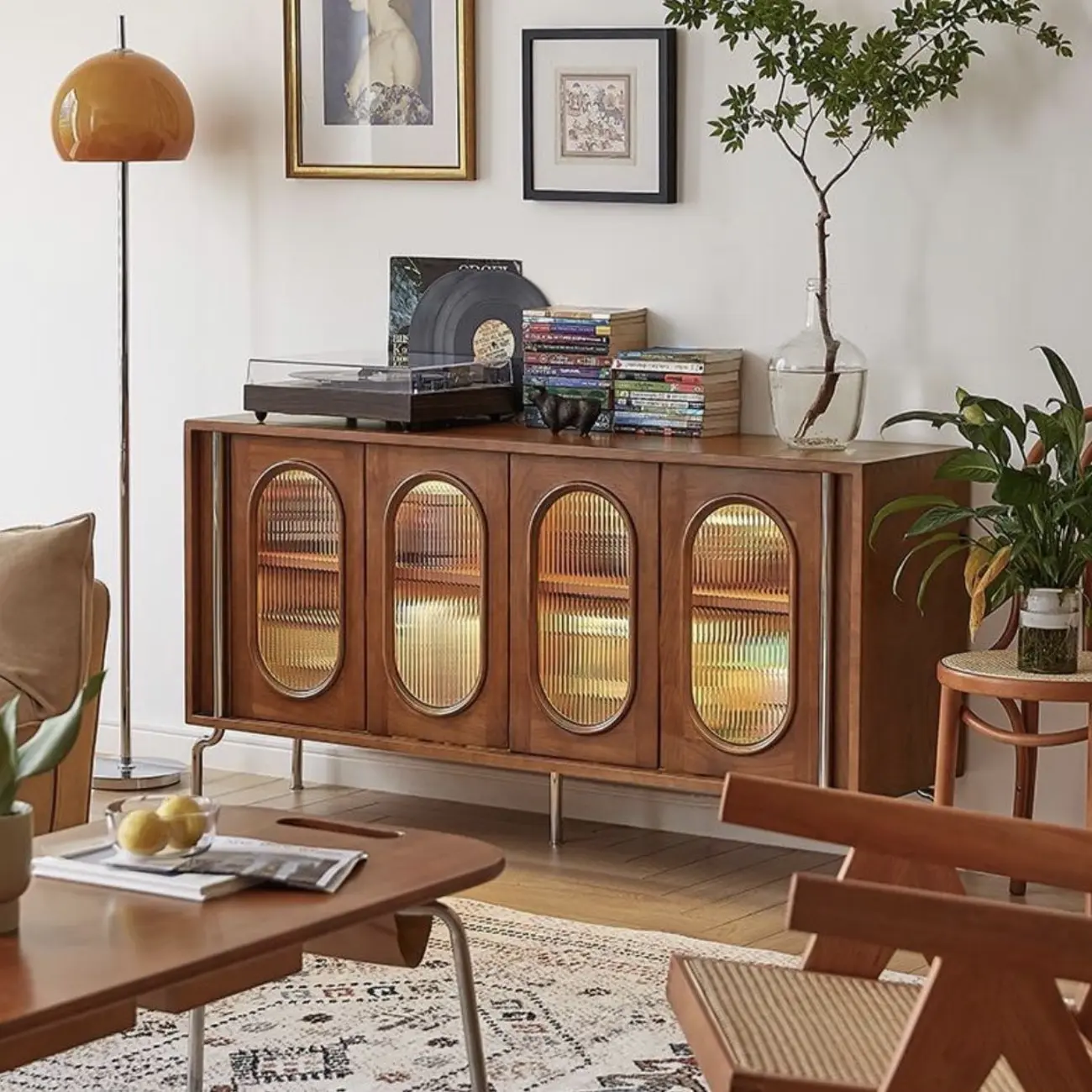
Wood is a choice because it is durable, dynamic and timeless. It works well in traditional, farmhouse, Scandinavian and contemporary interiors. But often people will check whether it could protect against damp conditions.
Metal accents often suit modern designs because glass details can make a room look lighter and more elegant. Metal sideboards are highly durable and resistant to moisture, making them a practical choice for everyday use.
However, they may not offer the same warmth as wood furniture and can show fingerprints or scratches more easily. Homeowners seeking a cosy, traditional look may prefer wood. But those favouring modern or industrial interiors often appreciate the refined appearance of metal designs.
When choosing materials, you just think about the style of your home and how often you will use the sideboard.
4. Style and Design
Your sideboard should fit the overall design of your space.
Modern homes often look good with clean-lined siding and simple details. Traditional interiors may look better with wood finishes and decorative hardware.
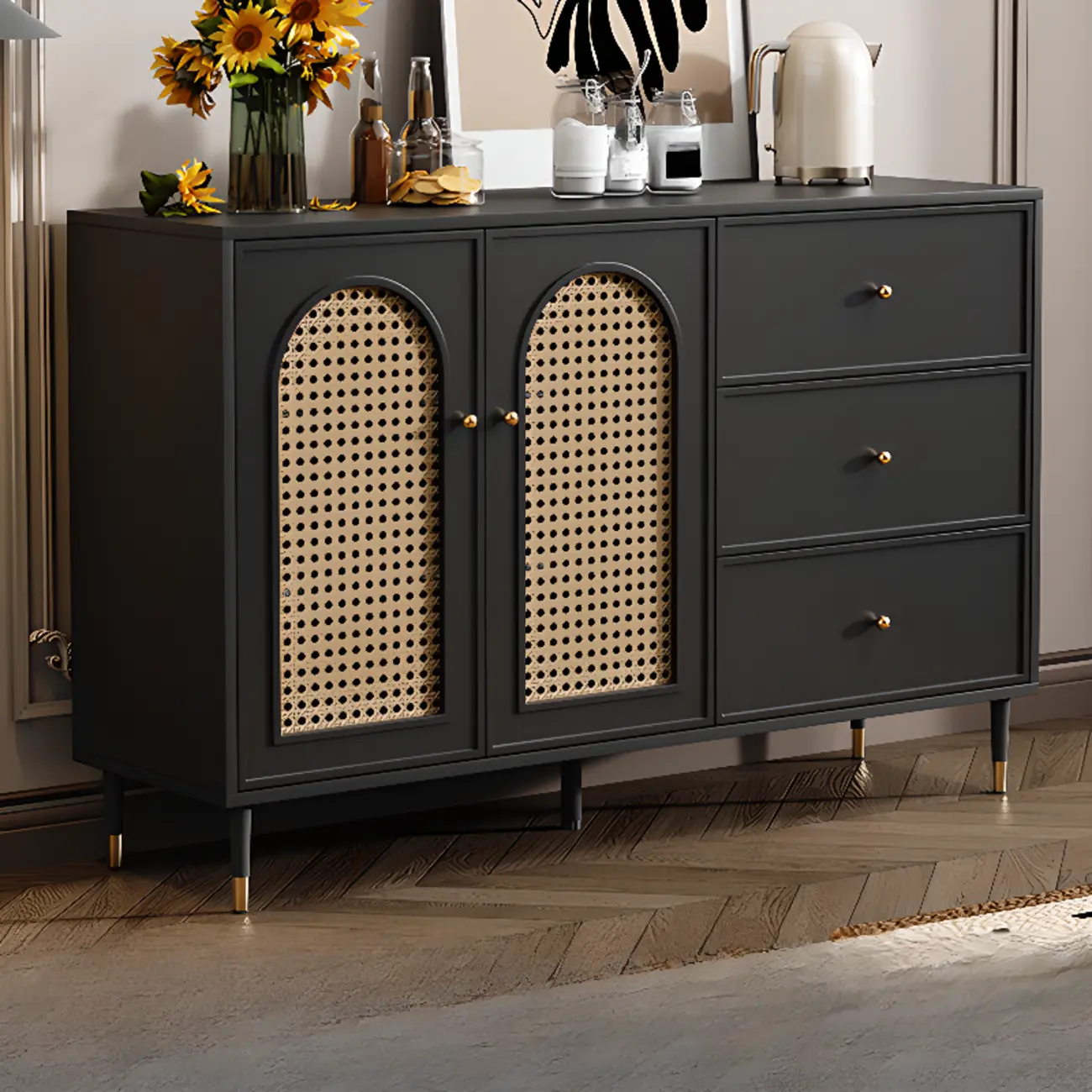
A black sideboard is popular in homes. It creates a point and looks good with neutral colours and modern decor.
When choosing a style, I think about how the sideboard will interact with nearby furniture rather than viewing it as a sole piece.
Choosing a Sideboard for Different Spaces
1. Dining Room Sideboard
A dining room sideboard should support how you use your dining space.
For everyday family meals, please think of the storage capacity. You should look for a dining room sideboard with multiple cabinets and drawers. It can hold dishes, glassware, table linens, and serving accessories.
If you often host dinner parties, a larger buffet sideboard can provide serving space. A wide tabletop allows you to display food and drinks while keeping the dining table clear.
Want your sideboard to contribute to the room's decor? You can consider a design that combines hidden storage with shelves or display sections. This allows you to showcase your things while keeping the room tidy.
A dining room sideboard should do more than look good. It should provide practical storage for everyday essentials while making it easier to host family meals and entertain guests.
2. Living Room Sideboard
Living room baseboards often serve a completely different purpose from dining room baseboards.
If your main use is reducing clutter, you can choose a sideboard cabinet with enclosed compartments. I think this design is ideal for storing books, games, electronics and other things that can make a room look messy.
Enjoy decorating? Please consider a sideboard that combines storage with shelving. The shelves can display your things while the cabinets hide things you do not want to see.
What if you use the sideboard as an alternative to a TV stand? A low-profile design that's wider than your TV is the best choice. You can look for models with compartments that can accommodate gaming consoles, streaming devices and media accessories.
A black sideboard is effective in living rooms. It creates an elegant focal point while blending naturally with entertainment setups and contemporary furniture.
The best living room sideboard balances storage, display opportunities, and visual appeal based on how you use the room.

3. Popular Sideboard Styles
You Can Consider The style of your sideboard should reflect both your personal taste and the overall design of your home.
Popular options include:
- Black sideboard for modern and contemporary interiors
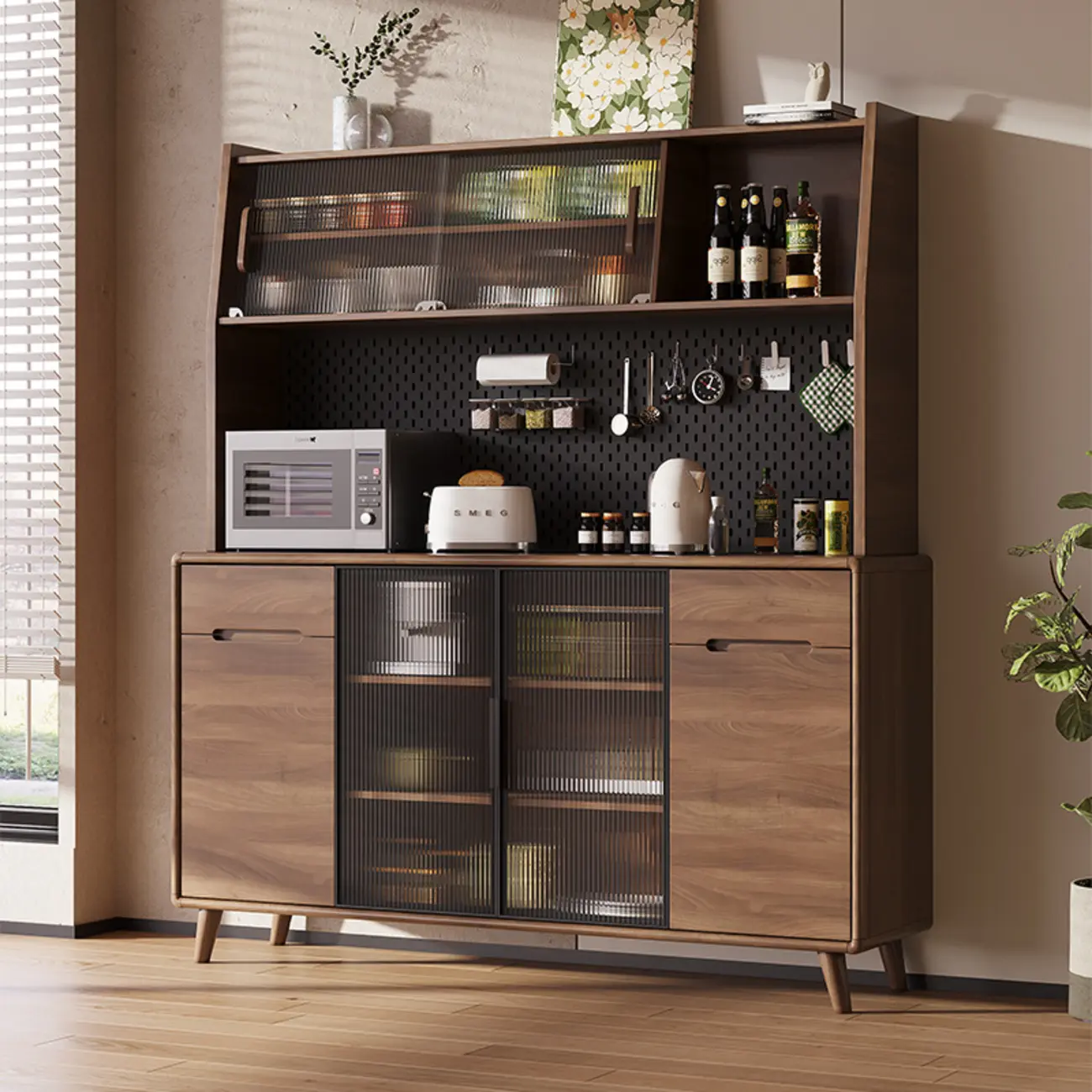
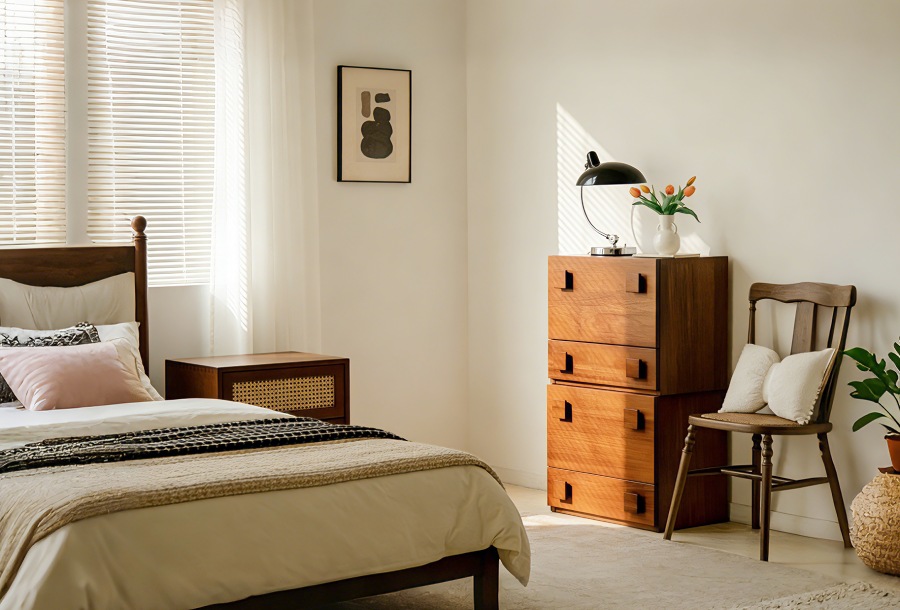
- Wooden buffet sideboard for warm and timeless appeal
- Minimalist sideboard cabinet with clean lines and practical storage
- Industrial sideboards featuring metal accents and textured finishes
- Scandinavian-inspired designs that emphasise simplicity and usability
You can choose a style that complements your existing furniture. This will help create a cohesive and well-balanced space.
Common Sideboard Mistakes to Avoid
Even a beautiful sideboard can become a poor investment if it doesn't fit your needs.
Buying Based on Appearance Alone
A stylish sideboard may look great online, but if it lacks the storage you need, it may quickly become frustrating to use.
Ignoring the Internal Layout
Two sideboards can be the same size. They offer different storage experiences. I think you could always check the number of drawers, shelves, and cabinet compartments.
Choosing the Wrong Height
A sideboard that is too tall or too low can feel awkward within the room. I advise you to consider the height of nearby furniture to maintain visual balance.
Forgetting the Room's Function
A dining room sideboard should focus on dinnerware storage and serving space. At the same time, a living room sideboard should focus more on media storage and decorative display. Choosing the right design for the intended room is necessary.
How Homeyfad Sideboards Stand Out
For shoppers who look for a balance of style and usability, Homeyfad offers a diverse collection of buffets and sideboards. They designed them for modern living. Their selection makes it easy to find a piece that suits both your storage needs and inner style.
Whether you prefer the warmth of natural wood, the sophistication of black finishes, or contemporary designs with metal accents and curved details, Homeyfad offers options that work well in dining rooms, living rooms, entryways, and open-concept spaces. Many designs combine concealed storage with display areas. They help homeowners organise dinnerware, linens, glassware, and decorative accents in one place.
Beyond product variety, Homeyfad also provides free shipping, order tracking, and a 30-day return policy for acceptable, unused items. It allows customers to shop with greater confidence. It often processes the orders within 5–7 business days, with expedited shipping options available for many locations.
Browse the complete collection here: Buffets & Sideboards Collection
Conclusion
Choosing a sideboard usually comes down to more than just how it looks. It has to actually work in your space—giving you enough storage and fitting into how you live day to day.
A good way to start is simply thinking about where you’ll put it and what you’ll use it for. From my perspective, it’s about how much storage you need, the space you’re working with, and what kind of style feels right in your home.
Maybe you want a buffet sideboard for when you have guests over, something practical for keeping your dining area in order, or a cabinet in the living room to tuck things away neatly. In the end, it’s less about following rules and more about finding a piece that feels like it belongs in your space.


--35.jpg?w=1000&h=550)
--10.jpg?w=828&h=612)

 Add Us On Google