

--32.jpg?w=900&h=506)
When choosing entryway shoe storage, how can you select one that suits the number of people,
space, and other factors? Considering the dimensions is crucial.
No matter what design of shoe storage you need, we can assist you in selecting the perfect entryway shoe storage!
Standard Entryway Shoe Storage Dimensions
Before choosing a shoe cabinet or rack, it helps to understand the typical dimensions used in entryway furniture.
Most shoe storage furniture follows similar size ranges to fit standard shoe sizes and home layouts.
| Furniture Type | Depth | Width | Height |
|---|---|---|---|
| Shoe Cabinet | 12–16 inches | 24–48 inches | 30–60 inches |
| Shoe Bench | 16–20 inches | 30–60 inches | 18–20 inches |
| Shoe Rack | 10–14 inches | 20–36 inches | 24–60 inches |
| Hall Tree | 16–20 inches | 30–48 inches | 65–75 inches |
These dimensions are designed to accommodate most adult shoes while maintaining comfortable walking space in an entryway.
Shoe Storage Dimensions by 5 Furniture Type
Different shoe cabinet designs have different size requirements. Below are five of the most common types used in the entryway.
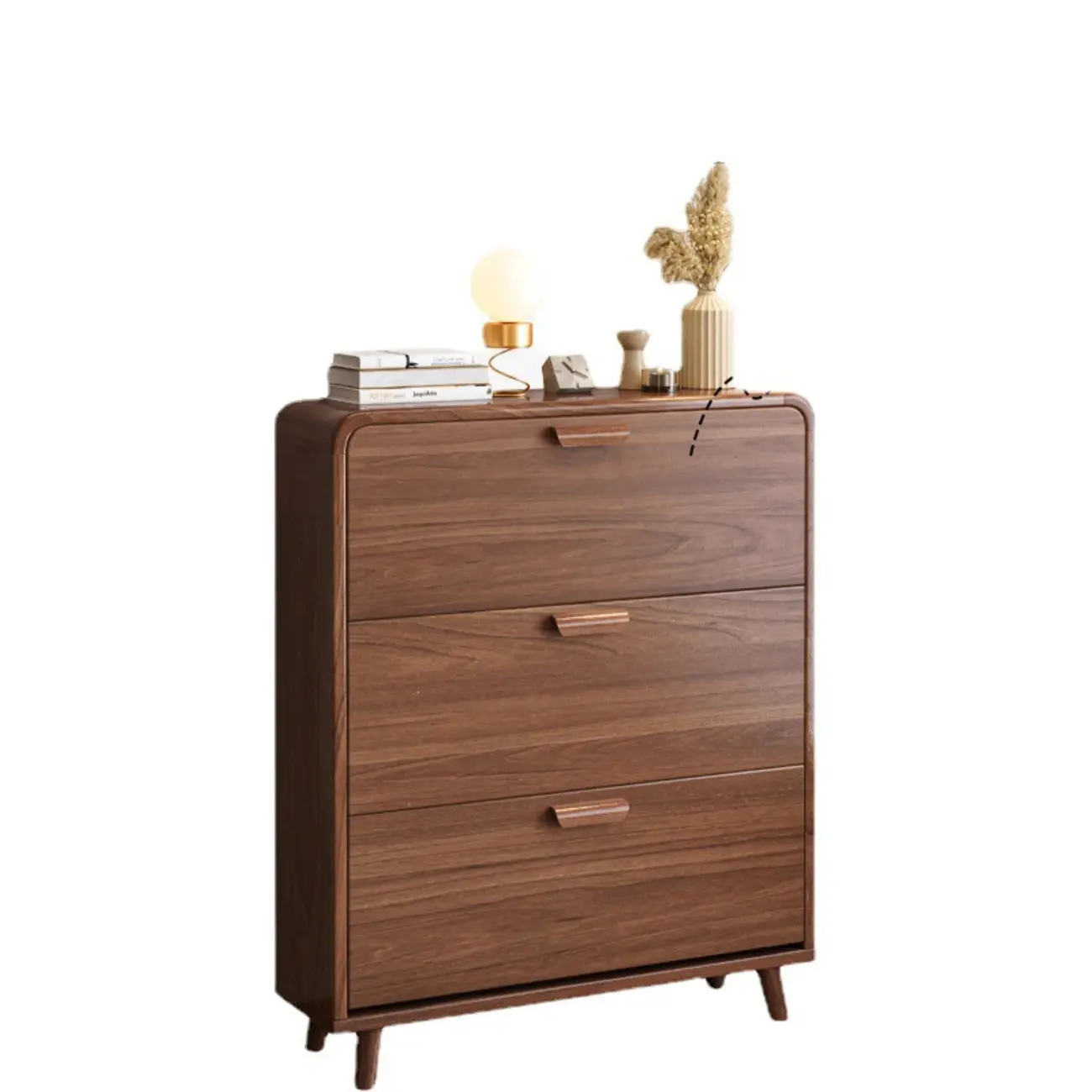
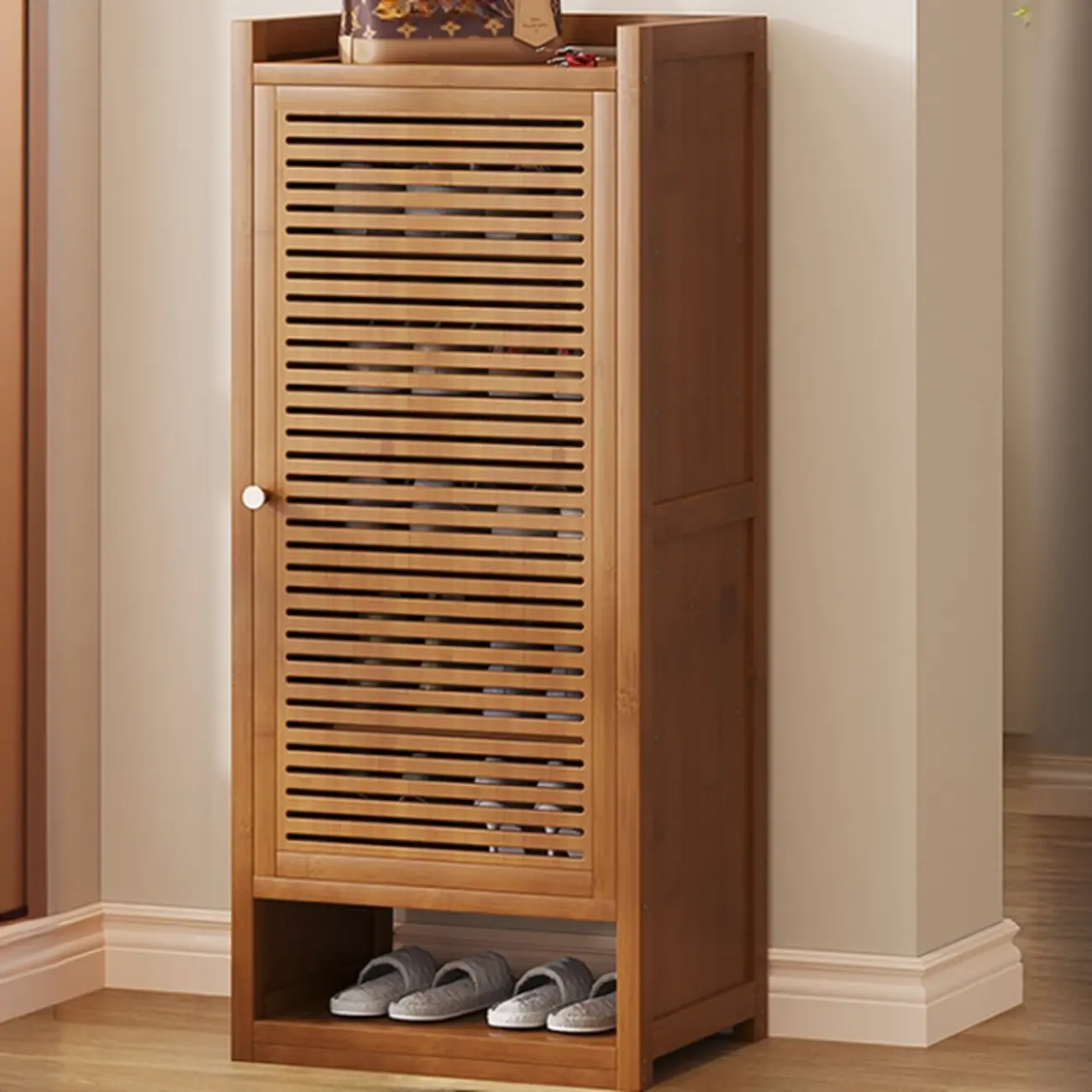
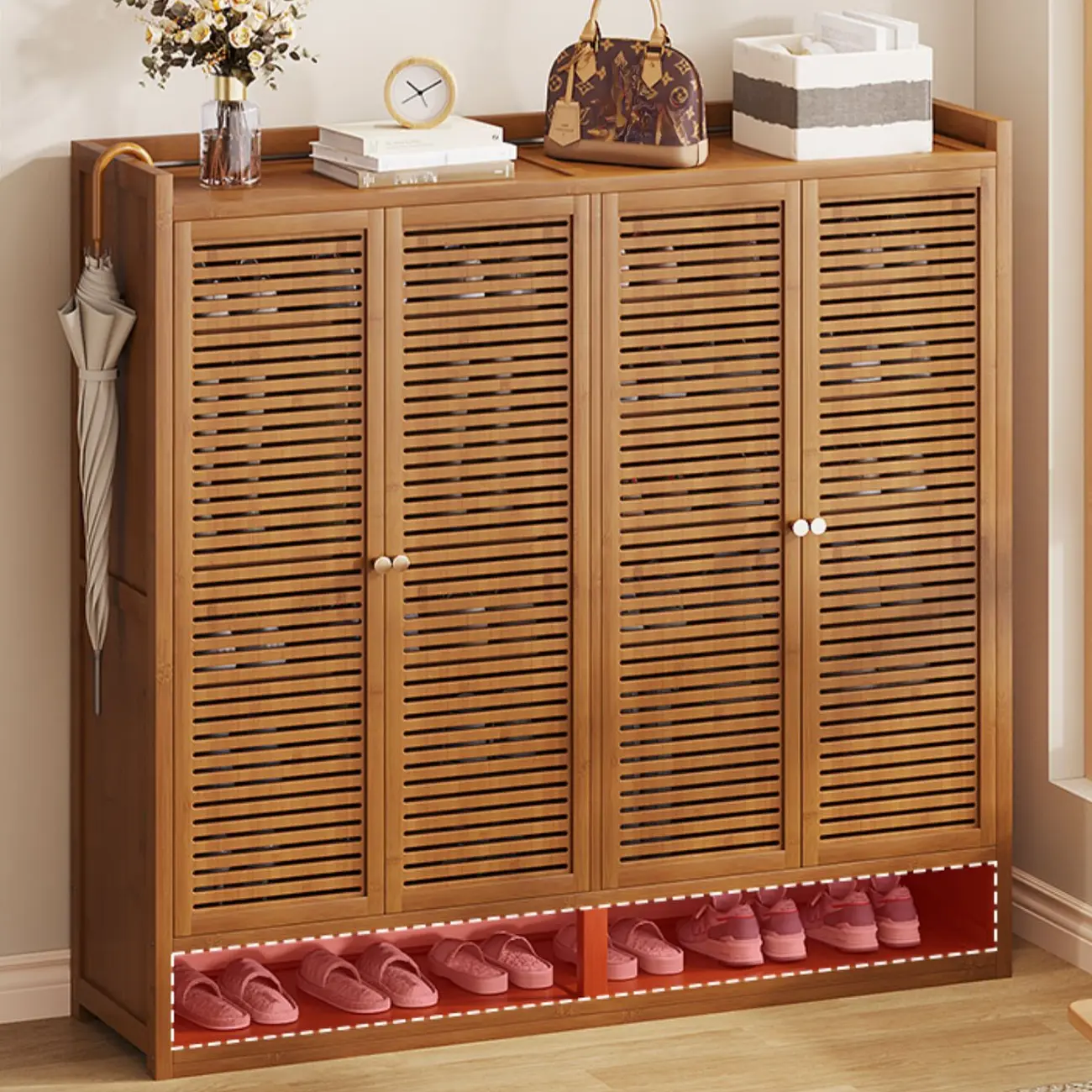
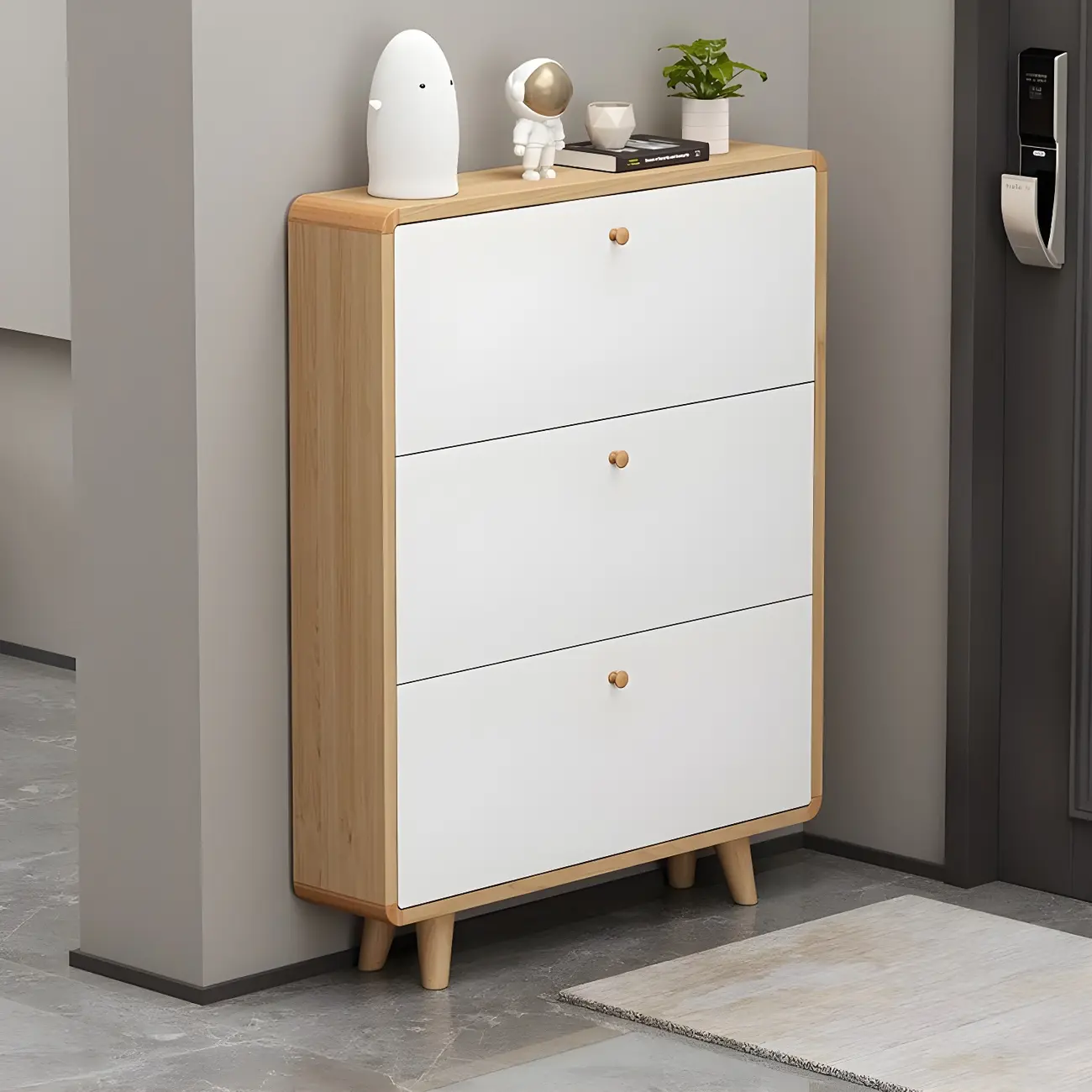
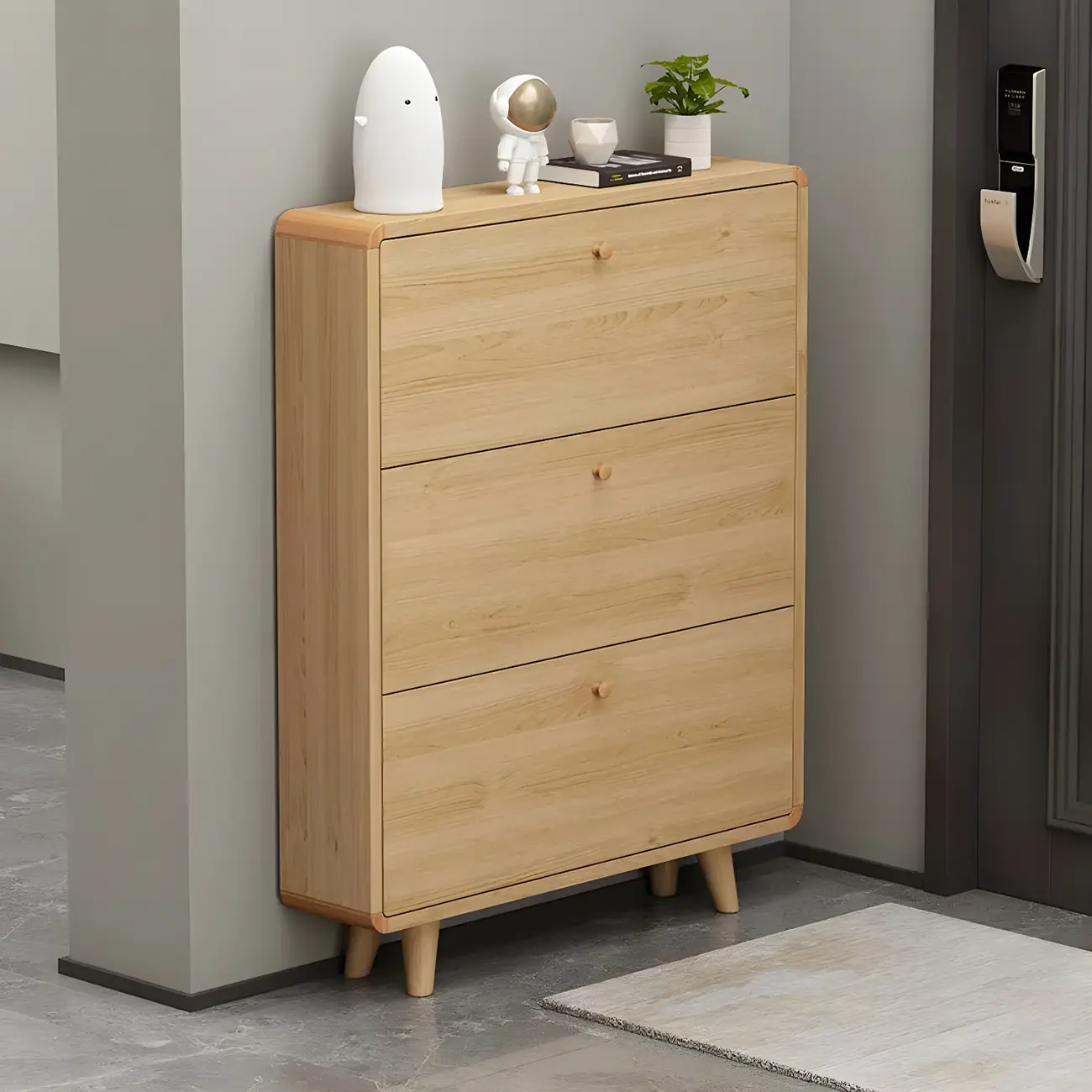
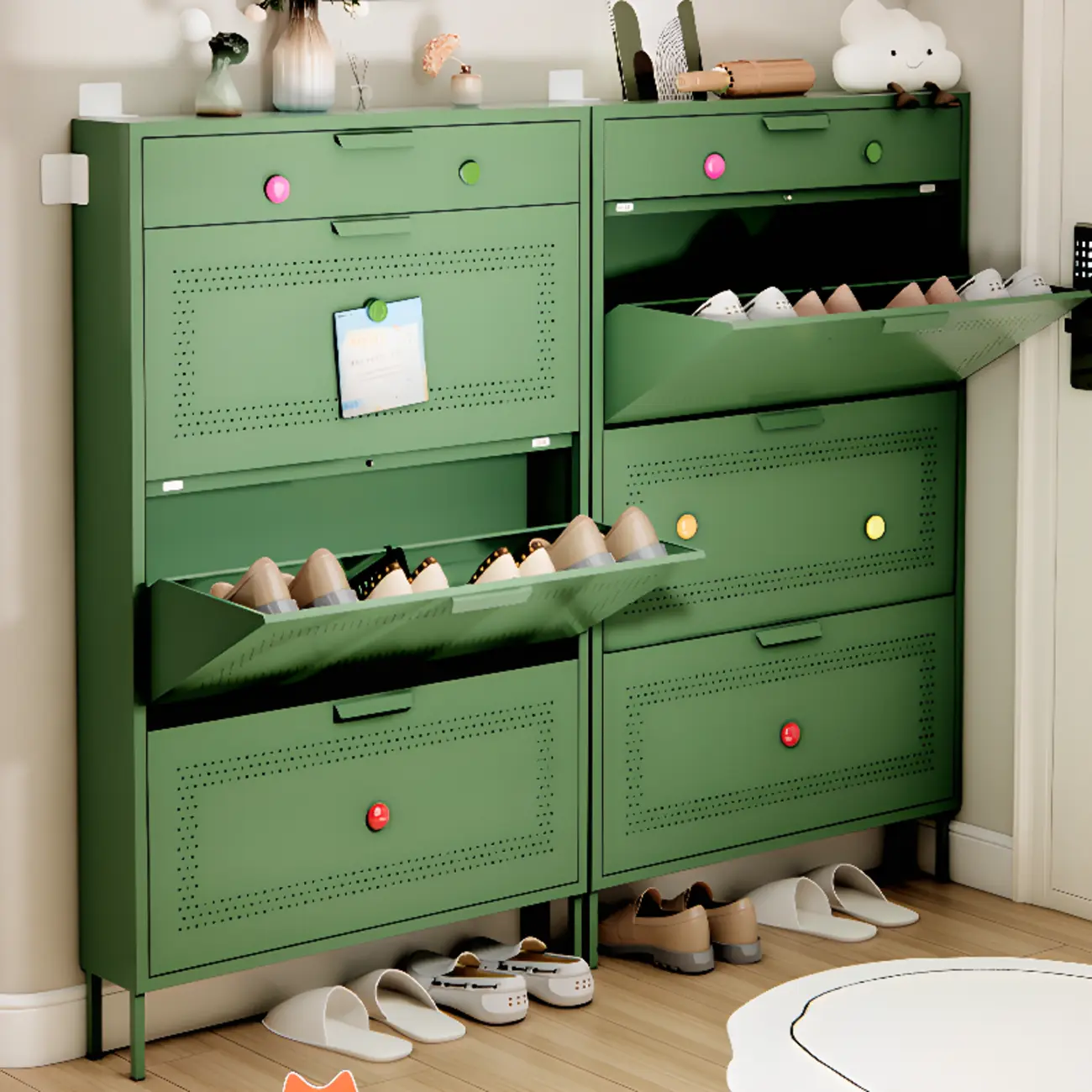
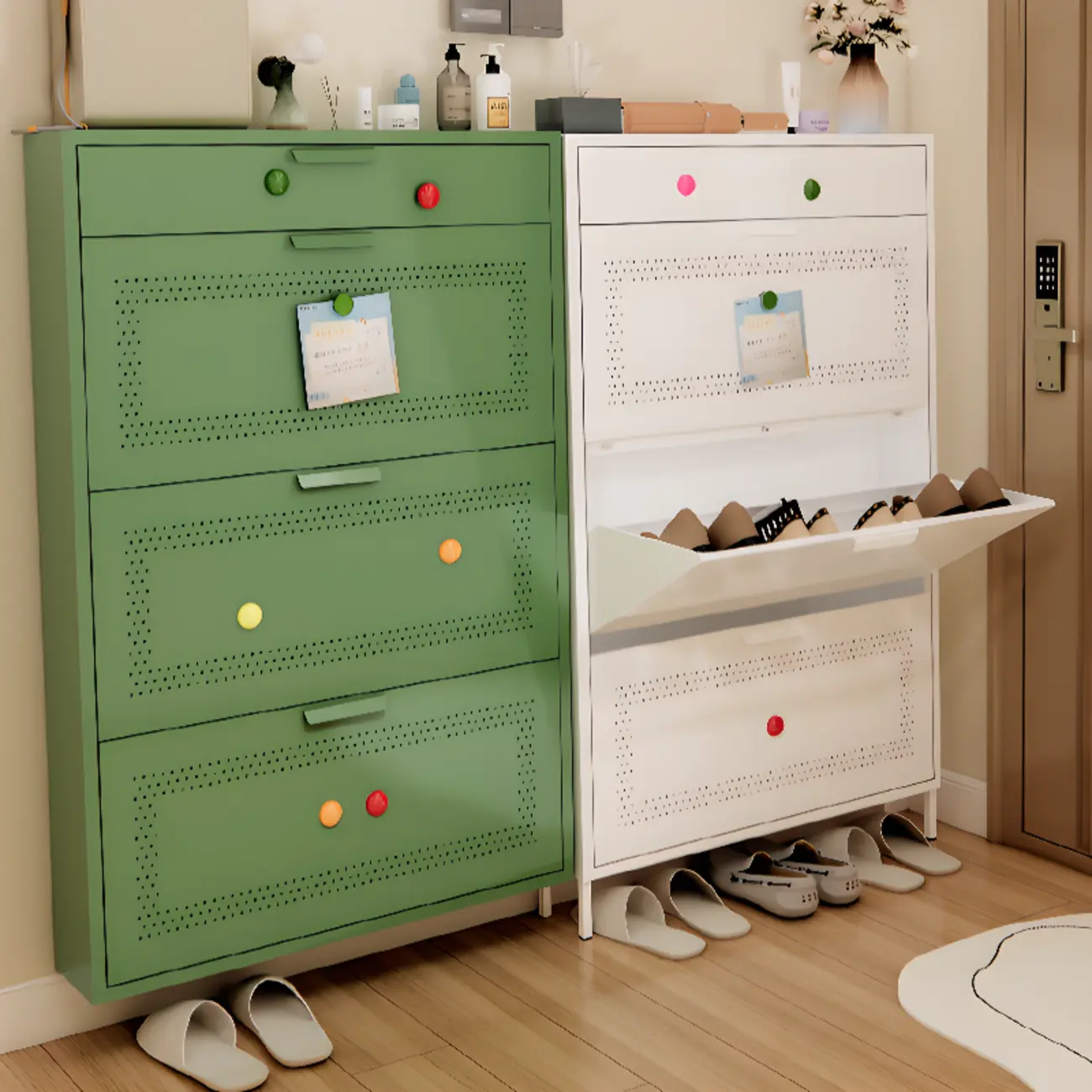
1) Shoe Cabinet
A shoe cabinet is a vertical storage unit with doors. It is dustproof and clean, making it appropriate for modern houses. It is ideal for families with plenty of entrance space and a preference for tidy storage. Choose a shoe cabinet with adjustable shelves so it can accommodate different shoe shapes.
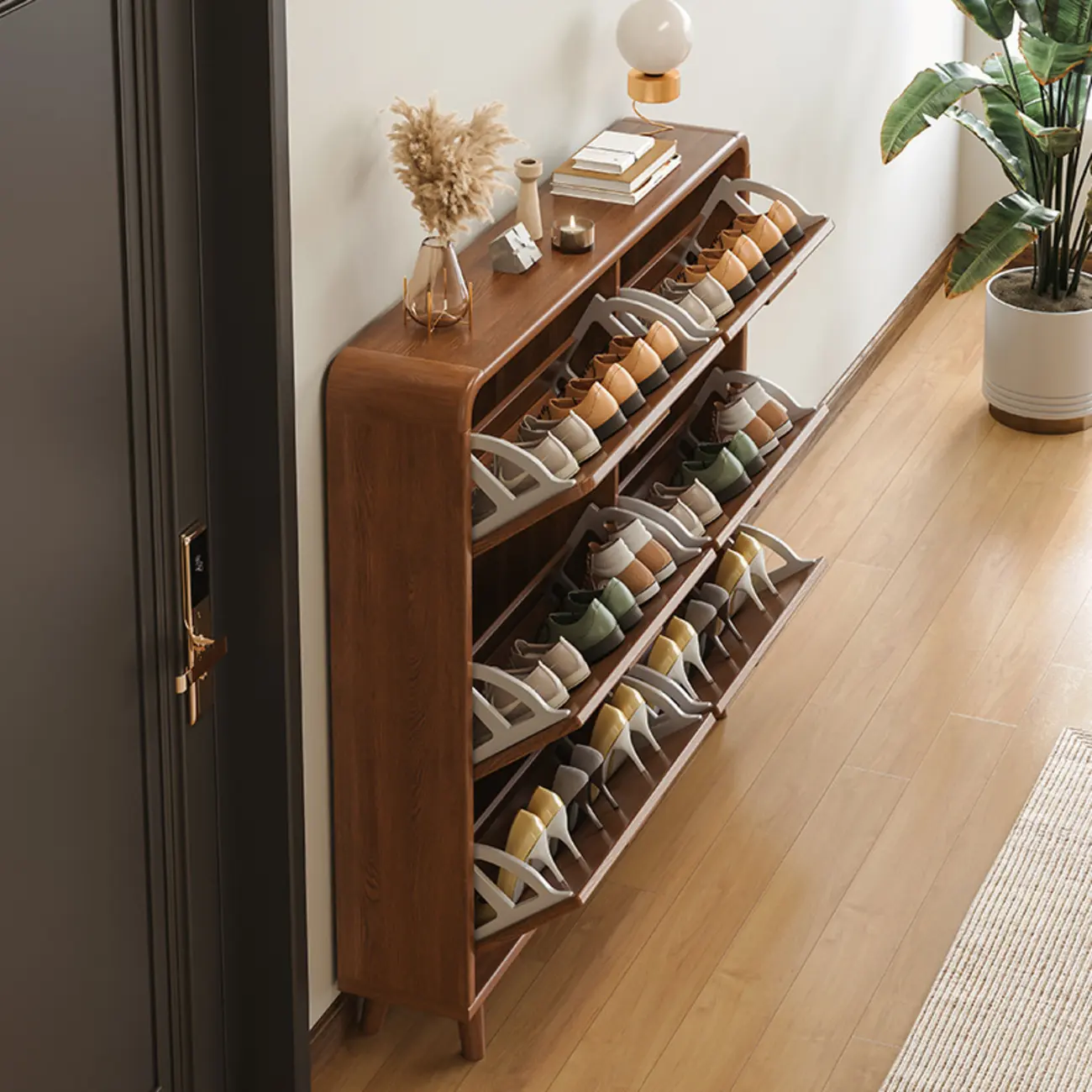
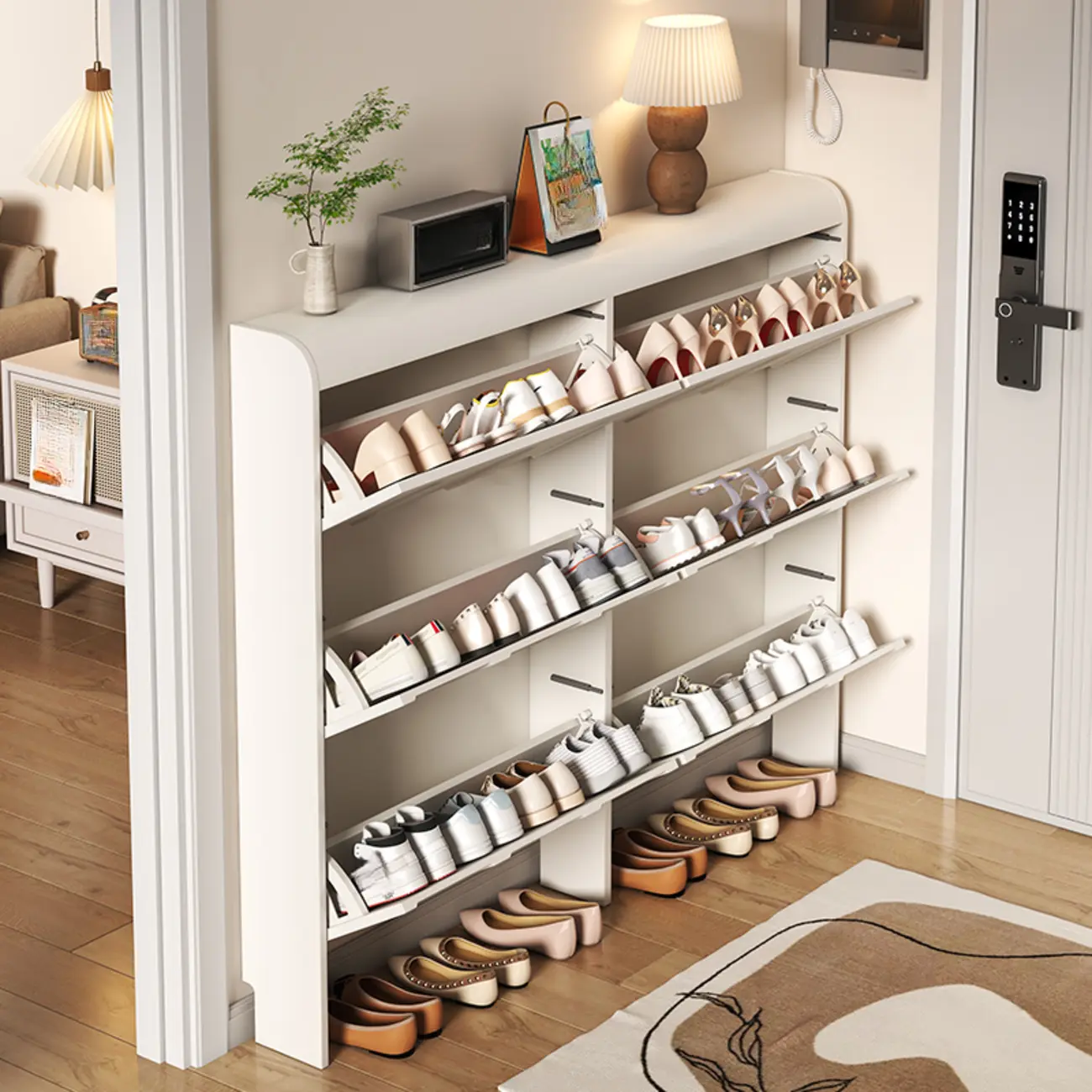
Explore More Shoe Cabinet Designs
Standard Dimensions:
Height: 30–60 inches.
Width: 24–48 inches (single-door: 24–30 inches, double-door: 36–48 inches).
Depth: 12-16 inches
Capacity:
24-inch width: 12-15 pairs.
36-inch width: 18-24 pairs.
48-inch width: 30-40 pairs.
2) Shoe Rack
Shoe racks have better ventilation than other shoe storage because they do not have a door. Common designs include tilted and multi-tiered vertical structures. Shoe racks are perfect for temporary storage, small entryways, and regions with high ventilation needs.
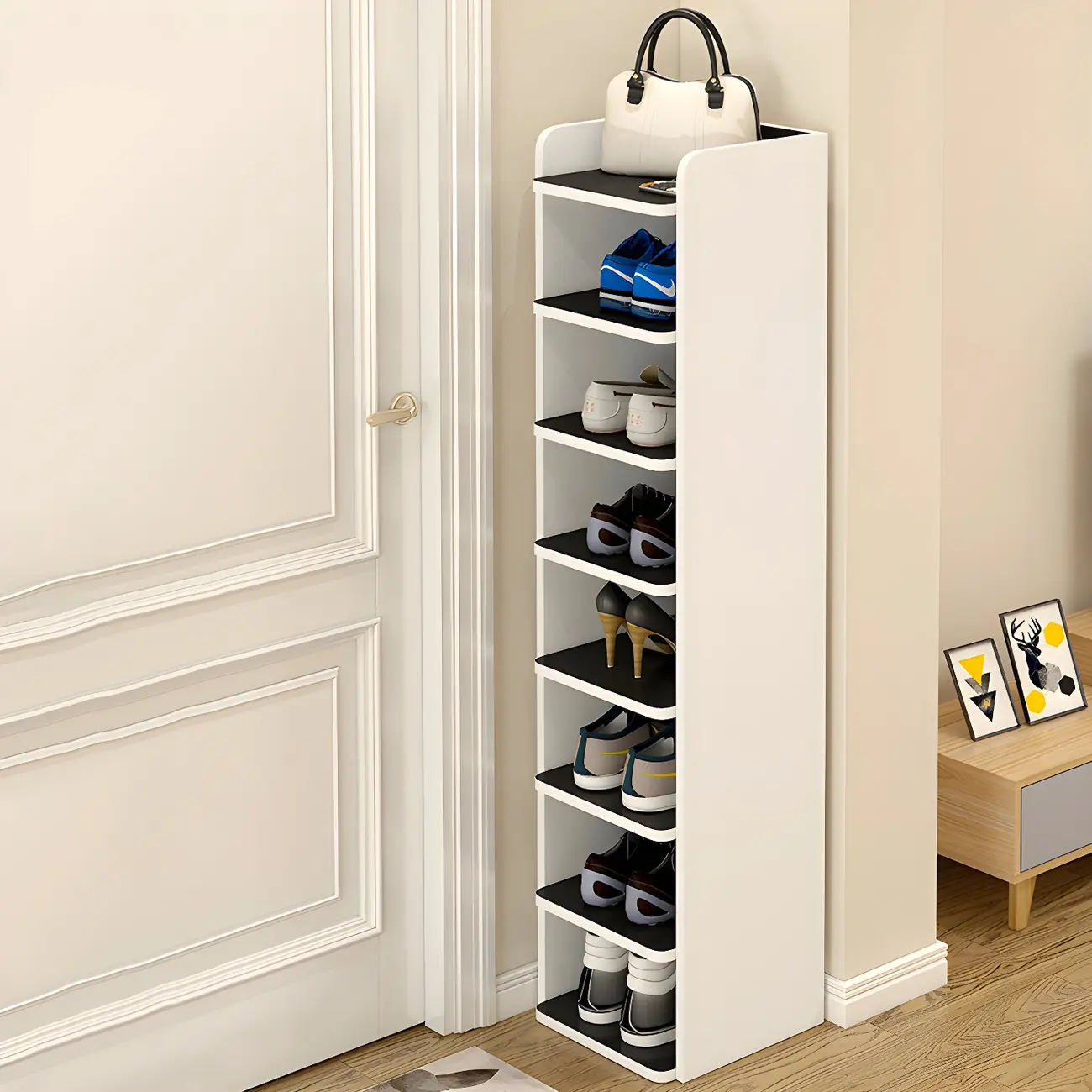
Standard Dimensions:
Height range: 24-60 inches (4-10 levels).
Width: 20-36 inches.
Depth: 10-12 inches.
You might be interested in:
Shoe Rack vs. Shoe Cabinet: Which Is Ideal for Your Space?
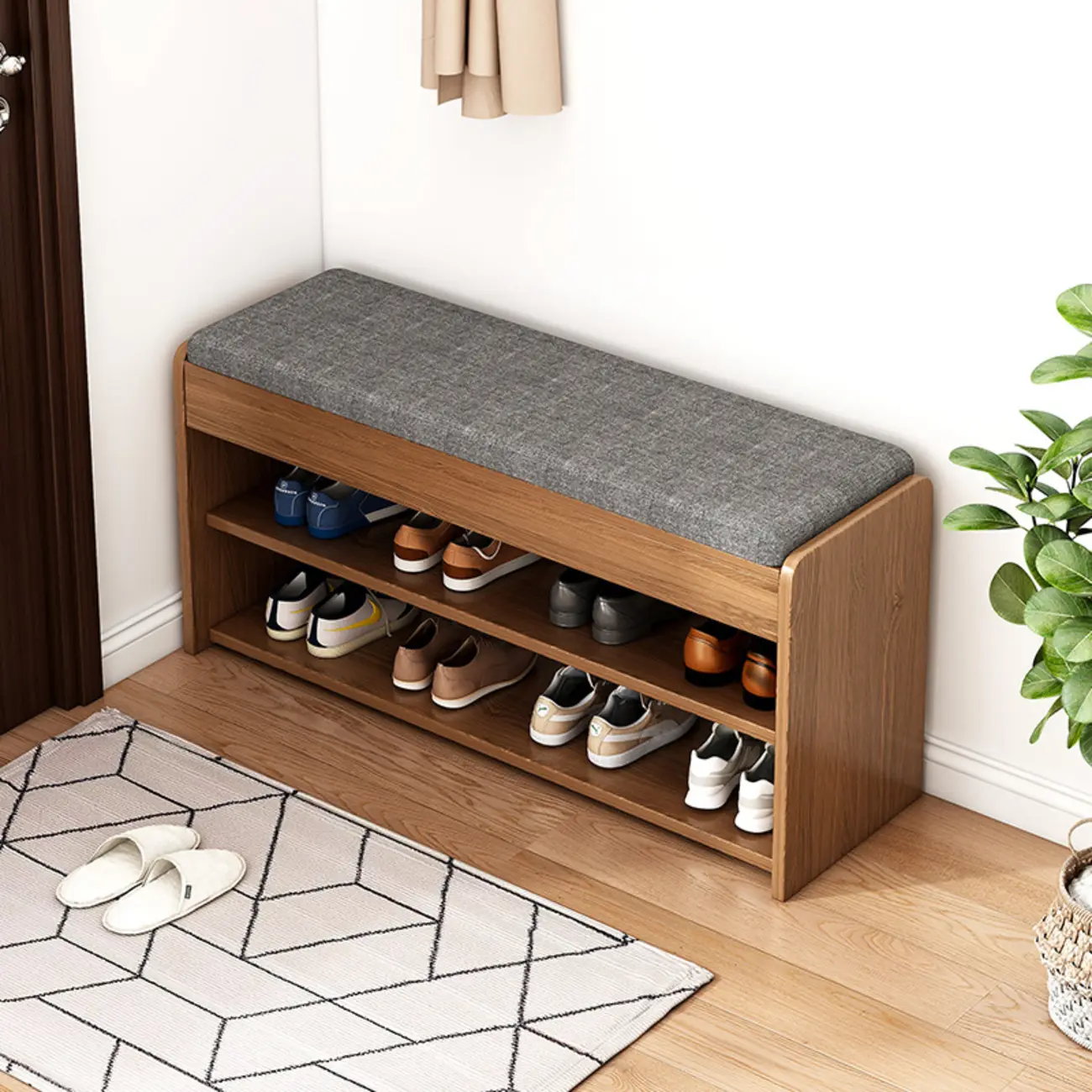
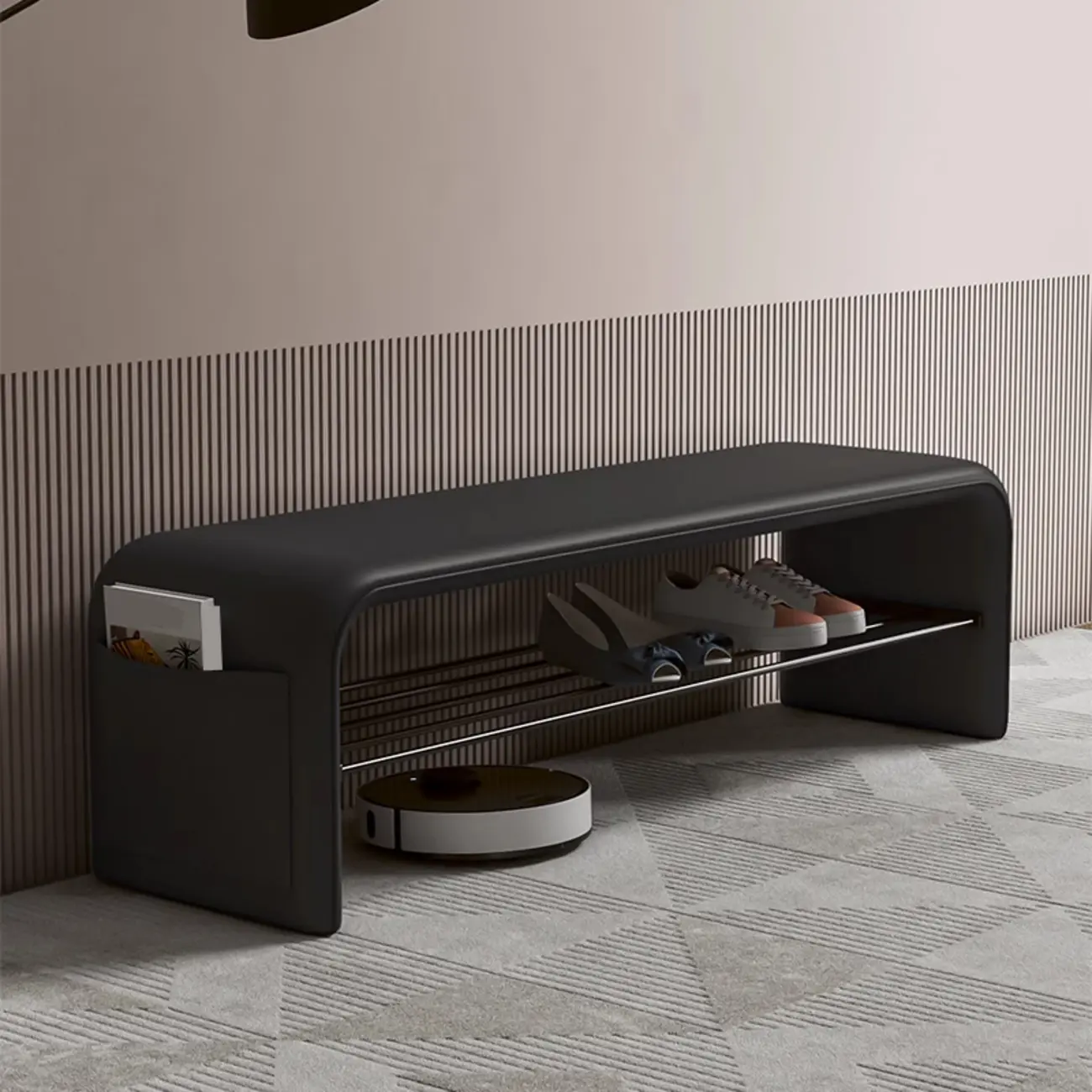
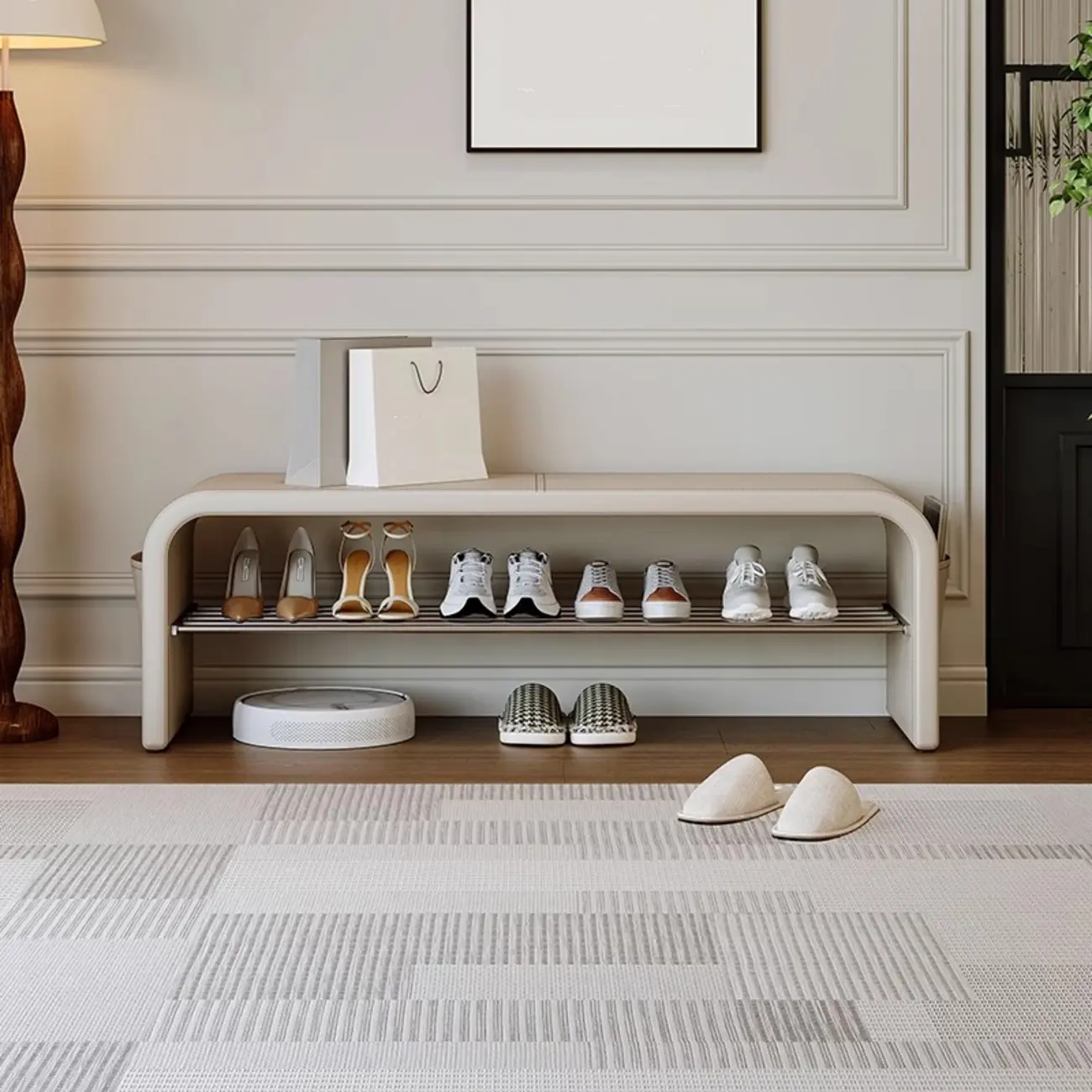
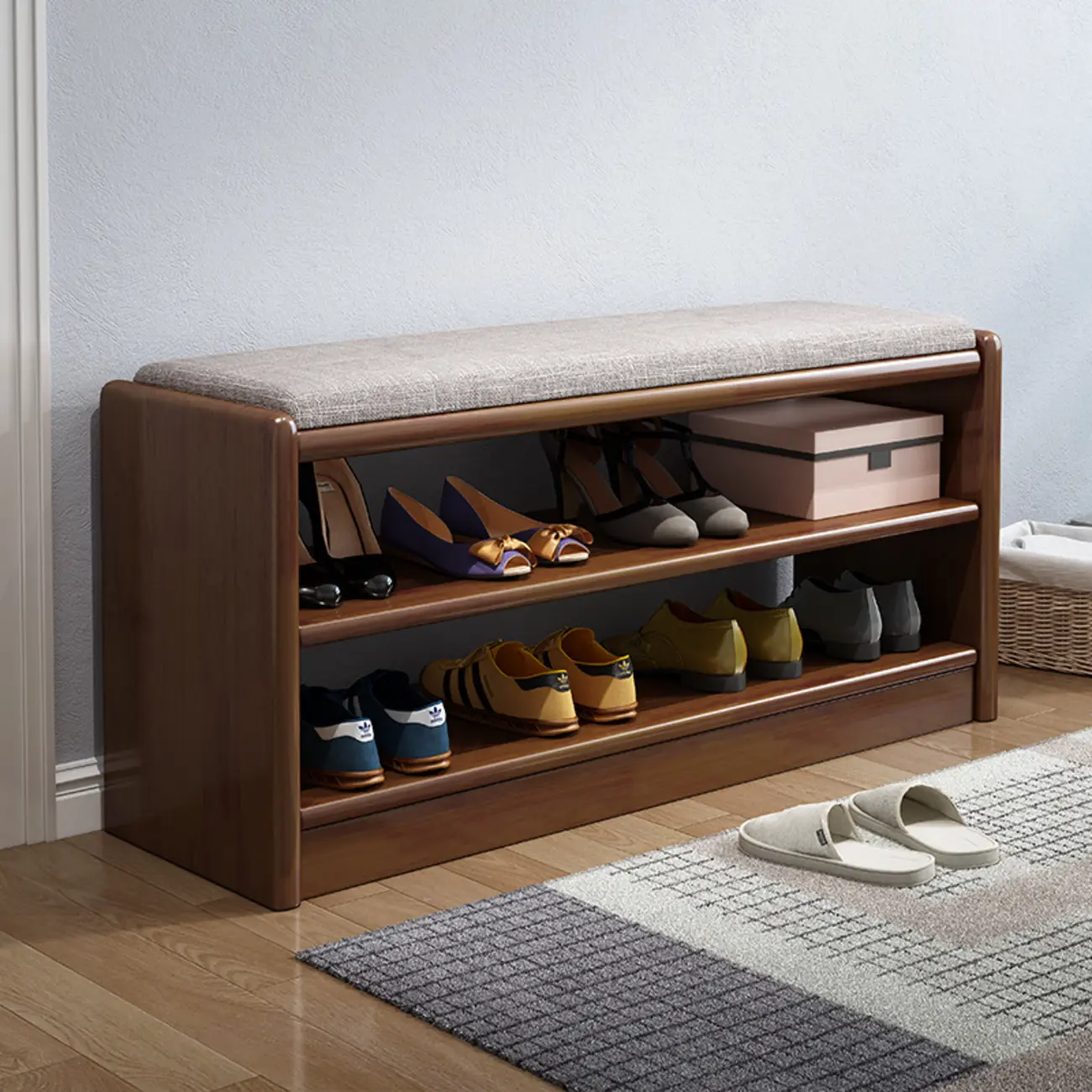
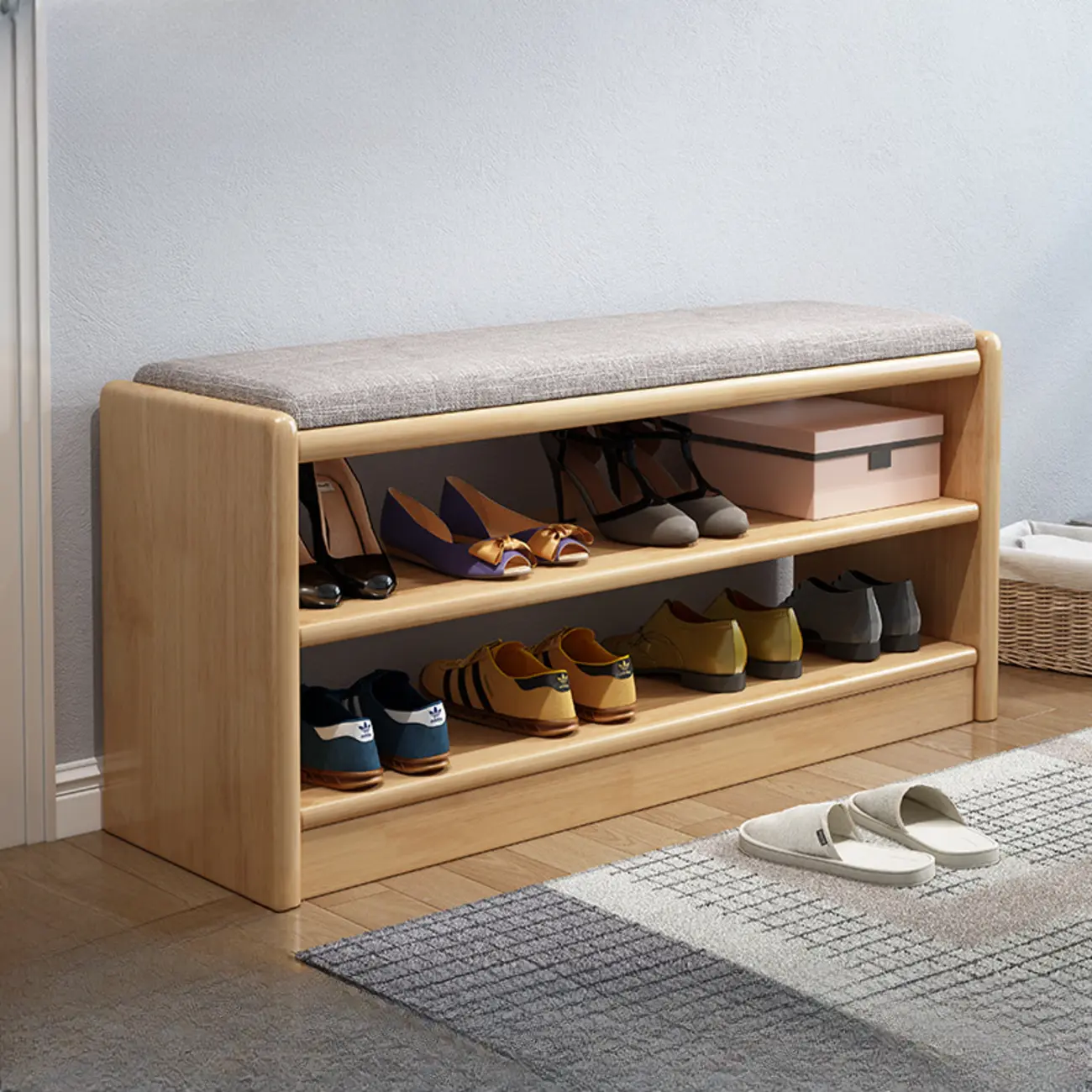
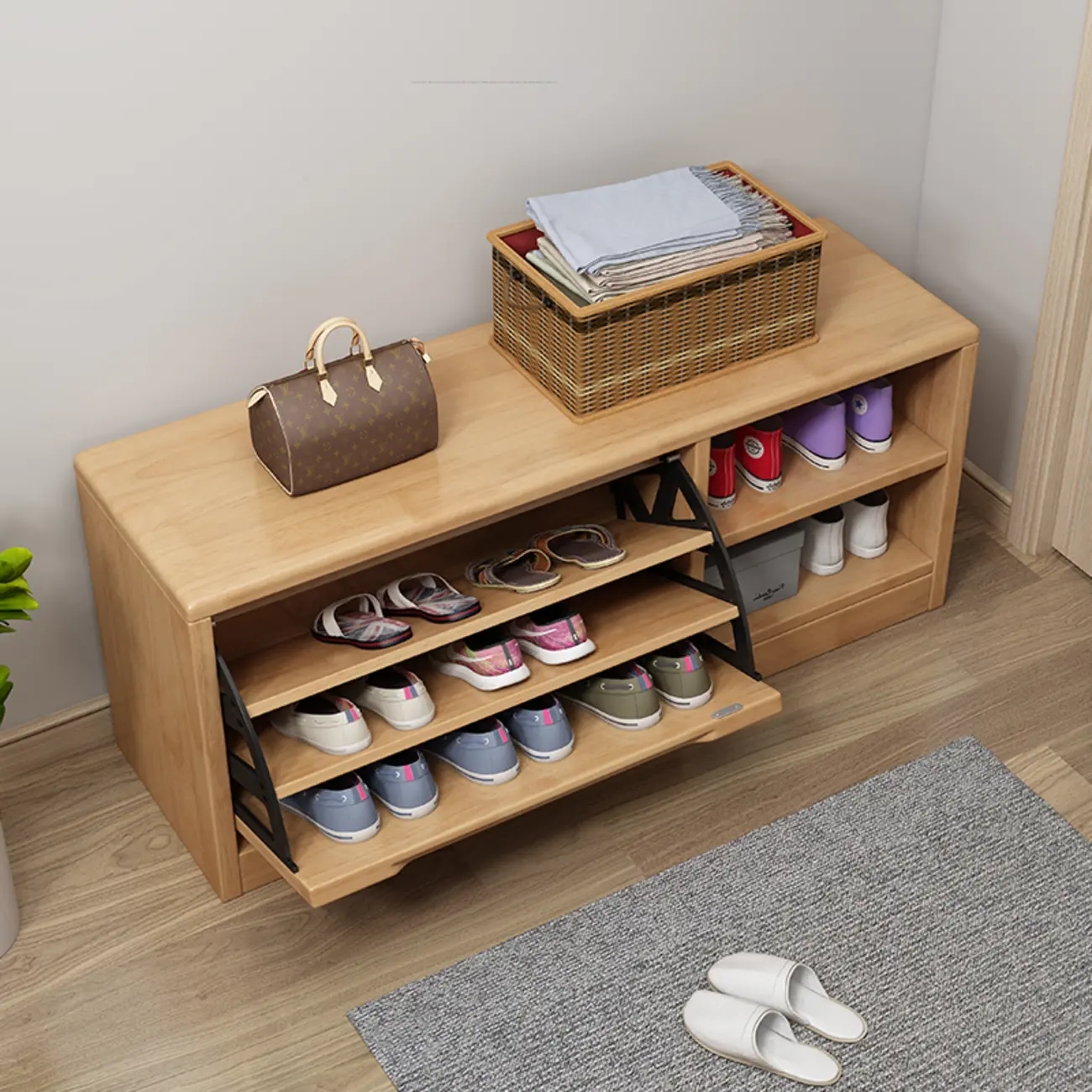
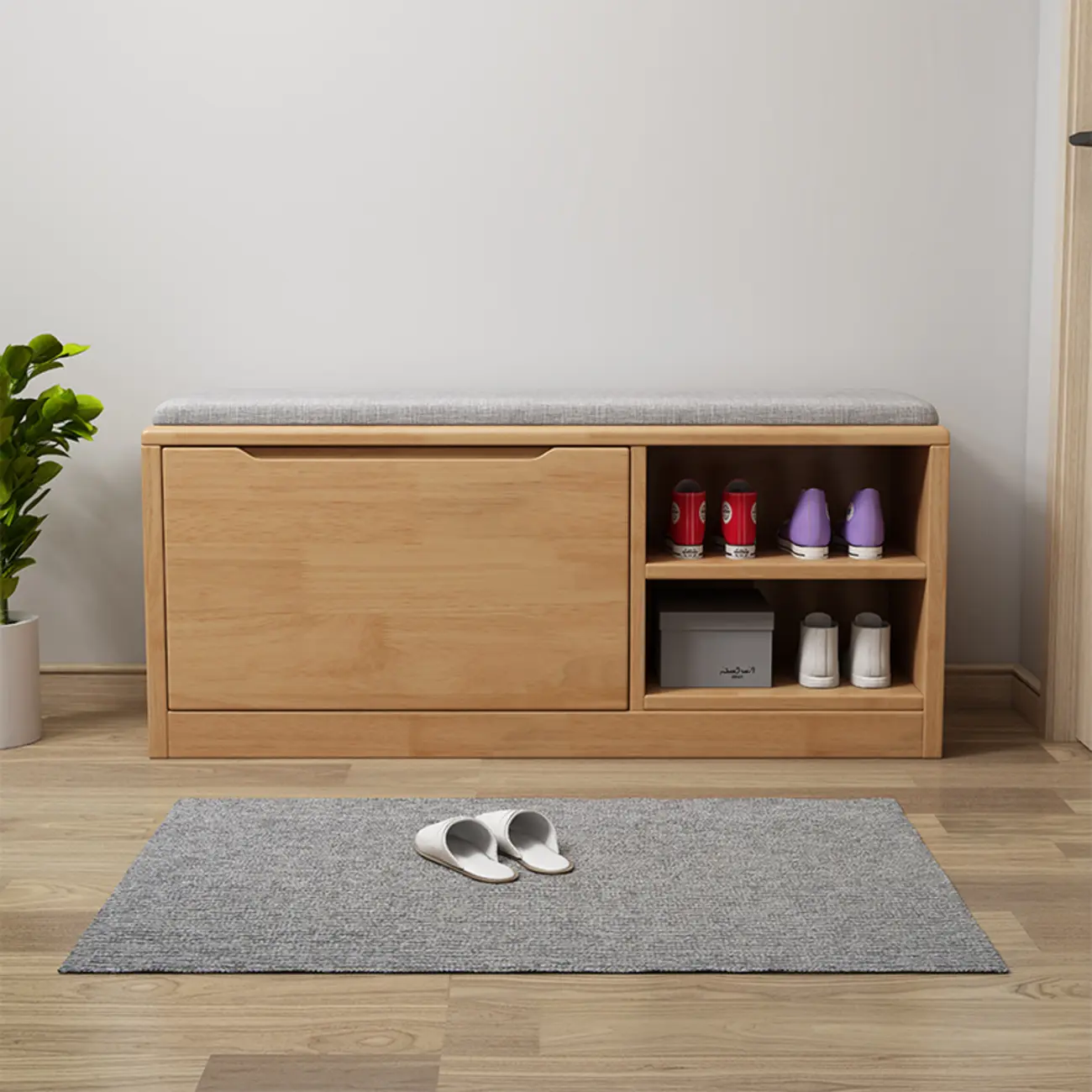
3) Shoe Bench
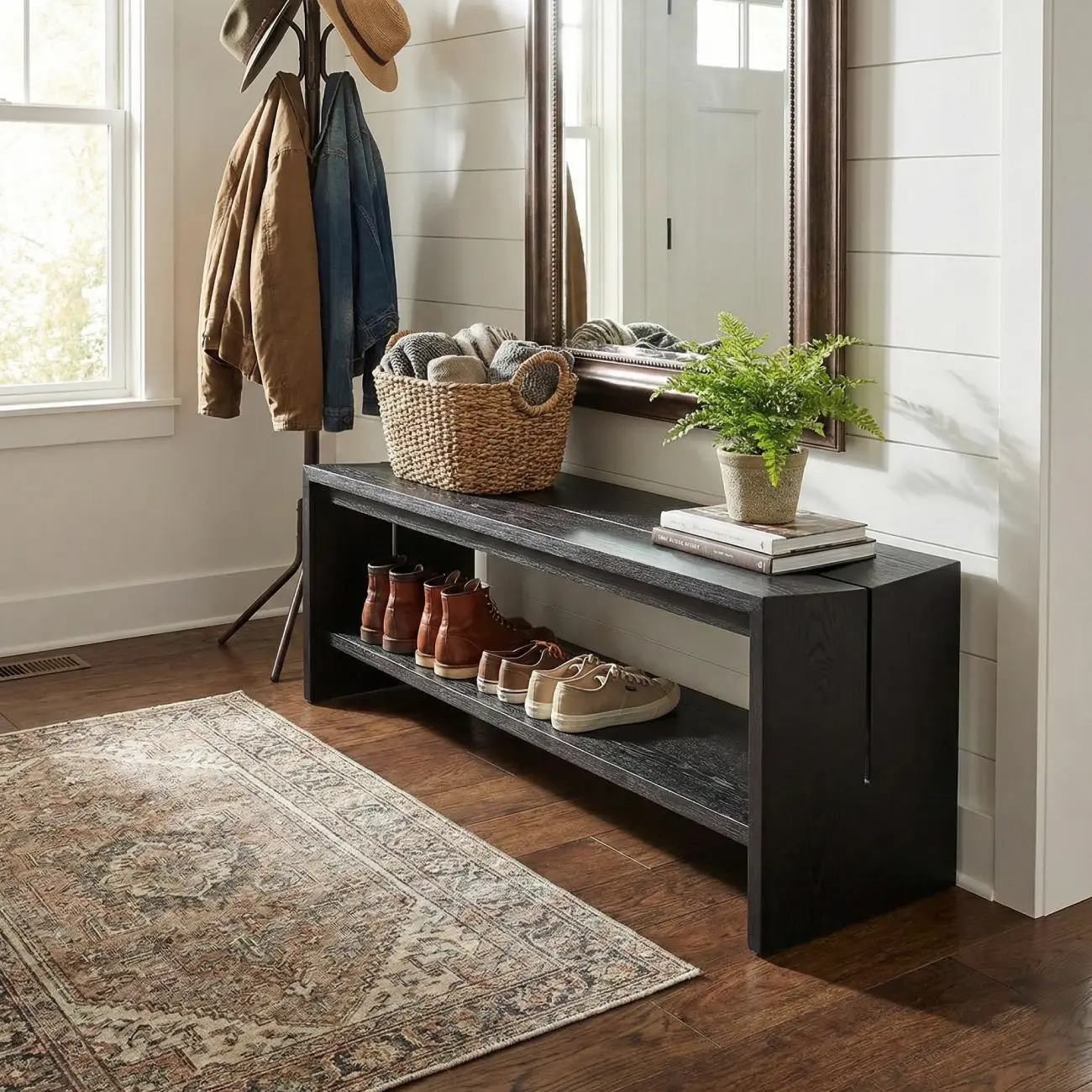
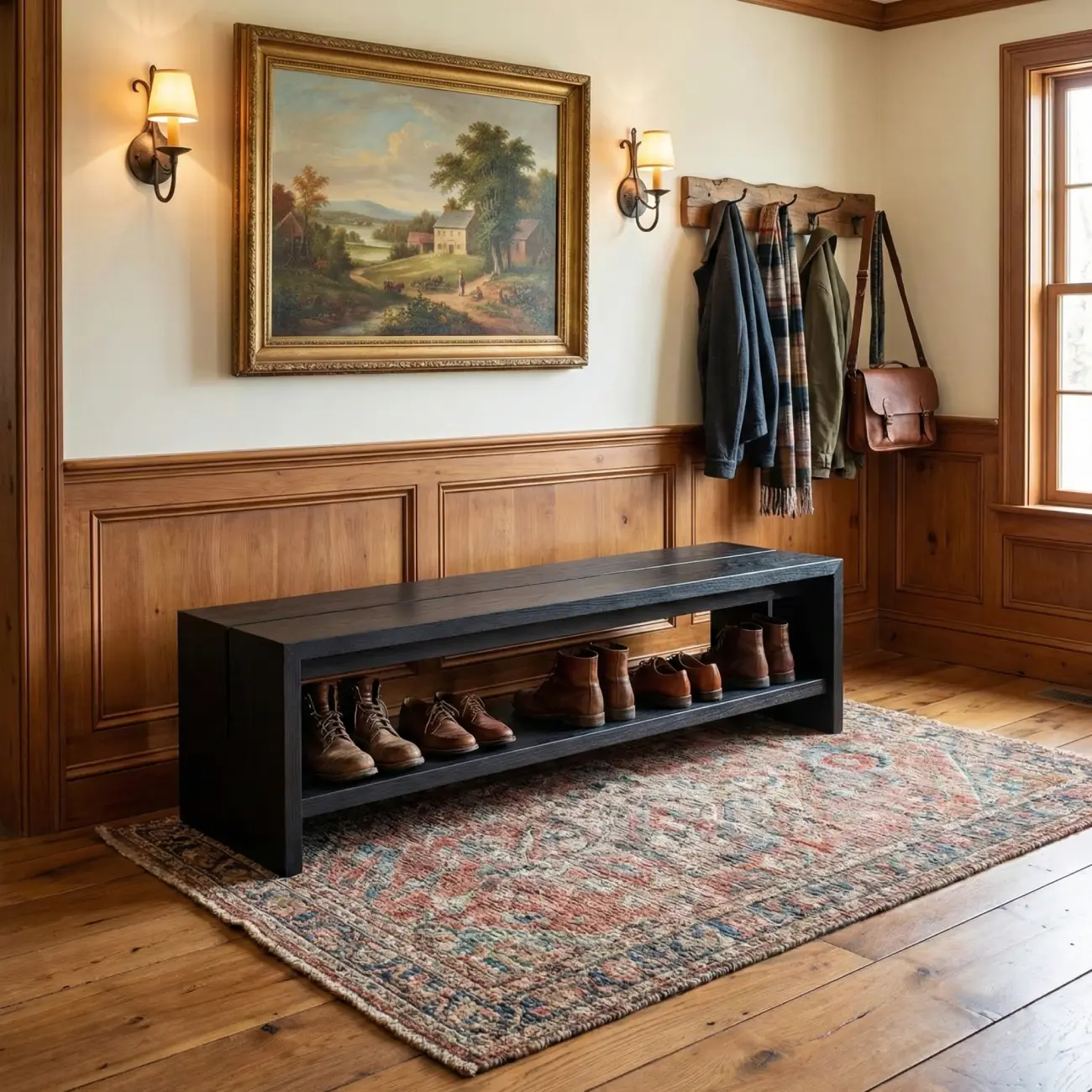
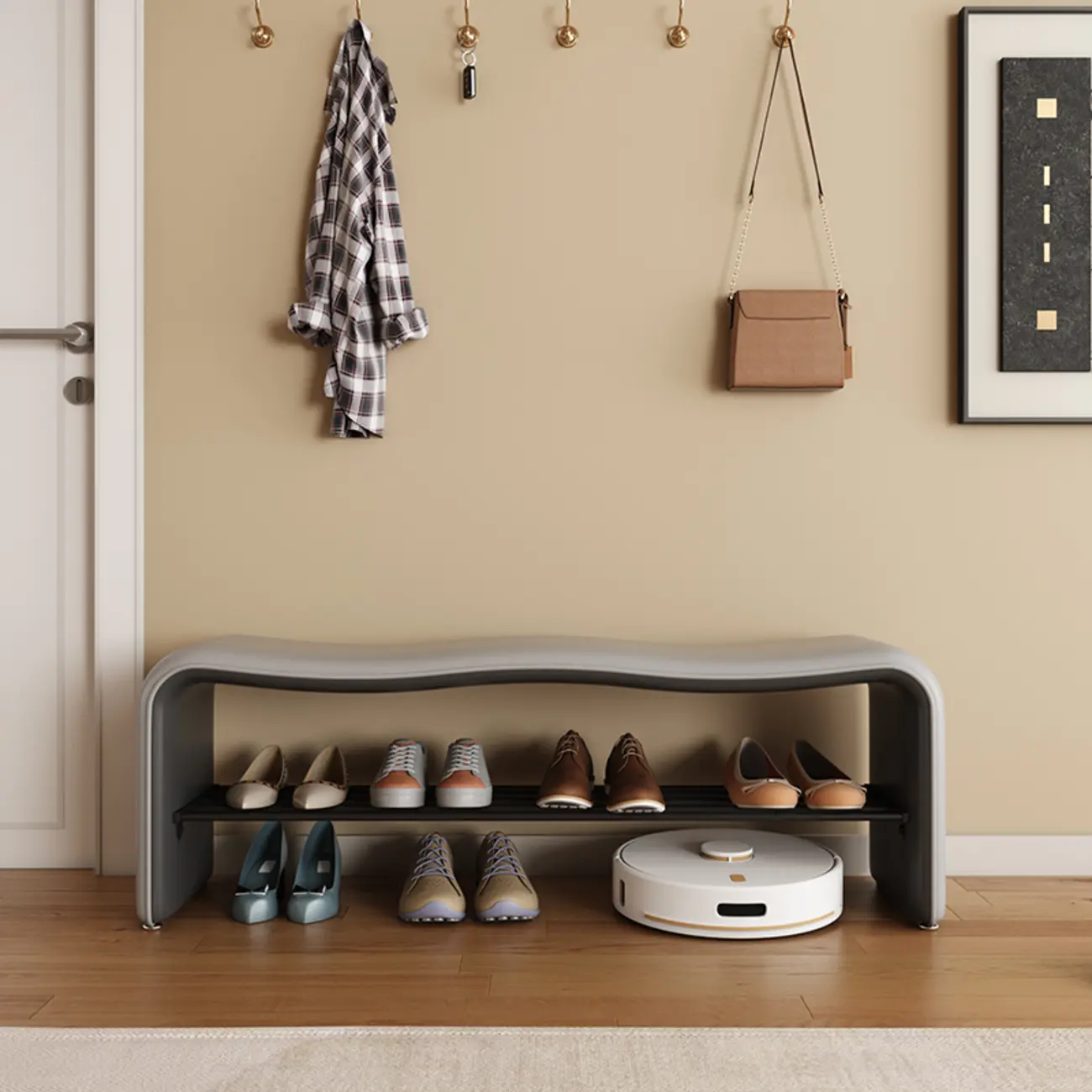
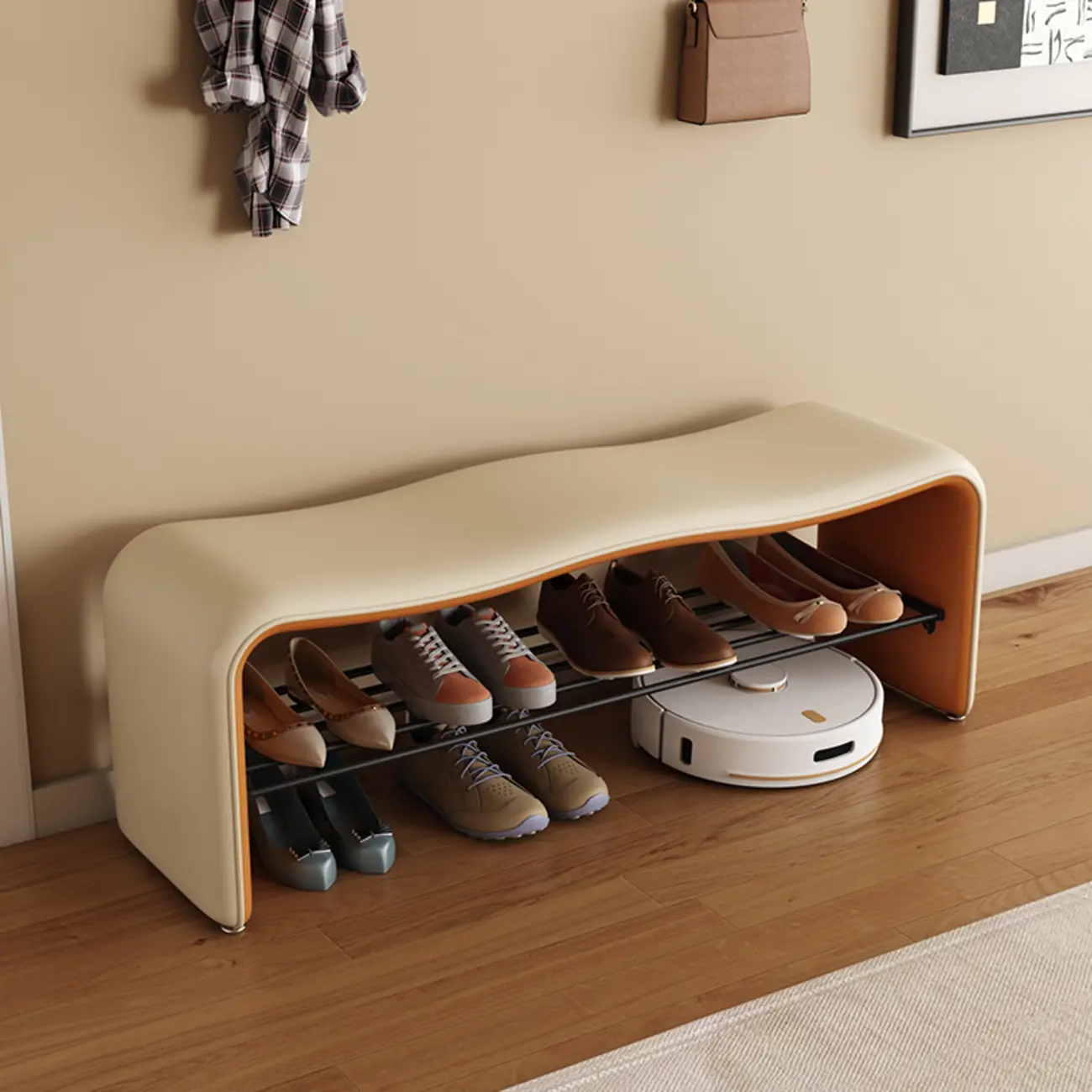
An entryway bench is a unique shoe storage solution, combining seating and shoe storage functions.
Suitable for small entryways and families needing both shoe storage and comfort.
Standard Dimensions:
Seat Height: 16–18 inches (ergonomic design).
Storage Shelf height: 6–8 inches (1–2 pairs of shoes per shelf).
Overall dimensions: 30–60 inches wide × 16–20 inches deep.
Capacity:
Single layer: 4-6 pairs.
Double/triple layers: 8-12 pairs.
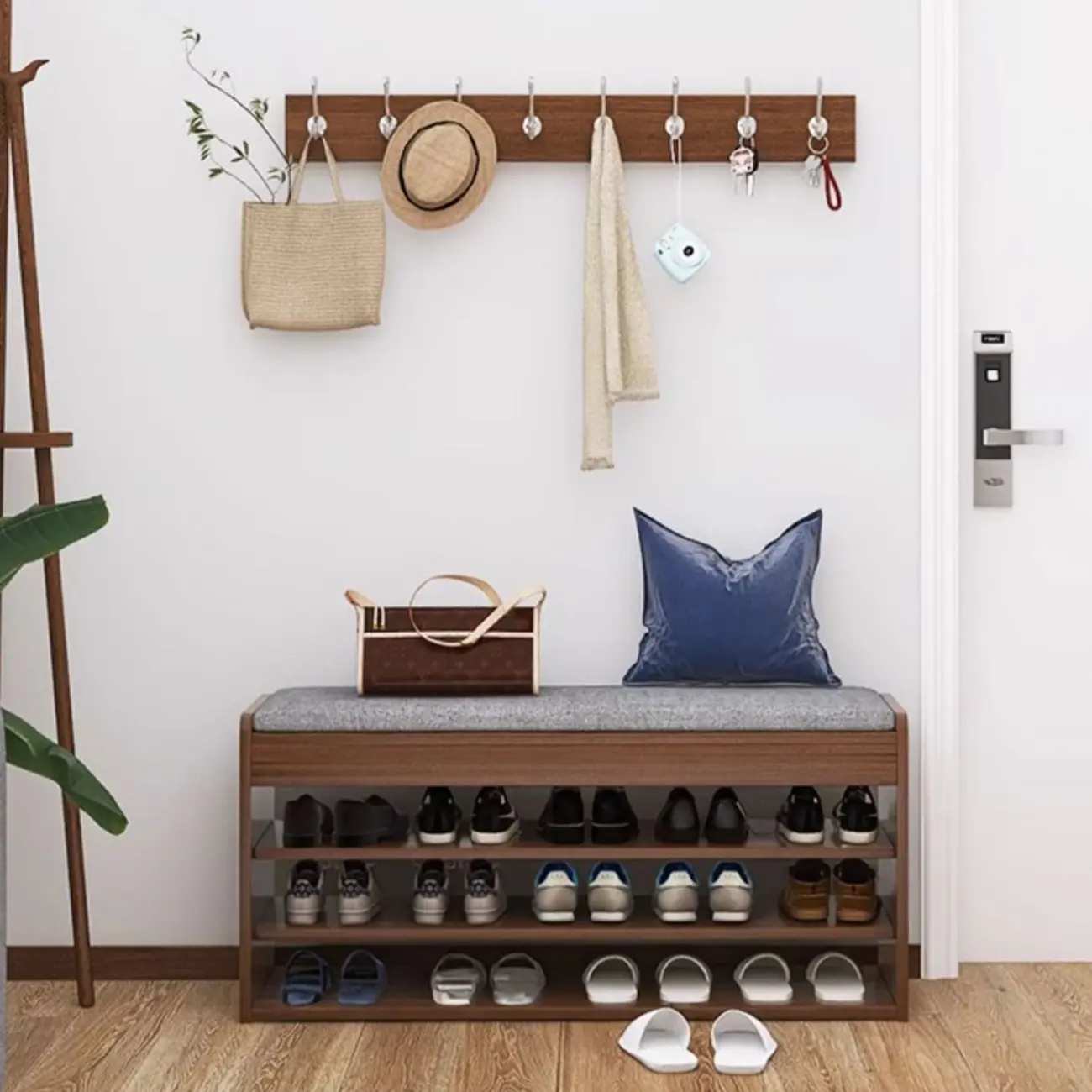
4) Hall Tree with Bench/Cabinet
The Hall Tree is a multifunctional entrance furniture piece, including hooks, a shoe cabinet, and a shoe-changing bench.
If your entryway is big enough, you can choose it. It can store shoes, coats, bags, etc.
If there are 1-3 people at home, choose a hall tree with a bench. If more than 4, choose a hall tree with a cabinet, which can also be paired with an additional shoe cabinet.
Standard Dimensions:
Total height: 60–72 inches.
Shoe cabinet section: 12–16 inches deep × 24–36 inches wide.
Seat height: 16–18 inches.
Capacity:
Small (24 inches wide): 6-8 pairs of shoes + hanging space.
Large (36 inches wide): 12-15 pairs of shoes + top storage.
--15.webp?w=500&h=500)
--0.webp?w=500&h=500)
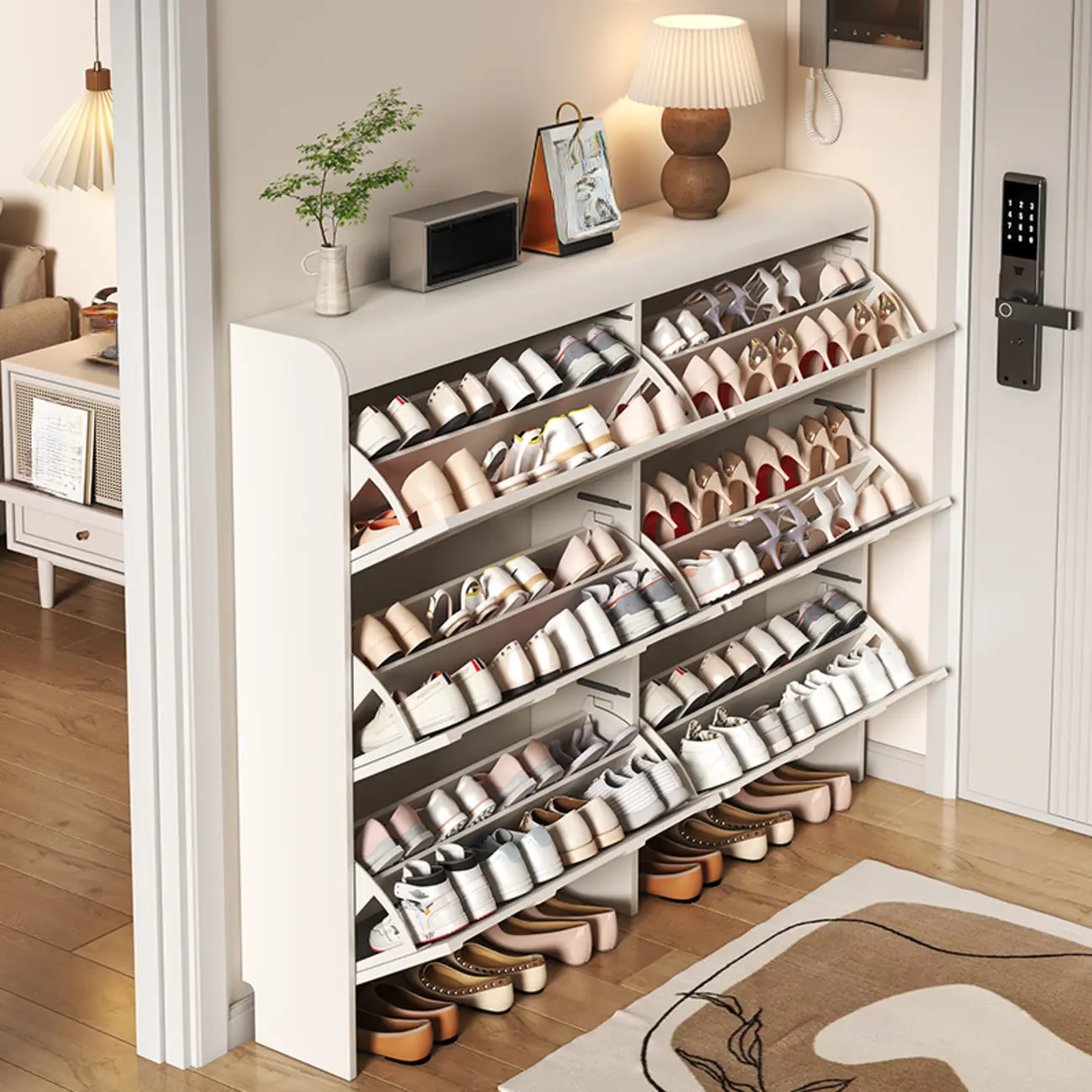
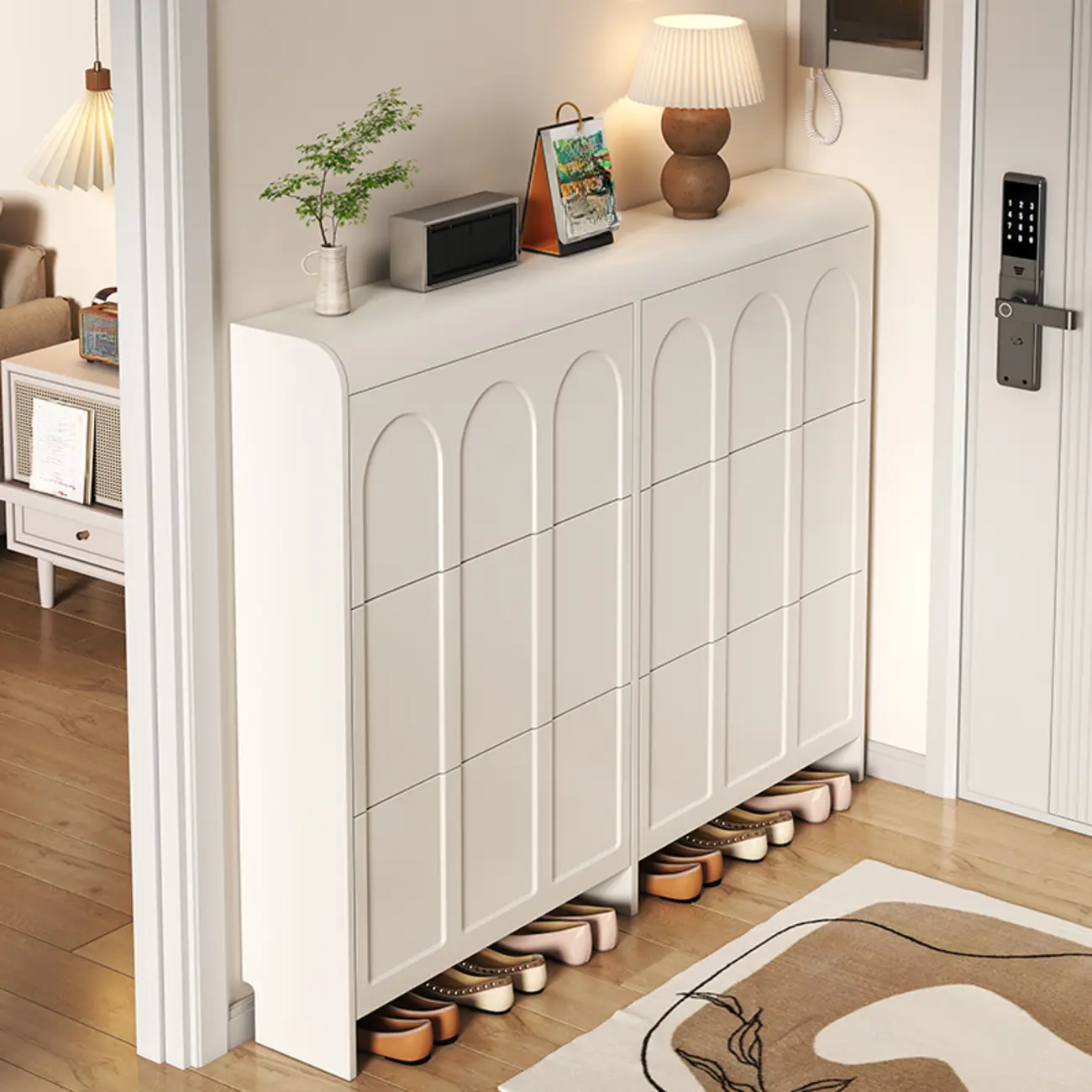
5) Rotating Shoe Rack
The rotating shoe rack can spin 180 degrees to make the best use of available space.
The standard dimensions are
Cabinet depth: ≥14.5 inch.
Height options include 40 inches (20 pairs) or 60 inches (50 pairs).
Shelf capacity is 4.4 pounds per shelf.
Capacity:
20 pairs are stored on a 6-shelf rack.
50 pairs can fit on a 14-shelf rack.
How to Choose the Right Shoe Storage Size for Your Entryway
Choosing the right dimensions depends on both your space and your storage needs.
1. Measure Your Available Entryway Space
First, use a tape measure to measure your entryway space, noting the height, width, and depth.
Then, save the door and hallway space. You need to leave at least 24 inches of space in front of the shoe storage.
Finally, only with these measures can you get a maximum size for your shoe storage.
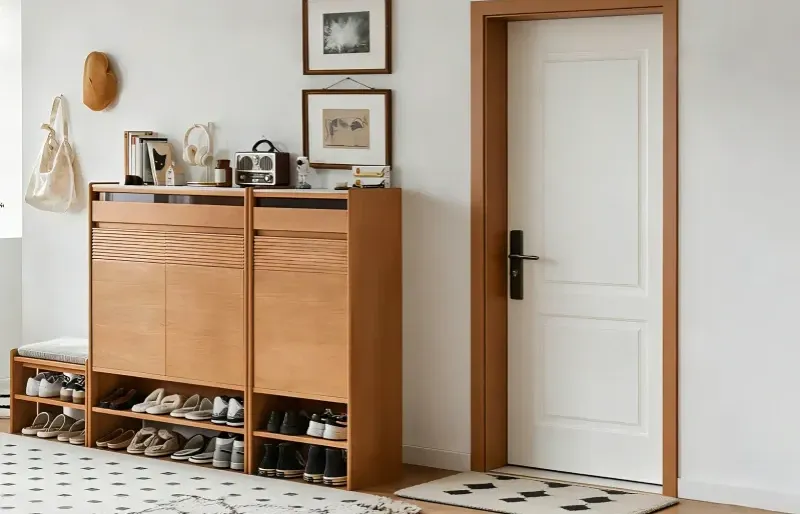
For narrow entryways with a width of less than 47 inches, narrow shoe storage is sufficient—no need to worry!
2. Understand the Height of Different Shoes
Understand the types of shoes in your family and the height capacity required for your shoe cabinet.
For regular shoes, an 18-inch shelf height is sufficient for most cases.
However, if you have many boots. Measure your tallest boots and add 1-2 inches to determine the most suitable shelf height.
|
Shoe Type |
Recommended Shelf Height |
Suitable Footwear |
|
Sneakers/Flats |
5-8 inches |
Everyday shoes |
|
Heels/Ankle Boots |
9-12 inches |
Women's footwear |
|
Tall Boots/Snow Boots |
19-23 inches |
Winter specialty boots |
Recommendation: Opt for a shoe cabinet with adjustable shelves to accommodate various shoe types.
3. Consider the Number of Shoes In Your Household
The width of your shoe storage should be determined by the number of shoes you have.
As a general rule:
-
2–3 pairs per person for daily use
-
additional seasonal storage elsewhere
A family of four may need space for 12–20 pairs of shoes in the entryway. Each pair of shoes should be 8-10 inches wide, and remember to leave a 1-inch gap between each pair.
4. Choose the Right Shoe Storage Depth
The standard depth of a shoe storage is often 12 to 15'', and it's enough for regular shoes, such as sandals, sneakers, and slippers.
Another regular depth is 18 inches, because it can store more people's shoes. If you're not sure, measure your length for the largest shoes. Select a depth of shoe storage more than 1-2 inches greater than this to ensure a proper fit.
Best Shoe Storage for Small Entryways
Small entryways require space-saving furniture.
Good options include:
- Slim shoe cabinets (depth: 8–12 inches)
- Wall-mounted shoe racks (great for maximizing floor space.)
- Vertical shoe storage towers (tall units can store more shoes without using extra floor area).
These solutions help keep small entryways organized without making the space feel crowded. For more ideas on shoe storage in small entryways, please see 15 Shoe Storage Ideas for Small Spaces.
Tips for Choosing the Right Shoe Storage Furniture
1. Based on Storage Demands
For 10 pairs or fewer: choose a bench or a compact shoe rack (24 inches wide).
For 20-30 pairs: choose a shoe cabinet (36-48 inches wide).
For 30 or more pairs: choose a rotating shoe rack or height shoe cabinet.
2. Think Functional
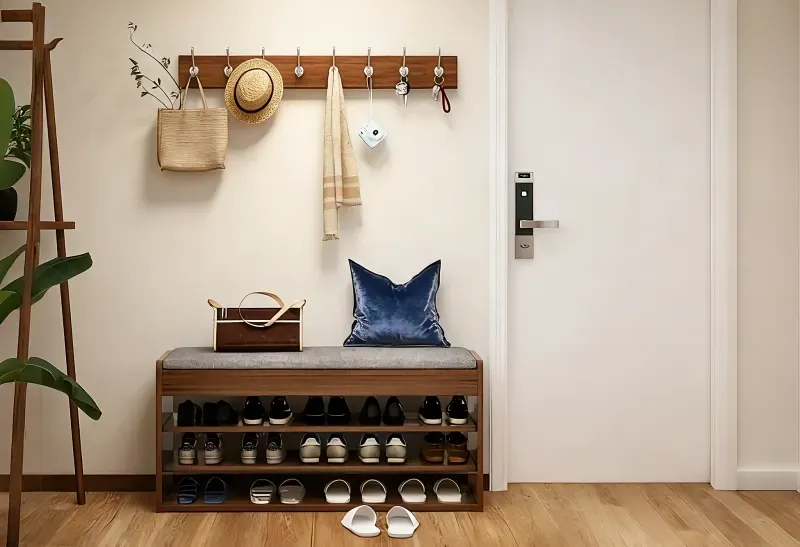
For small apartments, consider adding a shoe bench with hooks or a shoe rack.
For Large entrance, closed shoe cabinet or an entryway tree
3. Based on the Budget
Economy—Open Shoe Rack.
High-end custom smart shoe cabinet or revolving cabinet.
Find the Perfect Entryway Shoe Storage
Choosing the right entryway shoe storage size.
Follow our guide, starting with your space dimensions, shoe types, and quantities, to quickly select the perfect entryway shoe storage.
Homeyfad is here to help! Our shoe storage solutions come in various designs and sizes to easily meet your needs!
If you have any questions or ideas, feel free to contact us!
FAQs About Entryway Shoe Storage
Q1: Can we place a shoe rack in front of the main door?
A: While functional, avoid placing shoe racks directly facing the main door in Feng Shui—position them sideways along a nearby wall instead to maintain energy flow.
Q2: What's the best way to store a large number of shoes?
A: Sort by frequency of use—place everyday shoes on an open shoe rack by the door, and keep seasonal/rarely worn shoes in labeled bins elsewhere.
Q3: Are solid wood shoe cabinets worth it?
A: Solid wood shoe cabinets are definitely worth the investment, with a lifespan of 10-15 years or more. Good, solid wood is resistant to moisture and suitable for long-term use.
-.jpg?w=900&h=506)
--5.jpg?w=900&h=506)
-.jpg?w=900&h=506)
--17.jpg?w=900&h=506)
--21.jpg?w=900&h=586)

 Add Us On Google