
(1).png?w=1920&h=650)
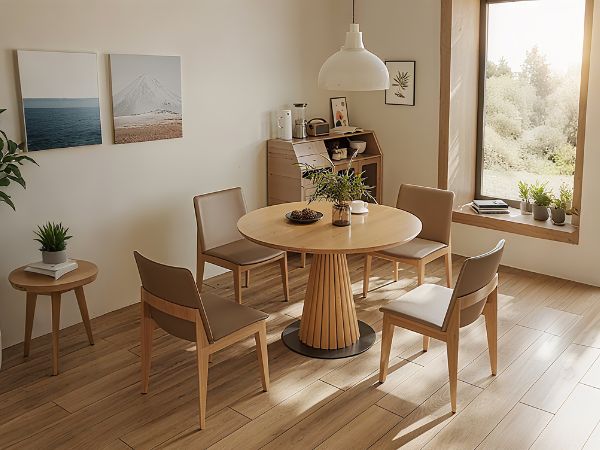
When choosing a dining table, this comparison often arises: a leg table or a pedestal dining table? 90% of people make the wrong choice. They buy a pedestal dining table simply because it looks beautiful, only to find it's completely unsuitable!
When choosing a dining table, don't be fooled by appearances. Instead, consider which one is better for your space.
To ensure a comfortable dining experience for every diner, today we'll put aside the jargon and delve into real-life comparisons of Leg (legged) and Pedestal (pedestal) tables. Find the table that best suits your lifestyle.
Leg vs. Pedestal Dining Table: 6 Key Differences in One Chart
Before we get into more details, let’s do a simple comparison between leg vs. pedestal dining tables!
|
Feature |
Leg Dining Table |
Pedestal Dining Table |
|
Visual Space |
Visually open and airy |
Visually centered and grounded |
|
Seating Capacity |
Limited by leg placement, corners can be awkward |
Highly flexible seating, easy to add guests |
|
Cleaning Ease |
★★★★★ (Robot vacuum friendly) |
★★★☆☆ (Requires manual cleaning around base) |
|
Stability |
Depends on leg structure and material |
Typically very stable due to central weight |
|
Style Vibe |
Modern, Minimalist, Industrial, Scandinavian |
Traditional, Elegant, Classic, Rustic |
|
Ideal For |
Small spaces, modern decor, easy-cleaning seekers |
Frequent entertainers, large rooms, classic elegance |
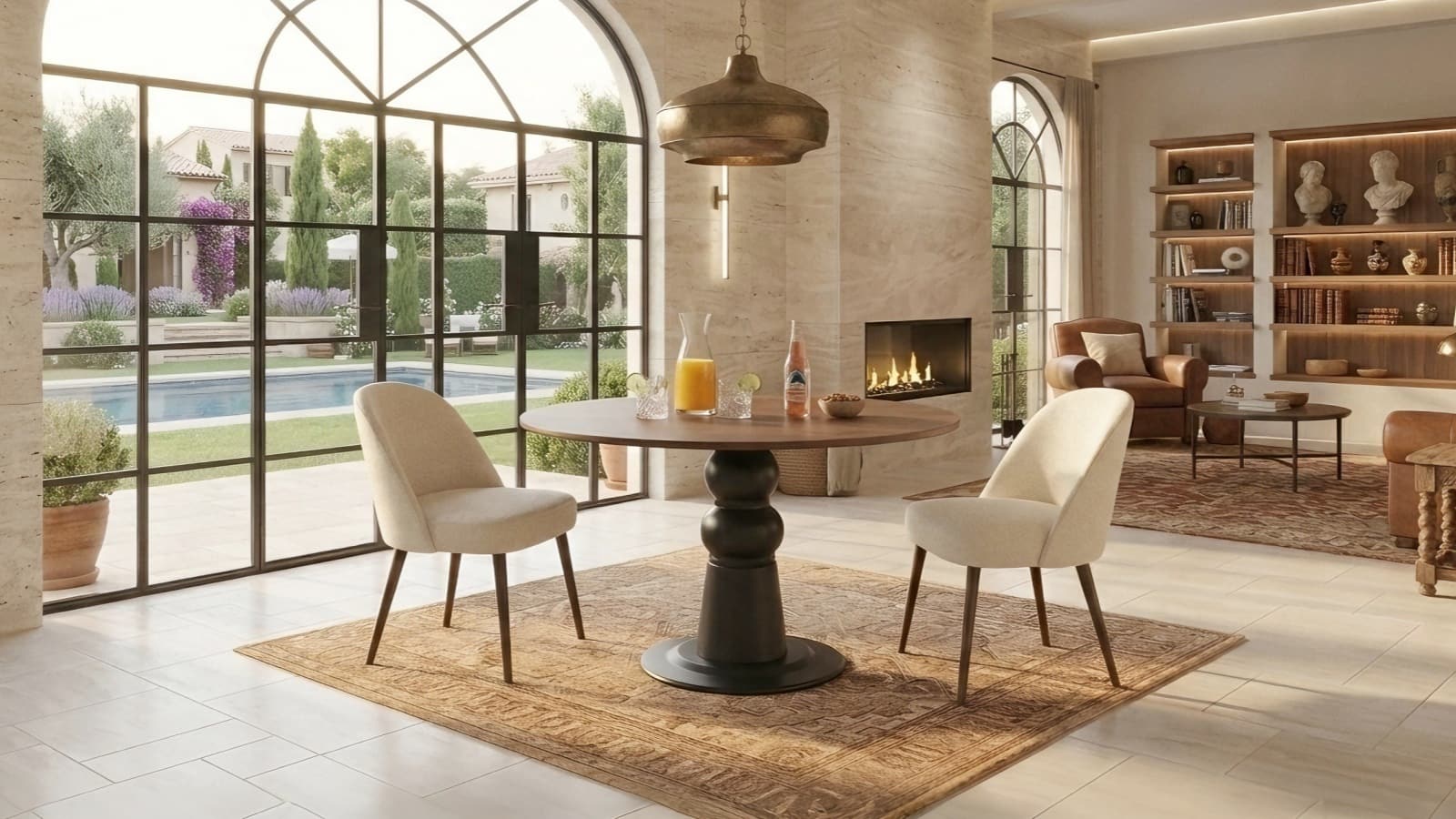
Are Pedestal Dining Tables Good?
-11.webp?w=600&h=600)
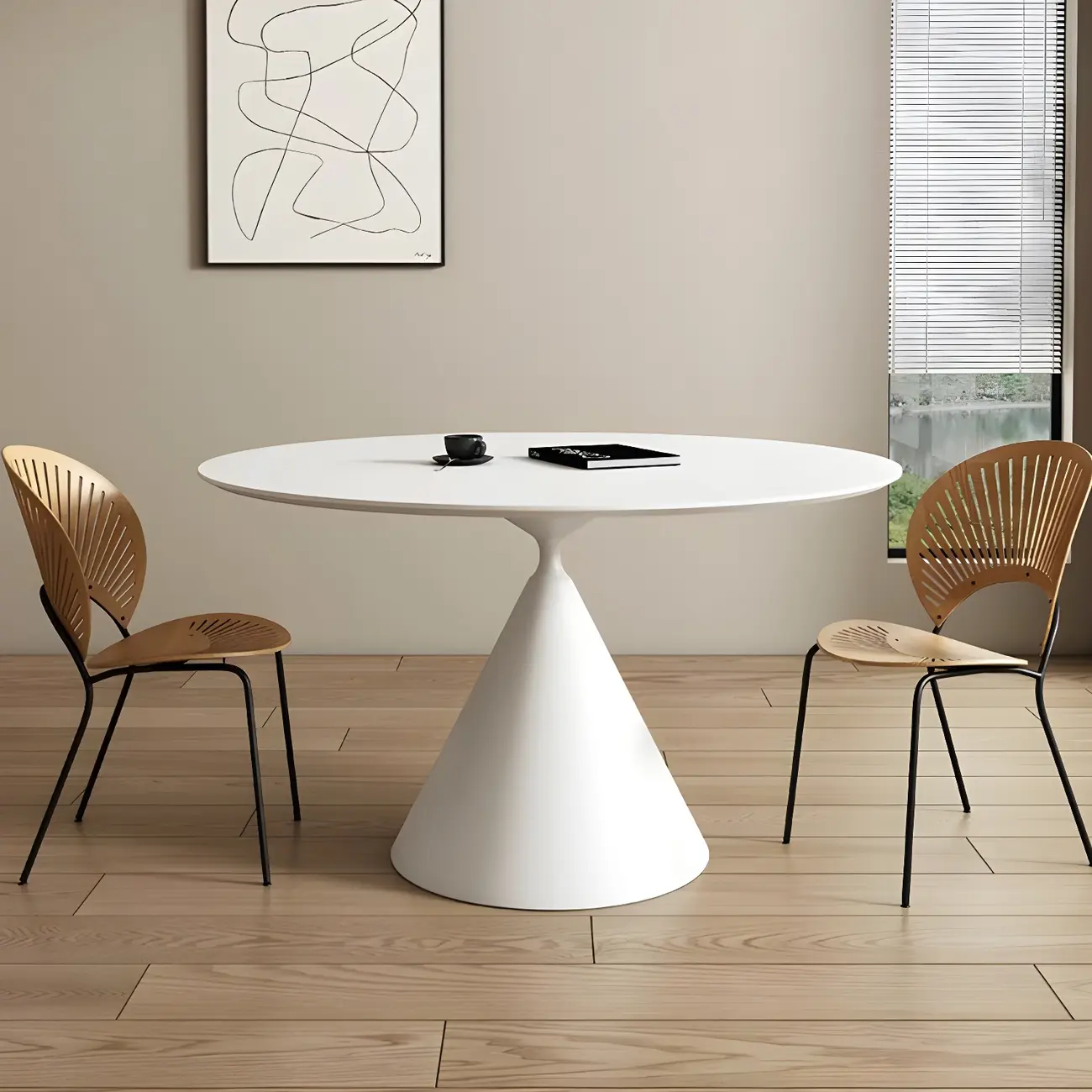
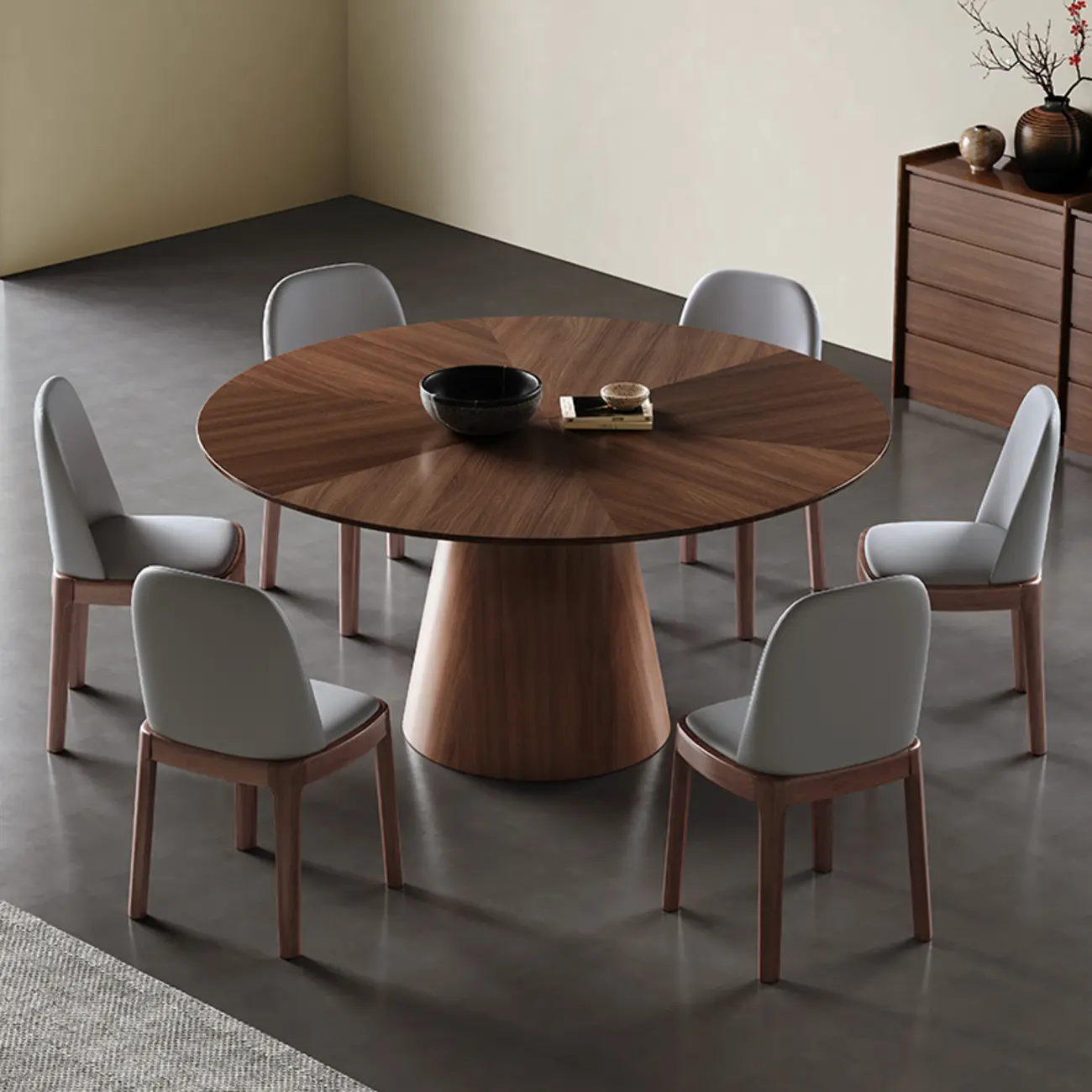
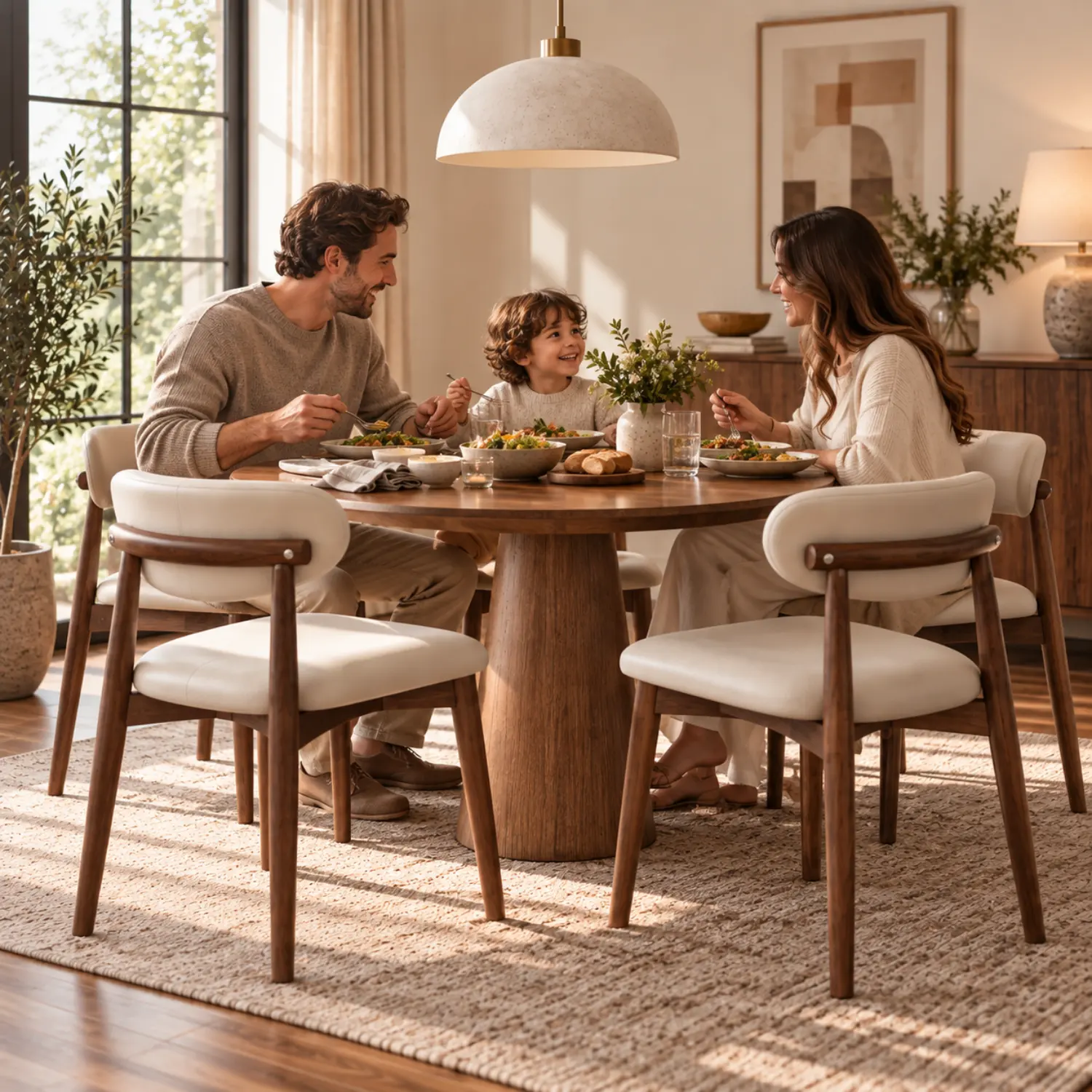
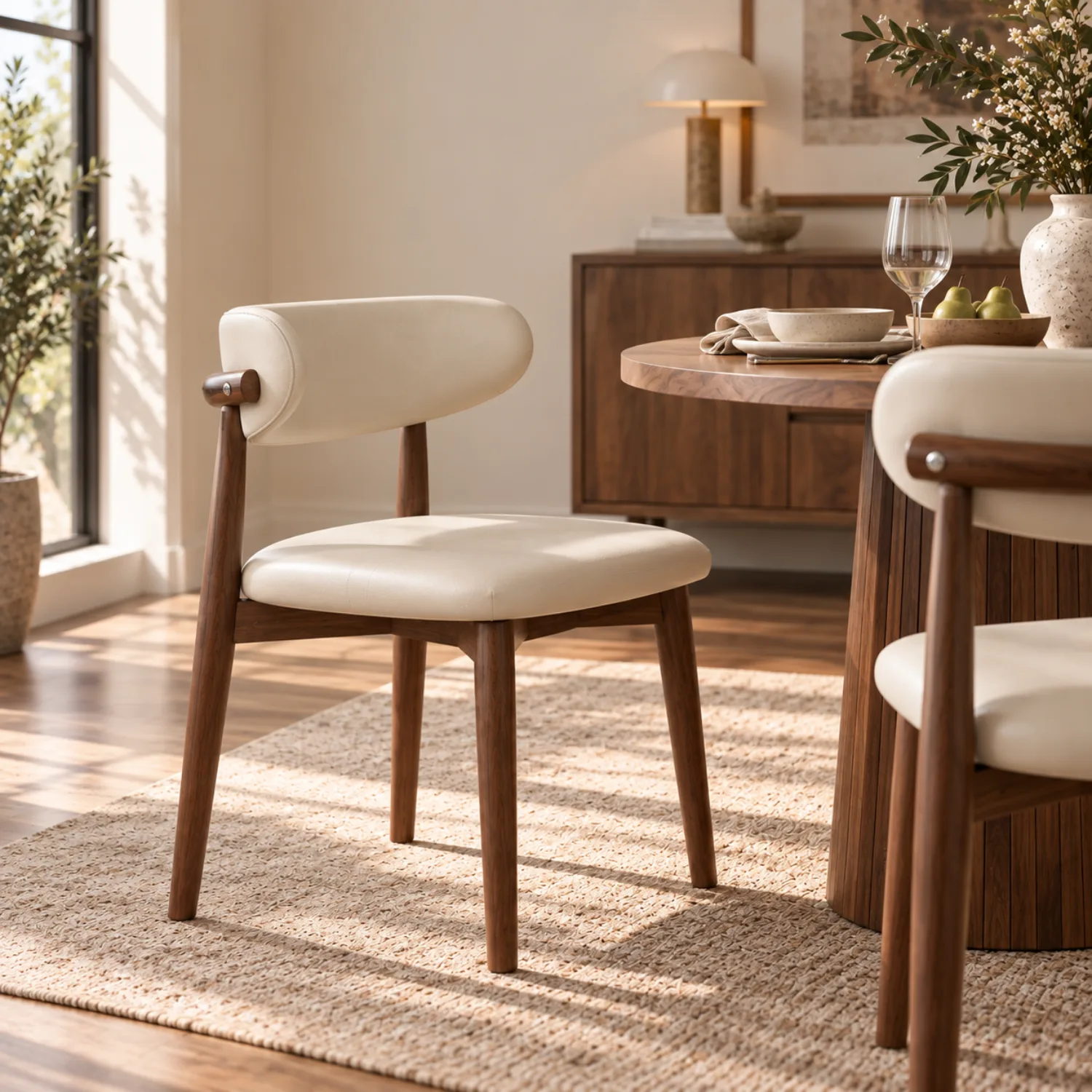
For some people, pedestal dining tables are a great option, especially for families with young children. Imagine your child constantly hunching over the table. A slight push could cause the entire table to flip over due to the imbalanced force.
A pedestal dining table eliminates this worry! It offers stability, a solid centerpiece, and resistance to wobbling.
And so on. Is that all it offers? No, the biggest advantage of a pedestal table is its seating flexibility. Without the constraints of legs, you can easily add chairs anywhere, especially when paired with a bench. Everyone can comfortably pull their chairs closer together for a true "group" experience, eliminating awkward "leg jams."
Finally, a beautifully designed pedestal table is a work of art in itself, a visual centerpiece for your dining room.
It's perfect for creating a traditional, classic, French, or vintage-inspired home ambiance, enhancing the space's elegance and sense of ceremony, and making the dining experience feel more inviting and stylish.
What Are the Disadvantages of a Pedestal Dining Table?
You wouldn't think a pedestal dining table has no drawbacks, would you?
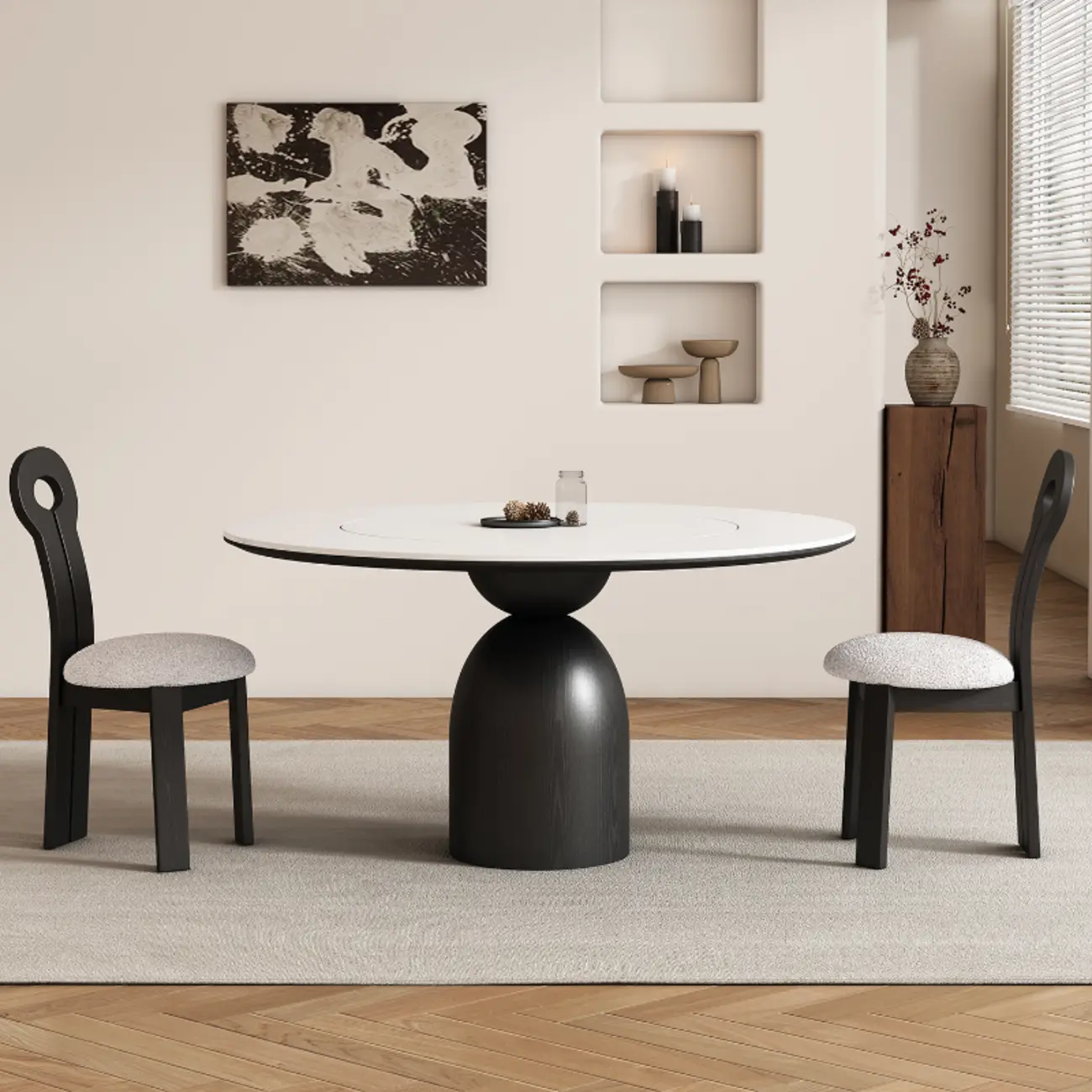
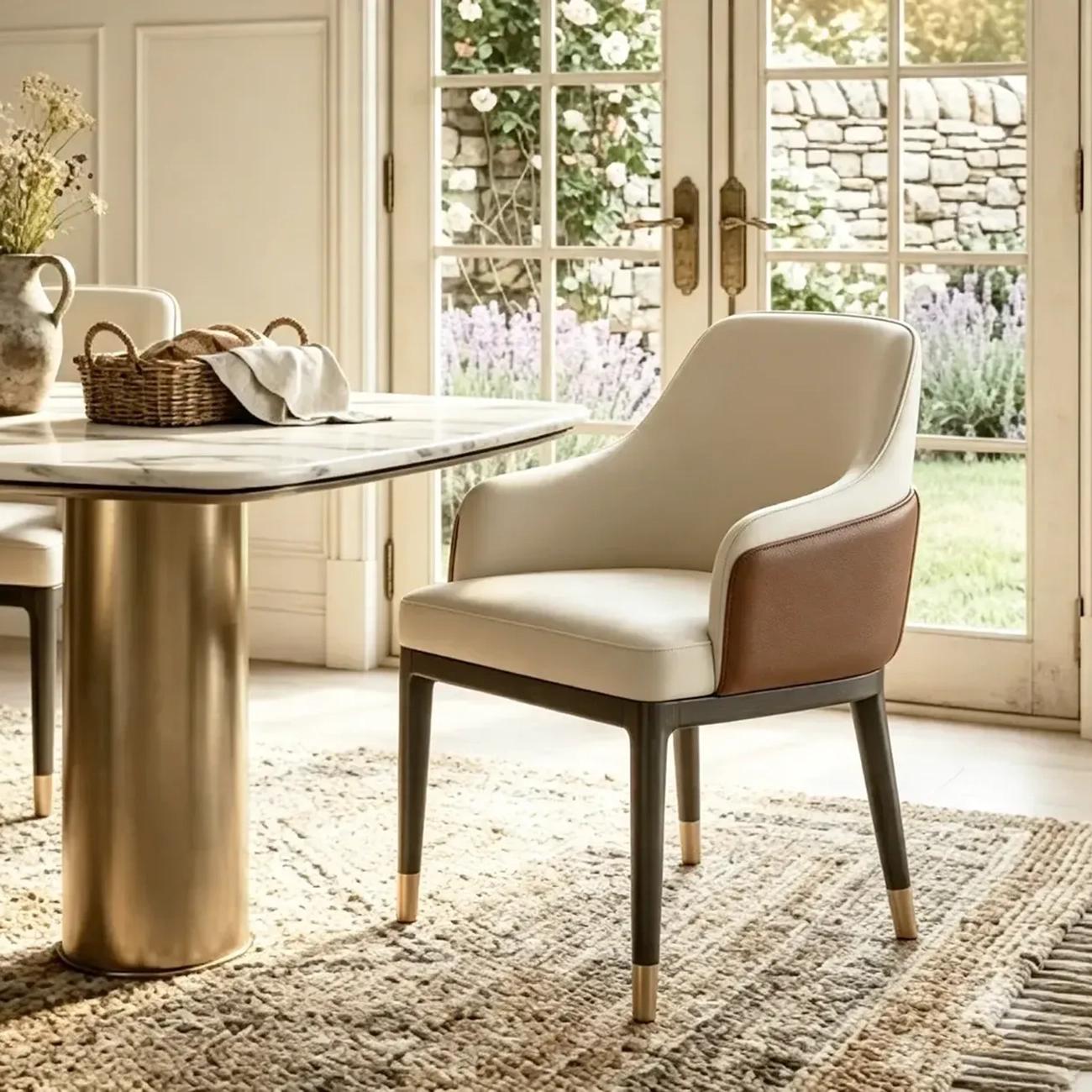
While pedestal dining tables don't require leg support, don't overlook their bulky base.
.webp?w=598&h=598)
- First, your legs are limited when dining; you can't stretch them straight, forcing you to bend them.
- Second, there's the issue of cleanliness. The complexly shaped base easily traps dust and pet hair, and even robot vacuums often bump against it. You'll need to bend over frequently to manually clean it, making maintenance more time-consuming and labor-intensive than with a table with legs.
- Finally, it's not ideal for small spaces. While chairs can be slid under the table, for smaller apartments or dining rooms with poor lighting, a pedestal table can make the space feel more crowded and oppressive, lacking the airy, lightweight feel of a table with slender legs.
Advantage of Leg Dining Table
Leg dining tables are the opposite of pillar tables, with one being more east-west than the other. Let's take a look at their advantages.
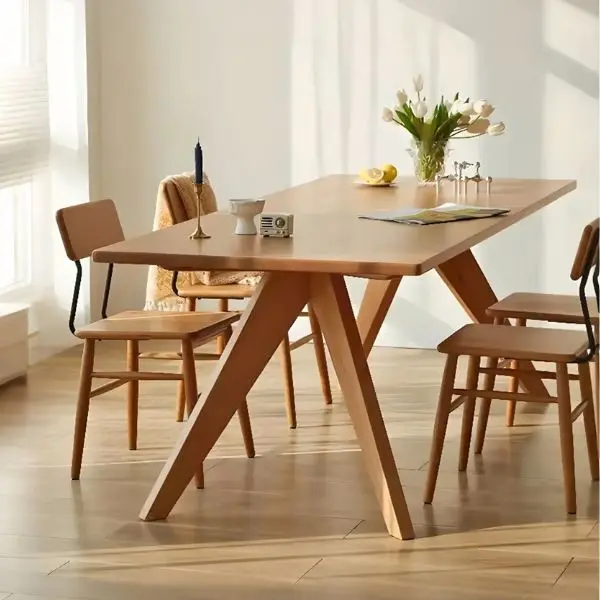
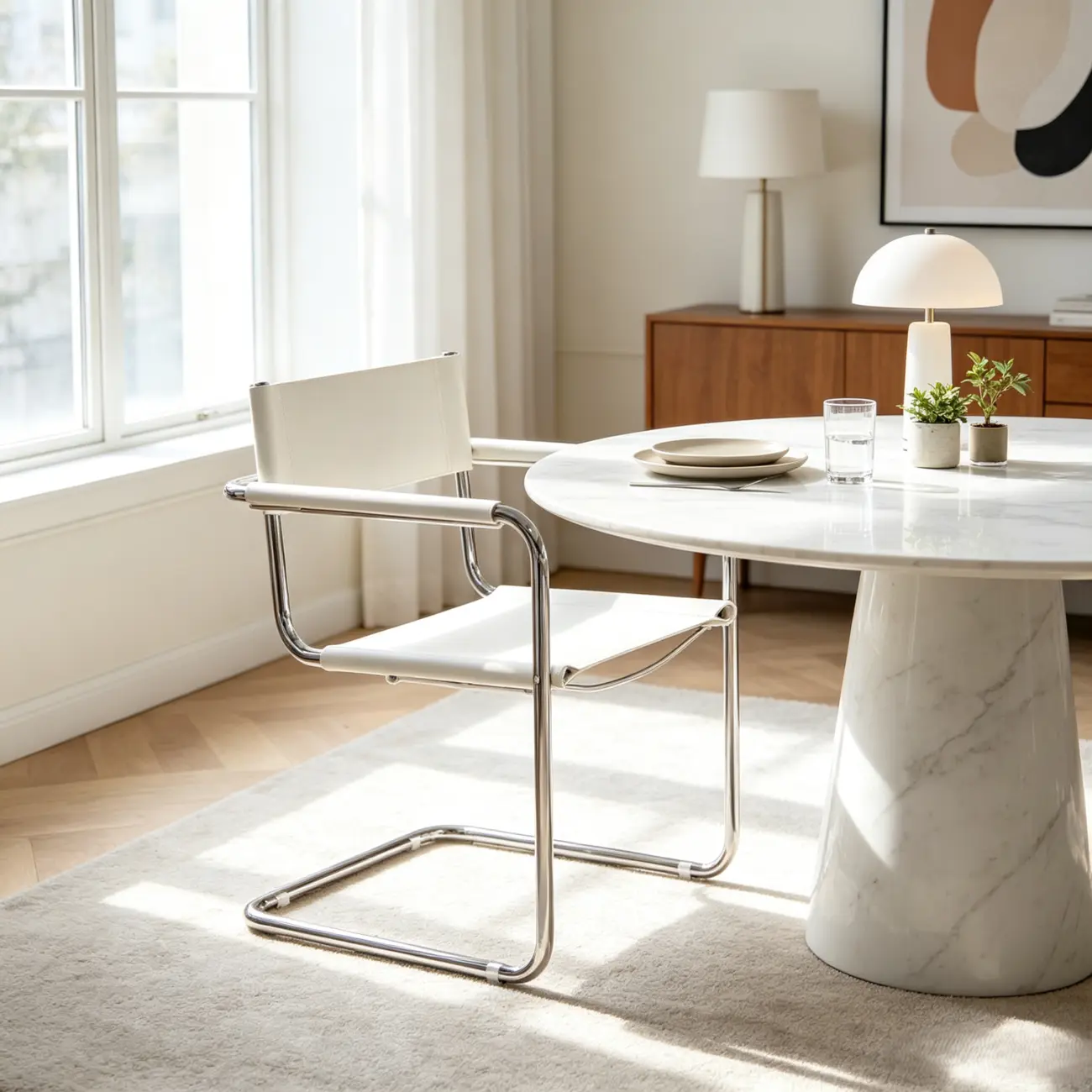
- First, they create a sense of openness. The slender legs allow light and sightlines to flow freely, making the space appear larger and more airy. Ideal for smaller apartments and dining rooms with limited lighting, they effectively reduce the furniture's bulk and prevent the room from appearing crowded or oppressive.
- Second, and this is their killer advantage over pillar tables, their four-leg design creates a perfect passage for cleaning tools. A robot vacuum can clean the entire area under the table without any obstructions, eliminating the hassle of bending over to scrape dust.
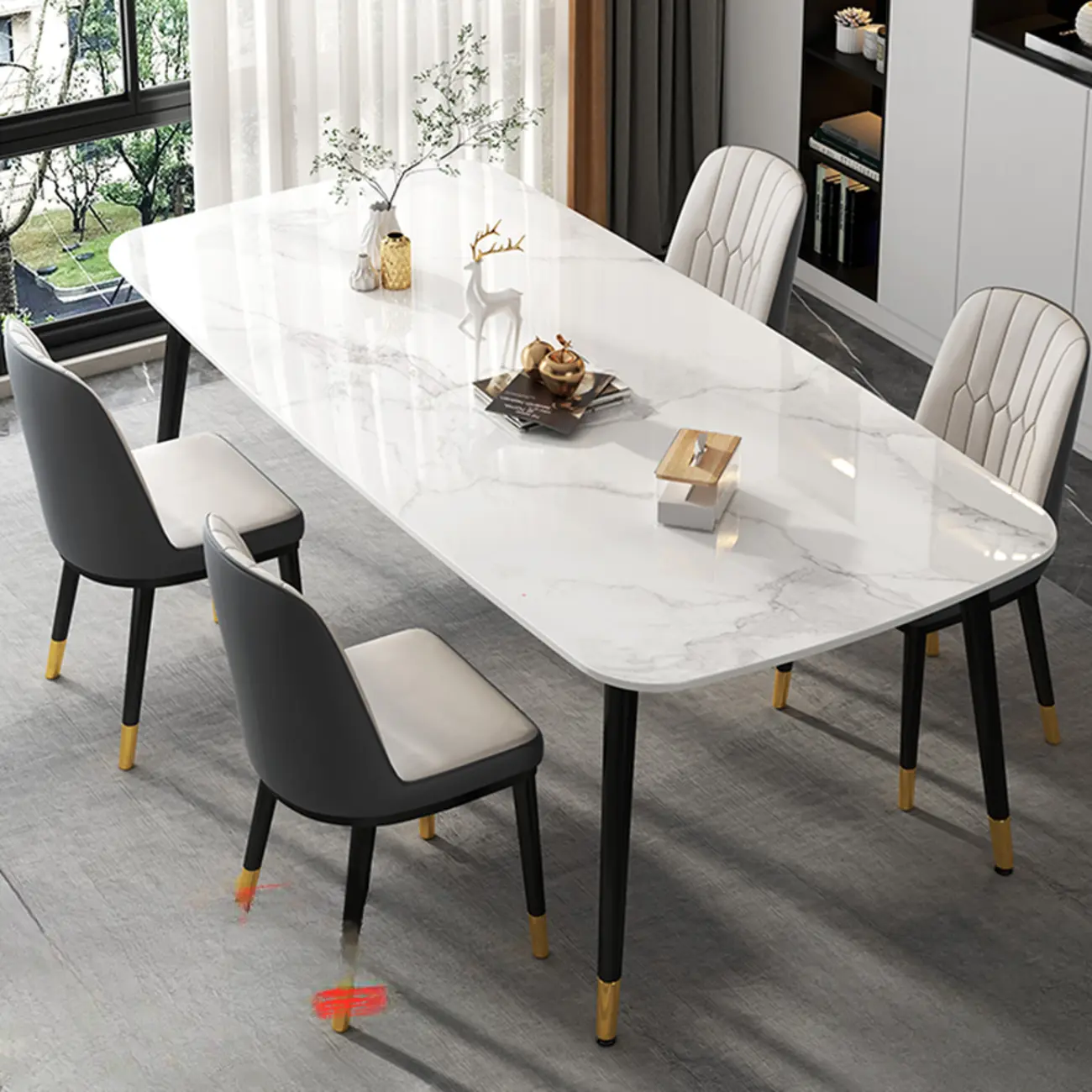
- Finally, leg dining tables are more versatile, available in a variety of styles and designs, and easily fit into any dining room. By choosing the material of the legs, you can find a leg dining table that perfectly matches your home style.
Disadvantage of Leg Dining Table
Of course, leg-style tables also have their limitations.
.webp?w=600&h=600)
There may be awkward seating. When the table is full, everyone needs to tuck their feet in to avoid stepping on anything.
- Diners at the table's legs, in particular, not only struggle to place their feet properly, but their knees can easily bump against the legs.
- Stability is relatively dependent on design. Some poorly designed or poorly crafted leg-style tables can become prone to wobbling when subjected to lateral forces or when someone leans on them.
- Seating capacity is limited. If you need to add one or two guests at short notice, the legs can become a hindrance, making seating arrangements less flexible than with a pillar-style table.
The Ultimate Decision-Making Guide: Ask Yourself These 5 Questions
Still struggling? Quickly answer these questions, and the answers will reveal themselves:
.jpg?w=600&h=600)
1. Do I frequently entertain more than 6 guests?
- Yes—strongly leaning towards a Pedestal
- No—Leg is a safe choice
2. Is ease of cleaning my top priority?
- Yes—Leg is the winner
- No—continue considering other factors
3. Is my dining room space very limited?
- Yes—choose a Leg table with slender lines to create a sense of spaciousness
- No—either is fine, depending on your style
4. Is my decor modern and minimalist or classic and traditional?
- Modern—Leg
- Classic—Pedestal
5. Do I frequently use my dining table for large projects (crafts, puzzles, etc.)?
- Yes—Pedestal is better
- No—Leg is sufficient
Go with whichever table you use most often!
Conclusion
Choose a dining table that suits your dining room's needs. For stability, choose a pedestal table; for a more airy feel, choose a leg dining table.
Regardless of which dining table you choose, be sure to measure your dimensions first, leaving 36 inches of free space around the table. For details, see our blog on choosing dining table sizes.
Find your perfect dining table now! Homeyfad is here, along with a wide selection of kitchen and dining room furniture. Get 10% off your first order!
-19.png?w=1300&h=1300)
-.jpg?w=900&h=506)
--14.jpg?w=800&h=577)
-.jpg?w=800&h=585)
-.jpg?w=800&h=571)

 Add Us On Google