


























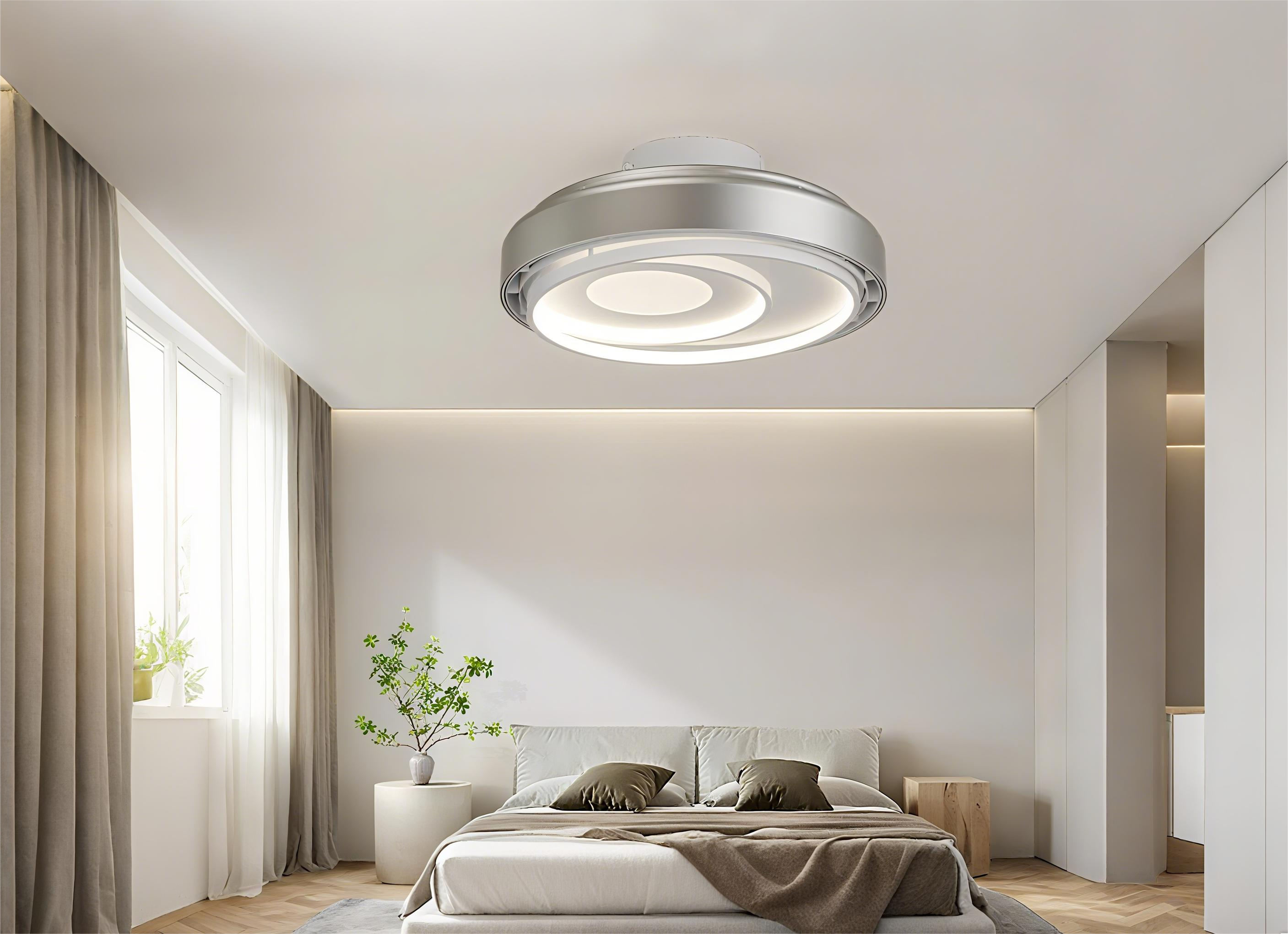
There are many technologies where not much has changed since the 90s. However, we are seeing a surge in innovations for ceiling fans. One such addition to ceiling fan technology is bladeless fans.
In this blog, we will compare both options for blade and bladeless fans for a home in 2026. So that you can make an informed decision when buying ceiling fans for your space.
The Traditional Blade Ceiling Fans
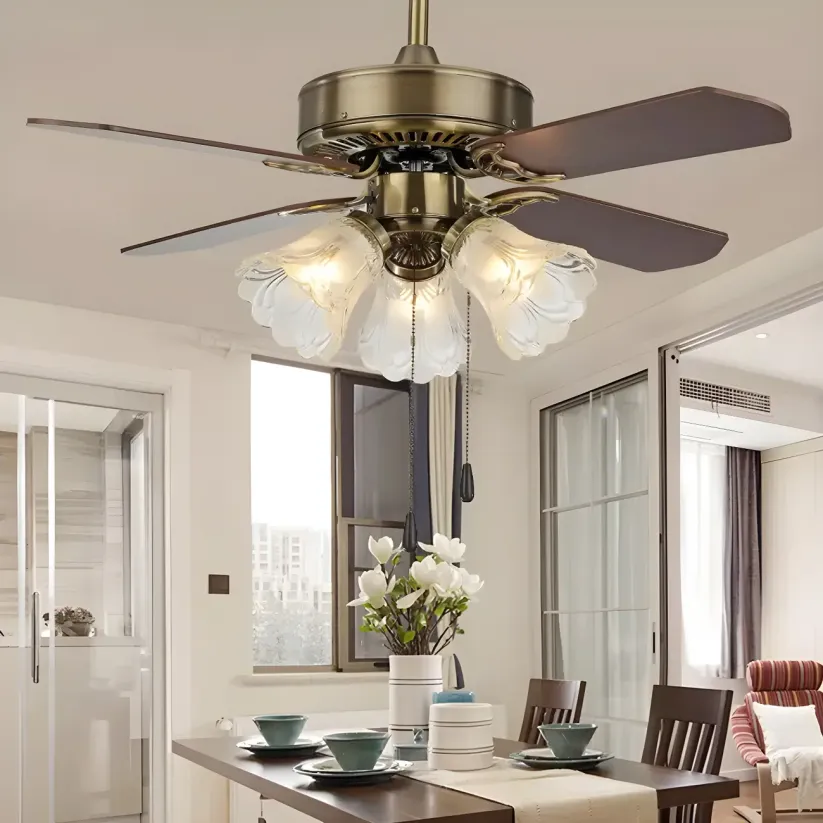
Traditional ceiling fans are what you usually see around you since your childhood. The fans with blades. Traditional ceiling fans have visible rotating blades.
These blades slice through the air to create cooling drafts, and that's how you receive cool air in your home.
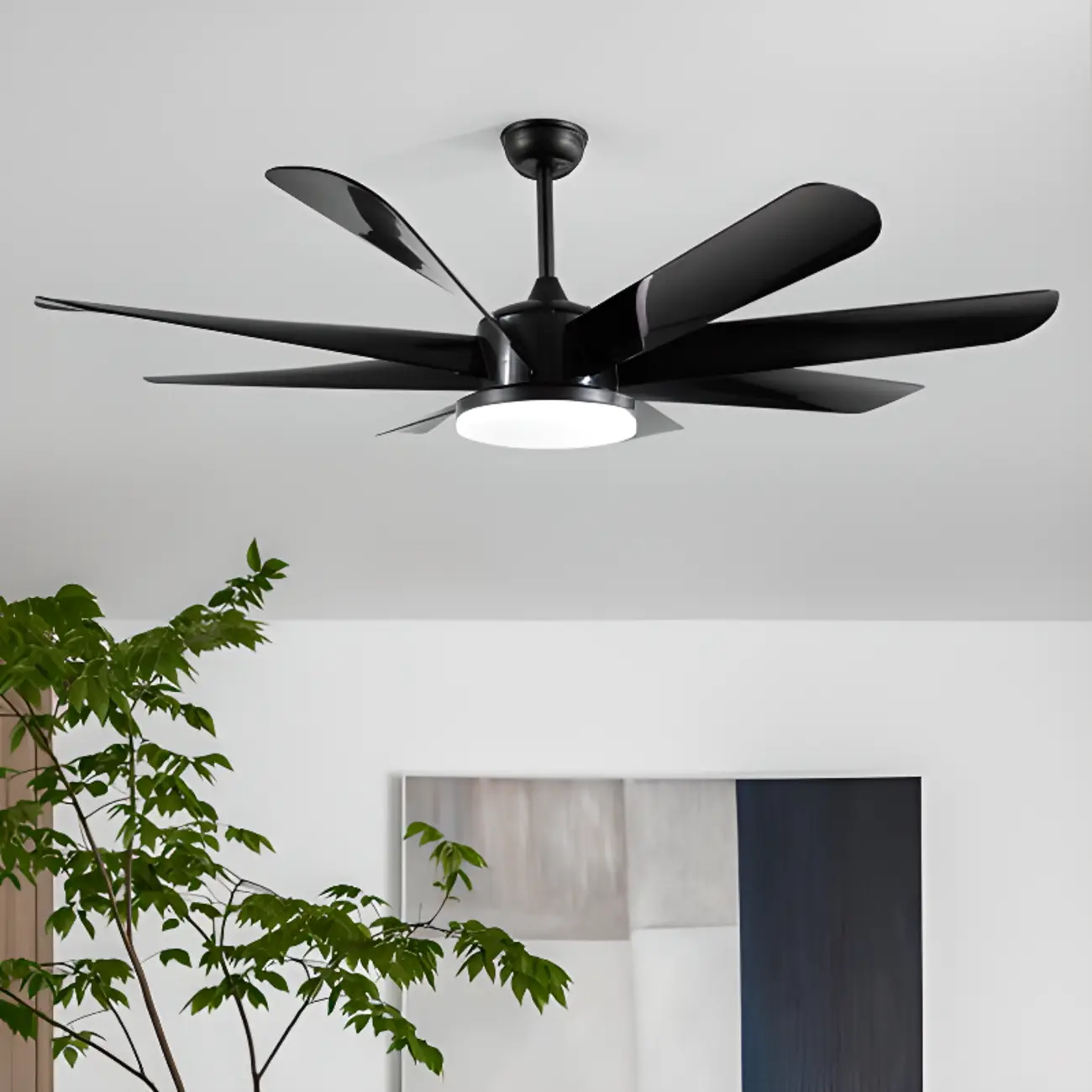
Such fans work like boat paddles; they push the air downward, and this creates immediate cooling relief below. These ceiling fans with blades are easy to install. You can find versatile options in blade fans. Some fans have 3 blades, others have 5 or more. Now you can also find ceiling fans with lights.
Bladeless Ceiling Fans
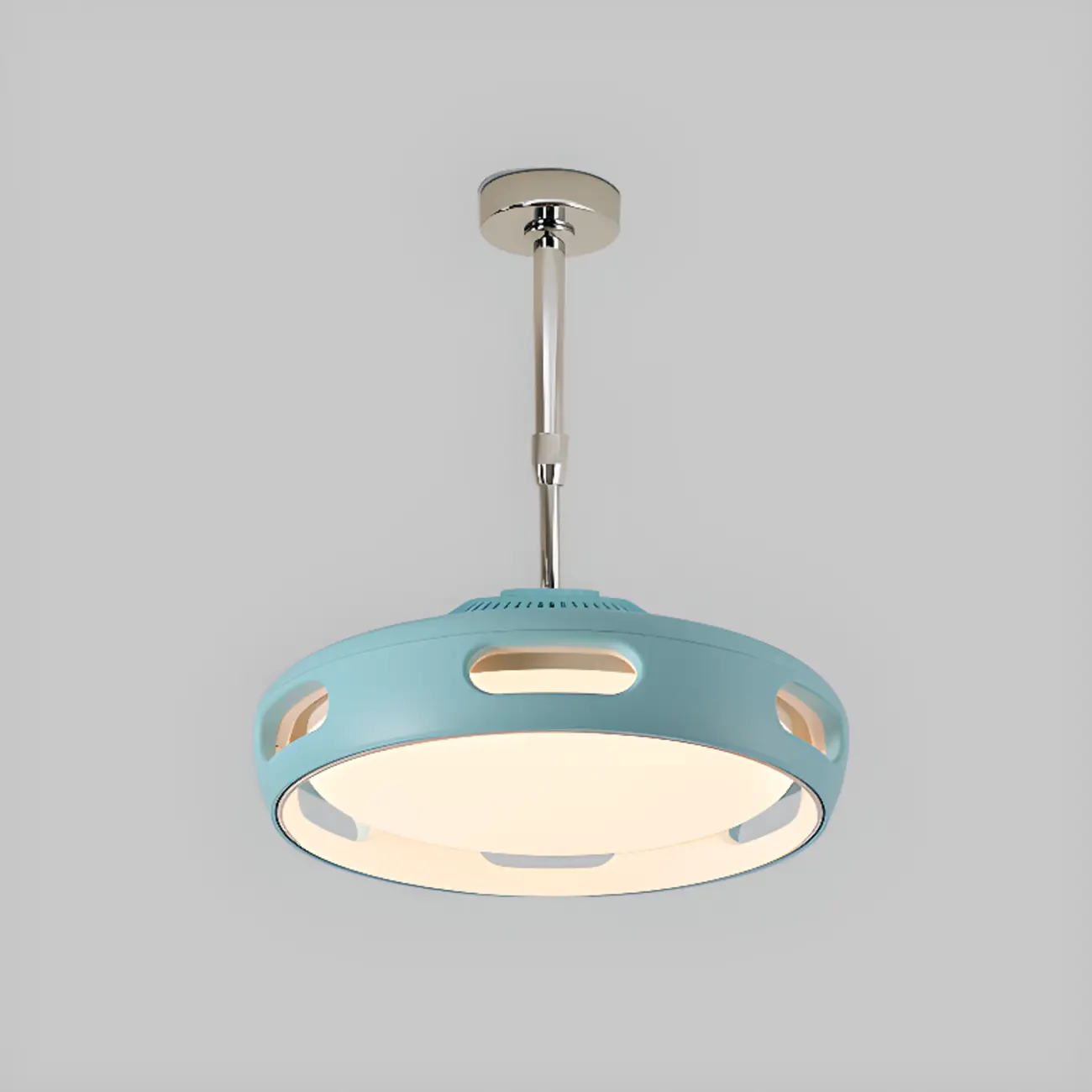
Bladeless ceiling fans, as the name suggests, are ceiling fans without visible blades. These fans hide all moving parts inside a sleek ring. In these fans, an internal impeller draws air upward first, then this air accelerates through narrow vent slots.
Finally, it exists as a smooth, amplified column, and in this way, you get consistent airflow without harsh gusts.
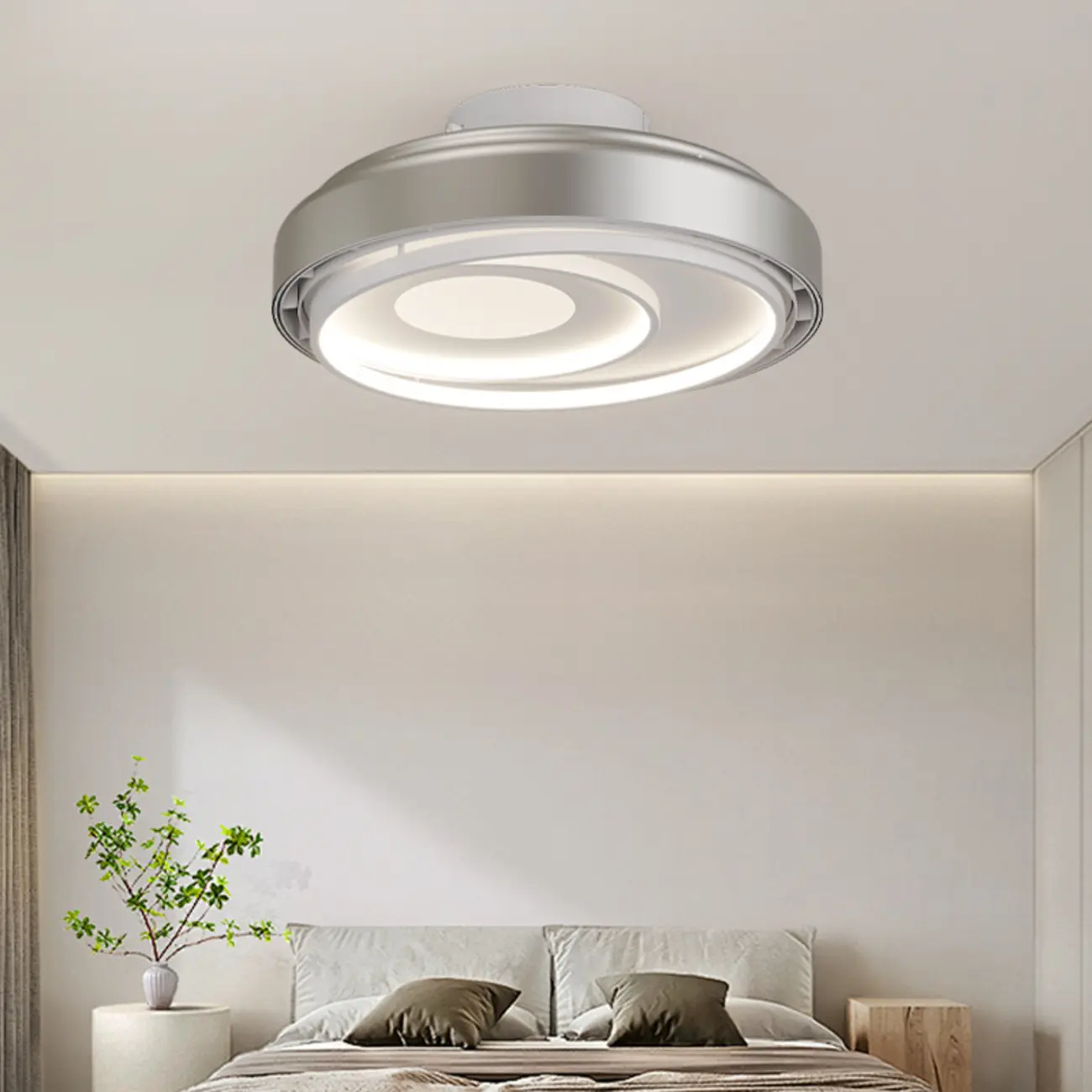
With such fans in your home, safety concerns have reduced significantly as there are no exposed blades. Ceiling fans without blades simplify cleaning, too; you just wipe the stationary outer surface.
There is more to it, which we will discuss in detail in the next section of the blog.
Blade vs Bladeless Ceiling Fans: The Ultimate Comparison
Every technology has its own usage and benefits; the same is the case with blade and bladeless fans. Here is the detailed comparison for to help you decide which type of ceiling fan meets your needs.
1. Airflow Experience
Traditional blade ceiling fans work like powerful wind machines because their spinning blades chop through the air aggressively. This will create strong downward gusts that you will feel immediately. Such fans work well and are perfect for large spaces like living rooms.
Moreover, you'll notice cooling relief on hot days quickly when blade fans are installed.
But the intense wind can become uncomfortable over time. It might blow papers off tables in home offices, it also makes a lot of noise, and that sharp, high-intensity air might not be suitable for every person..
However, with bladeless ceiling fans, you will not face such issues. These fans move completely differently. It creates smooth, consistent airflow without bursts. It's like gentle outdoor breezes indoors all day with bladeless fans.
This works perfectly for bedrooms and small spaces. You won't feel sudden blasts of cold air, and the entire room gets even circulation too.
For smaller areas under 200 square feet, the best bladeless ceiling fan is ideal. But large open-concept rooms may need extra units of such fans for proper air flow.
2. Noise Levels
If we compare the noise level of both blade and bladeless fans. The bladeless ceiling fans win here.
Blade fans operate quietly at their lowest setting, around 30 decibels. Their sound resembles whispering. But noise increases significantly at higher speeds.
And with the highest speed settings, the noise can reach 50 decibels, like steady rainfall. The combination of motor hum and blade swoosh develops. This can disrupt concentration during daytime activities, and light sleepers might also find it bothersome at night.
However, Bladeless ceiling fans maintain consistent sound levels. They stay around 35-40 decibels across all speeds. This will create a steady background noise like a quiet refrigerator. That's why many people find bladeless fans as the best solution for sound sleep. You can run them all night without disturbance.
But with these fans, their placement matters. You should avoid installing it directly above bed pillows, as some people can notice faint electronic hums up close.
3. Safety and Cleaning
Although blade ceiling fans are generally safe, they do require safety awareness in homes. Because its exposed spinning blades pose risks to children and pets.
Also, tall people might accidentally touch them too. On such fans, dust also collects visibly on flat blade surfaces, so cleaning is required more often. This chore becomes dangerous in high-ceiling rooms, as you might have to climb a ladder to clean ceiling fans.
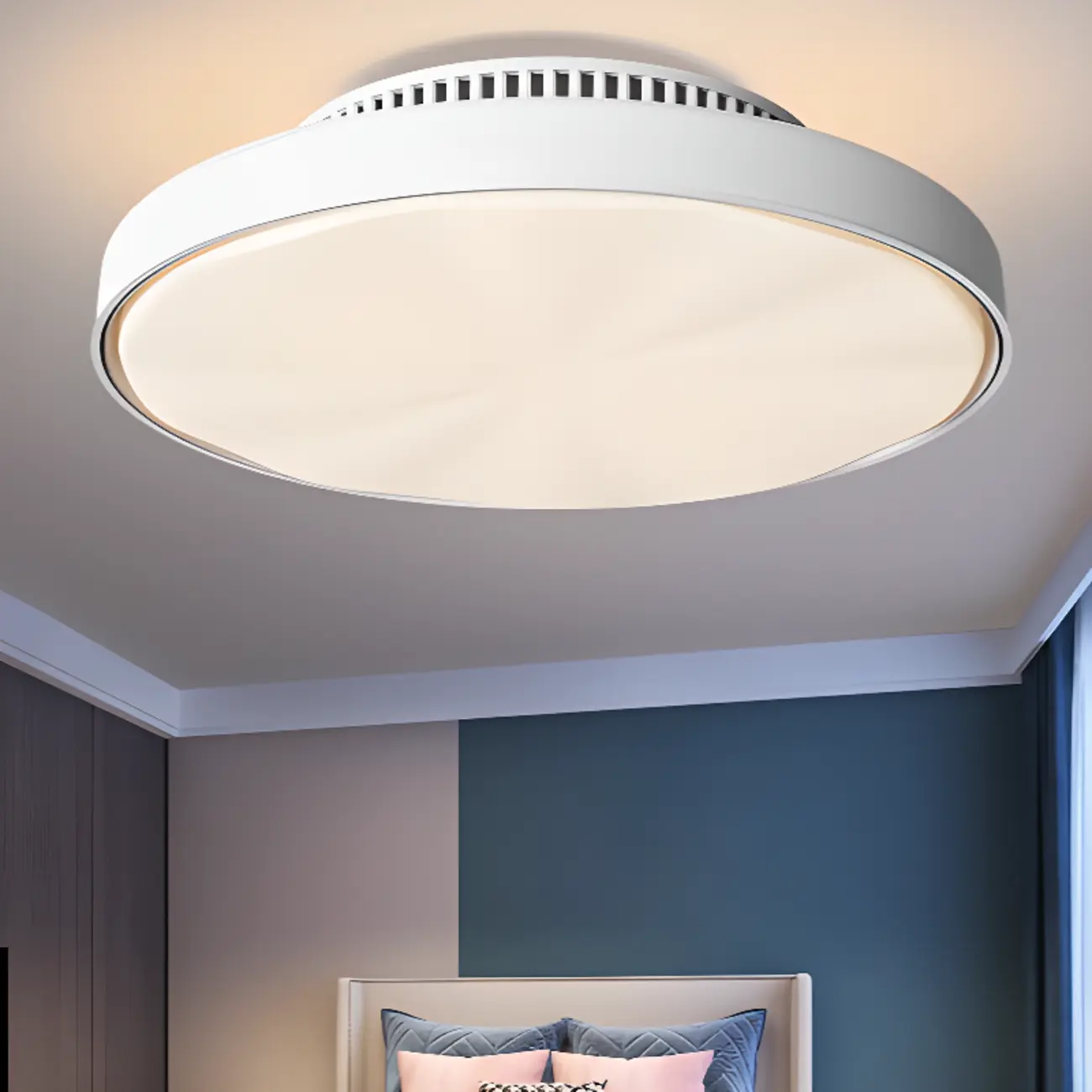
On the other hand, bladeless designs solve these safety concerns completely as there are no exposed moving parts. Besides, its smooth surface simply needs occasional dusting too. You can use a long-handled duster from floor level to clean such fans.
Low-profile bladeless ceiling fans also work well in tight spaces. Their small size fits eight-foot ceilings safely. But internal components need professional servicing, so you need to hire a specialist to clean hidden impellers every few years.
4. Appearance
It's 2026, and home decor is an important part to show off our personality. Your ceiling fans also showcase your home’s overall vibe and aesthetic.
With blade fans, they will often become room centerpieces. You should go with decorative wooden blades or metallic finishes to stand out from your ceiling fan.
Also, the traditional five-blade designs suit farmhouse decor well. Besides, industrial-style ceiling fans match loft apartments perfectly. But you should not forget that with such fans, their visible motion draws constant attention. And some people might find this distracting in minimalist spaces.
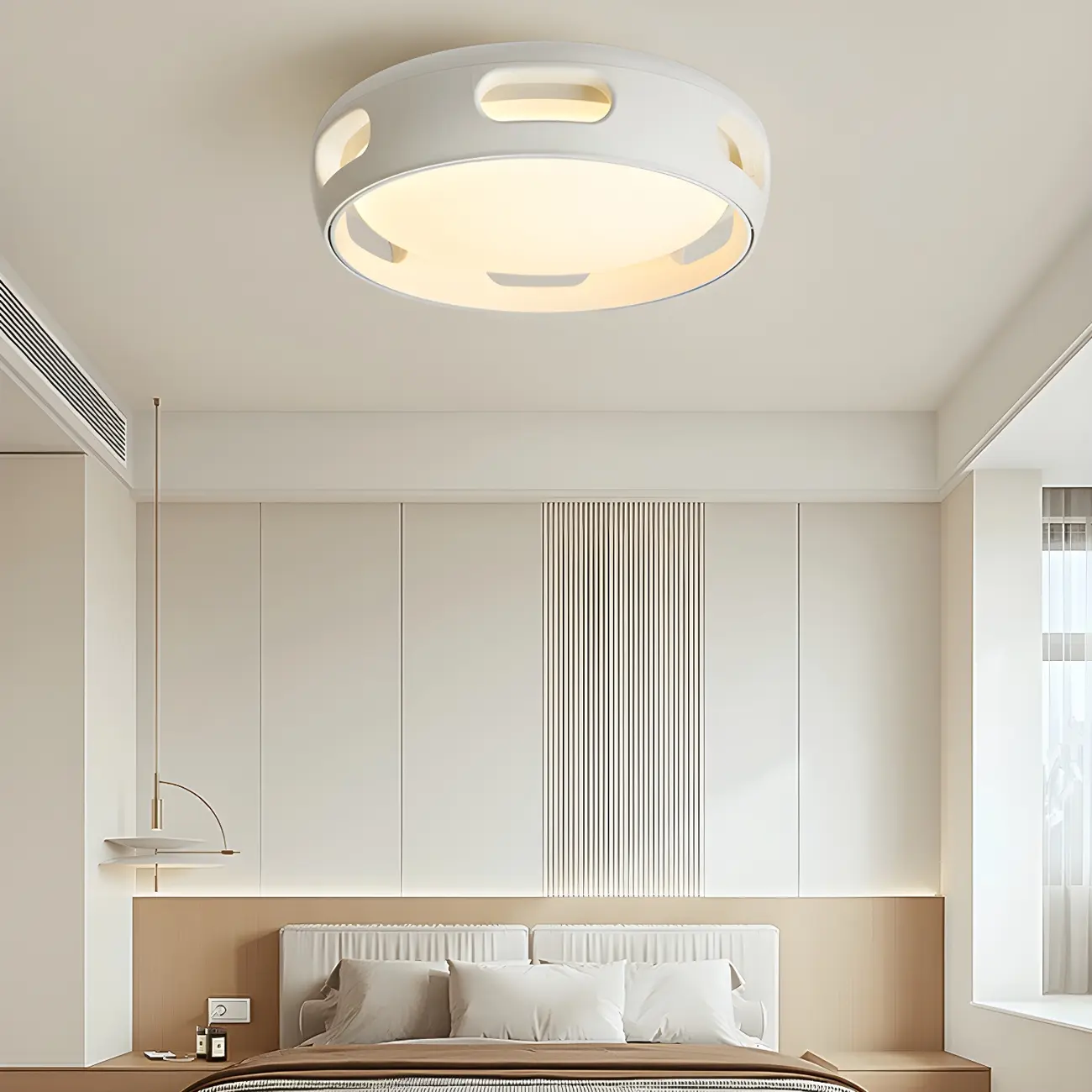
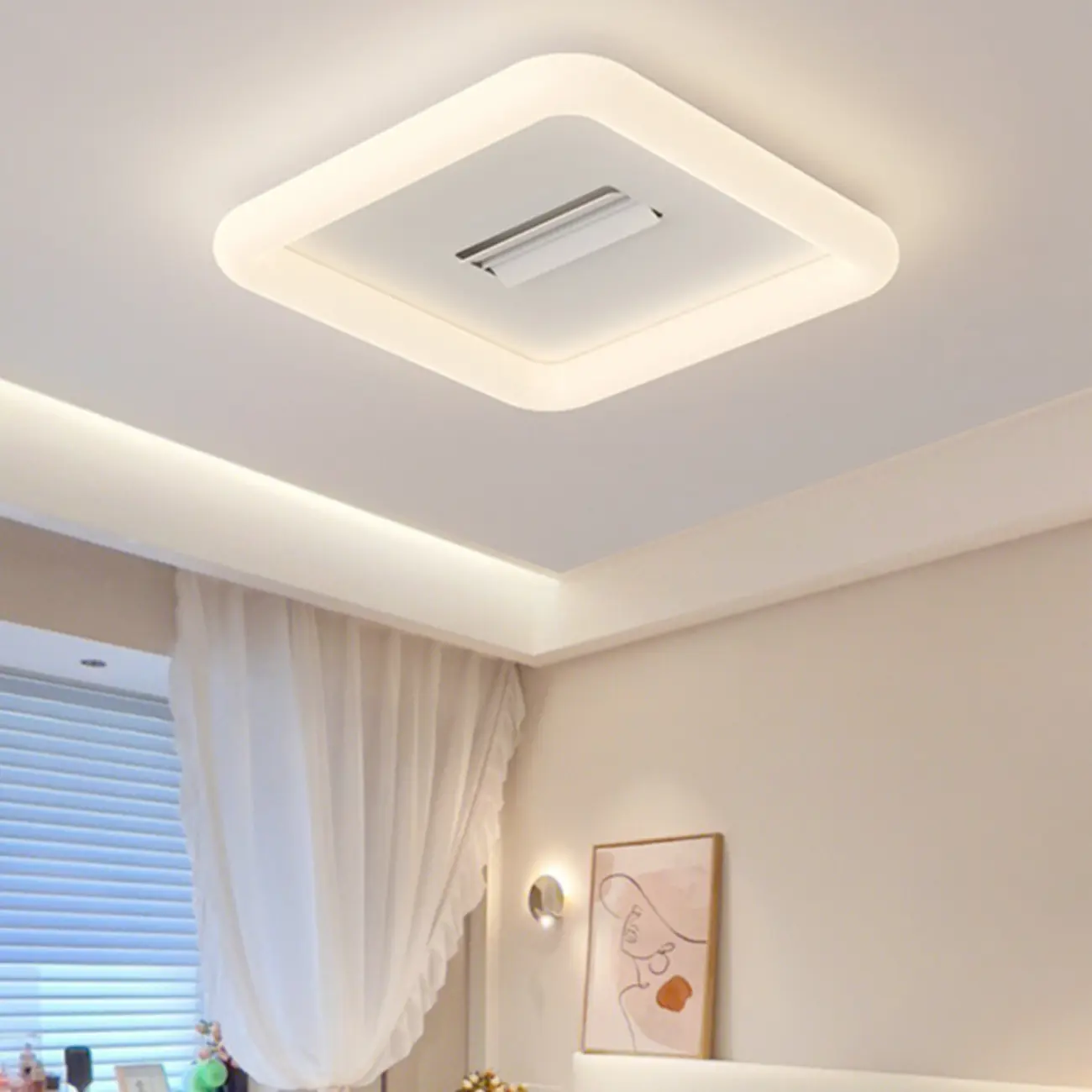
Whereas, with bladeless ceiling fan options, you will be prioritizing subtle integration instead. Such fans’ seek rings appear like modern light fixtures, and their neutral colors blend against most ceiling paints. Moreover, a bladeless flush-mount ceiling fan disappears entirely when off. This will create clean, uncluttered ceiling lines.
And, their geometric shapes complement contemporary furniture too. You notice comfortable air movement, not the fixture. They work especially well in small modern apartments.
5. Costs
Initial costs show clear differences:
-
Basic blade fans start around $100
-
Simple bladeless models begin at nearly $150
-
Premium blade designs' price can reach $800
-
High-end bladeless units can be around $1,500
Long-term expenses for both fans:
-
Blade fan repairs cost little ($20 per blade)
-
Bladeless internal repairs average $200+
-
Blade units last 15-20 years typically
-
Bladeless lifespan averages 10-12 years
Blade fans clearly offer a more budget-friendly option. Their simple technology keeps prices affordable. And their replacement parts are also widely available.
Bladeless premium buys modern benefits, but they are more costly. With these fans, you invest in safety, and quiet operation and maintenance become simpler for daily cleaning.
Bladel Vs Bladeless Ceiling Fan Recommendation Based on Space
Without a doubt, every room has its own unique cooling needs. So you should match your fan type to your space's size and purpose, too. Let's dig deeper and find out which type of fan goes with which type of space.
1. Great Rooms and Open Concepts
As large rooms over 250 square feet need powerful airflow, traditional blade fans excel in these spaces. Their 52-inch or wider blade spans move massive air volumes. This way, you'll feel cooling relief across the entire area quickly.
Moreover, the high-ceiling room also benefits from strong downward drafts of blade fans.
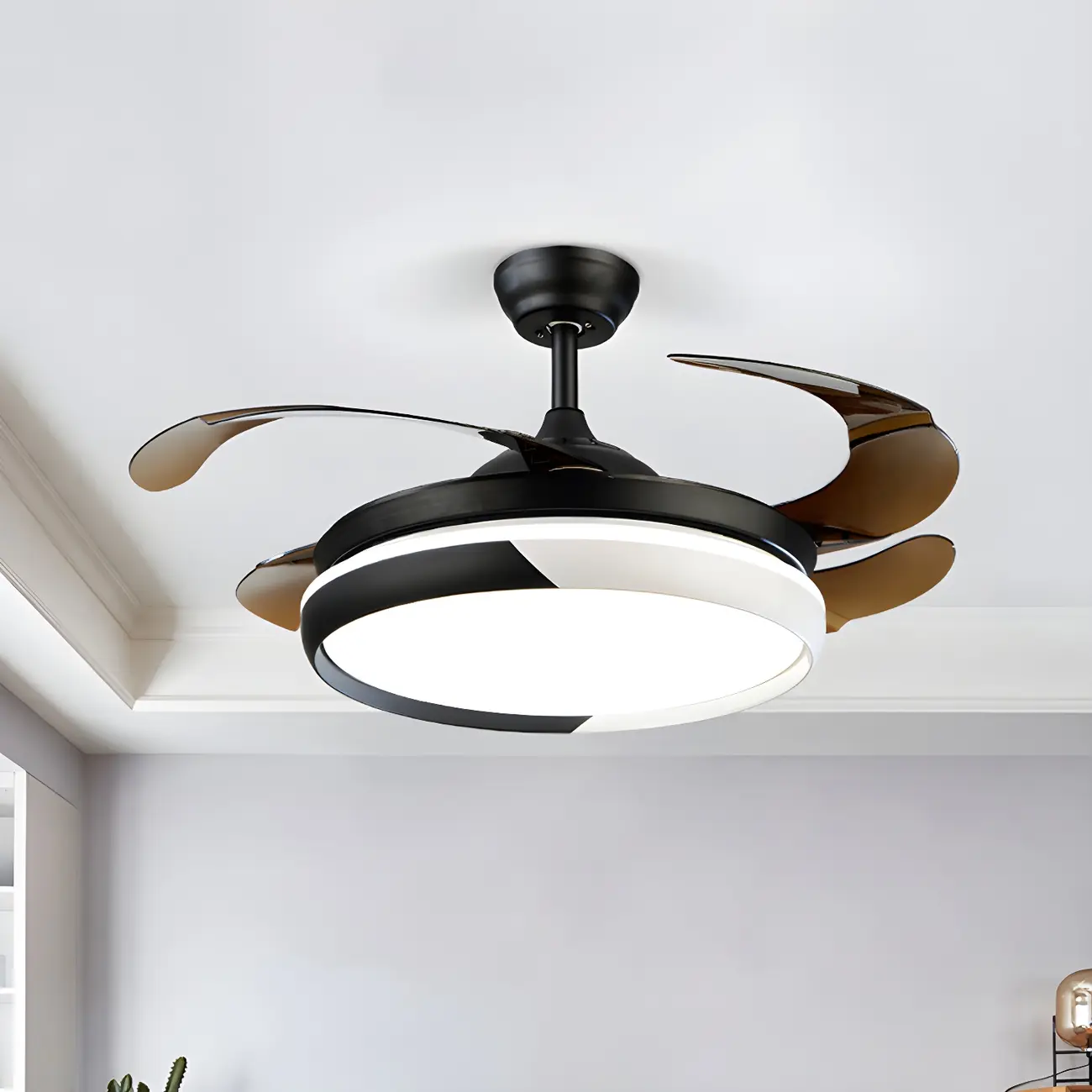
Whereas the bladeless ceiling fans are not a good option for big rooms or open concepts. As their gentle airflow gets diluted across wide areas, you might need multiple units for full coverage. This will end up increasing costs significantly.
You should consider blade fans for living rooms or kitchens because such fans can handle cooking heat or crowded gatherings effortlessly.
2. Bedrooms and Nurseries
We all deserve a sound, restful night's sleep without any disturbance. Therefore, for sleep spaces, you should go with bladeless fans. These fans provide quiet and gentle comfort. Their consistent 35-decibel hum won't disturb your sleep, and the smooth airflow feels like natural night breezes.
Moreover, you can also choose bladeless ceiling models based on your lighting needs. A bladeless ceiling fan with light offers soft bedtime lighting. Dimmable LEDs create a perfect reading ambiance. And for pure airflow focus, you should select bladeless ceiling fans without light versions. Both options maintain clutter-free ceilings.
Traditional blade fans are not a good option for bedrooms or nurseries. Their variable noise disrupts light sleepers, both adults and babies. And its visible blade rotation also causes distracting shadows. A specialized kid's ceiling fan is necessary for kids.
3. Patios and Covered Terraces
Outdoor spaces need weather-resistant solutions. So both fan types offer specialized models. You should check for damp location ratings first before buying ceiling fans.
Traditional blade fans work well outdoors. You should look for all-weather metal or ABS plastic blades. And you should make sure the fan’s motor has proper sealing against moisture. Blade fans’ powerful airflow cools large patios effectively.
However, outdoor bladeless ceiling fan options bring modern benefits to your space. No blades means no dust collection during storms. And the smooth surfaces wipe clean easily after pollen seasons, too. Moreover, their sealed electronics resist corrosion better.
You should consider your climate carefully before buying a ceiling fan for the outdoors. If you live near coastal areas, you need marine-grade corrosion protection. Whereas, desert environments require dust-proof motors. Both fan types offer suitable solutions, though.
Discover the Best Deals on Ceiling Fans and More With HomeyFad
We have given you a detailed comparison of bladeless vs blade ceiling fans. With the help of this guide, you can now choose ceiling fans based on your unique requirements and room size.
The final choice between blade and bladeless ceiling fans depends entirely on your space and priorities. You should always consider the points we have discussed above before buying a ceiling fan.
Want to know more about ceiling fans and other home furniture? You can check out our blog for the latest home decor trends, installation techniques, and much more.
And if you are looking for the best place to buy home furniture that speaks to you, you should check out Homeyfad. Here you will find furniture pieces that complement your home and personality perfectly.

 Add Us On Google