
Do you consider wattage when choosing pendant lights for your home? Most people usually only consider style and price and have a rough idea of wattage.
This ends up with light that needs to be lighter and brighter. Choosing the right wattage for a pendant light has become a problem for many families.
Today I will show you how to quickly choose the pendant light wattage you need for your space with an easy-to-understand guide to make wattage selection less of a challenge!
What Is the Wattage for a Pendant Light?
To explain what wattage is, you can think of it as the “fuel” needed for the light to shine!
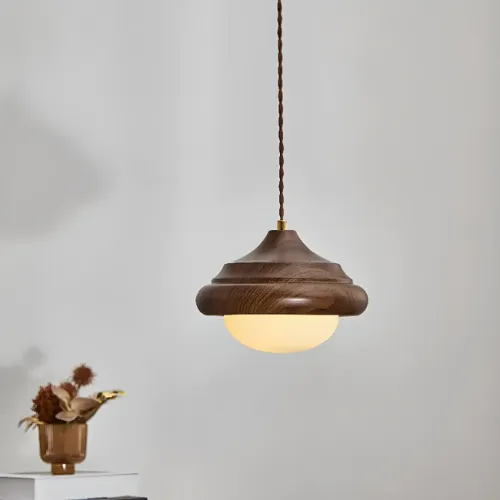
In our daily lives, many appliances are measured in watts; for lamps, it means how much energy it takes for the bulb to produce light. Usually the higher the wattage, the brighter the fixture is, but the more electricity it consumes. Lower wattage, and vice versa.
But while energy consumption varies greatly from bulb to bulb, LED bulbs are low-wattage, bright, and consume less energy! For reference, here are the corresponding wattage and lumen figures for various bulbs:
|
Lumes |
LEDs |
Incandescent |
Halogens |
CFL |
|
110-220 |
3.5W |
15W |
10W |
5W |
|
250-440 |
5W |
25W |
20W |
7W |
|
550-650 |
9W |
40W |
35W |
9W |
|
650-800 |
11W |
60W |
50W |
11W |
|
800-1500 |
15W |
75W |
70W |
18W |
|
1600-1800 |
18W |
100W |
100W |
20W |
So choosing a pendant light with LEDs, with low wattage, high brightness, and low energy consumption, is the most efficient and appropriate type of bulb. In the following, we still speak in terms of the wattage of LEDs.
5 to Consider When Choosing the Wattage of a Pendant Light
When choosing the wattage of a pendant light, it is not just a single factor to consider but a combination of several aspects to think about to determine what wattage pendant light is ideal.
We give these five considerations: lighting needs, space size, bulb type and cost-effectiveness, pendant light style and design, and pendant light height.
We will look at these five factors and consider how to choose the wattage of your pendant light.
1. Lighting Needs
We all know there are three types of lighting needs in a residence: task lighting, ambient lighting, and accent lighting.
-
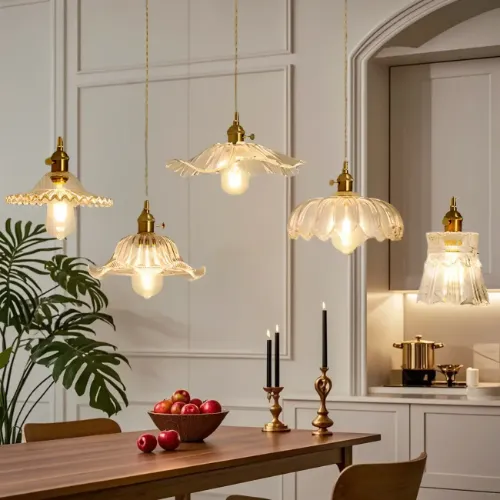
Task lighting: For using pendant lights in locations such as working in the kitchen, reading corners, etc., you should choose a high wattage, such as 8-20W LEDs per bulb.
-
Ambient Lighting: As ambient lighting for a space, generally choose 4-15W LEDs, which will produce around 200-800 lumens of soft and even light.
-
Accent lighting: To emphasize a certain area and create an atmosphere, you can choose a 5-11W LED pendant light.
.png?w=750&h=300)
2. Different Space and the LED Wattage of the Pendant Light
The larger the space, the more lumens you need, so you can use more than one pendant light or choose a higher-wattage pendant light.
|
Room Size (sq ft) |
Brightness (lumens) |
LED Pendant Wattage |
The Most Suitable Space |
|
50 sq ft |
400-800 |
5-10W |
Small spaces such as corners, closets, or hallways
|
|
100 sq ft |
800-1,600 |
10-15W |
Small bedrooms or home offices |
|
150 sq ft |
1,200-2,400 |
15-20W |
Desks, small kitchens, or bathrooms |
|
200 sq ft |
1,600-3,200 |
20-30W |
Medium-sized living space or kitchen |
|
300 sq ft |
2,400-4,800 |
30-50W |
Spacious dining room, open kitchen, or entertainment area
|
|
400 sq ft |
3,200-6,400 |
40-60W |
Master bedroom, large kitchen, or home office.
|
|
500 sq ft |
4,000-8,000 |
50-80W |
Spacious family room, garage, or home theater
|
3. Bulb Type and Cost Efficiency
As we mentioned in the previous section, of the several common light bulbs, LEDs and CFLs are more efficient.
While incandescent bulbs cost less, they don't last nearly as long as LEDs, and even though LED pendant lights cost more upfront, the 10-watt LED bulb is as bright as a 60-watt incandescent bulb, making it the ideal choice for long-term efficiency.
4. Pendant Light Style and Design
The design of the pendant light will also affect the choice of wattage.
Try to choose a pendant light with a transparent shade; for opaque, covered pendant lights, you need to choose a relatively high wattage to ensure normal lighting.
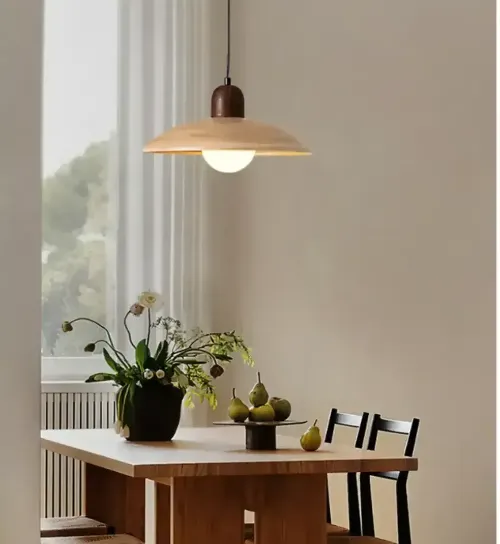
For open-bulb pendant lights without shades, the wattage needs to be slightly lower than normal so as not to be too bright.
Explore More Pendant Lights:
| Green Pendant Light | Rattan Pendant Light | Wood Pendant Light | 3-Light Pendant | Gold Pendant Light | Globe Pendant Light | Glass Pendant Lights | Led Pendant Lights |
5. Height of Pendant Light
The height of the space is not the same, the pendant light installation height is different, and the wattage is naturally different.
Installation of higher pendant lights needs to be a little higher wattage to have enough light. The lower pendant light is not uniform, but as a task or focus light, the wattage needs to be a little lower in order not to be blinding.
Pendant Light Wattage and Choices for Common Uses
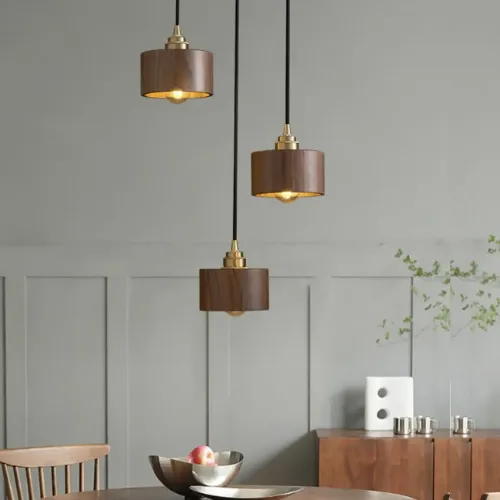
Different spaces choose different types of pendant lights and wattages; according to their needs, we give some applicable pendant lights and wattages for your reference.
-
Kitchen: Preparing food in the kitchen requires precise and bright lighting. For kitchen island pendant lights, choose 20-40W LED lights with focused beams to improve visibility in the cooking area.
-
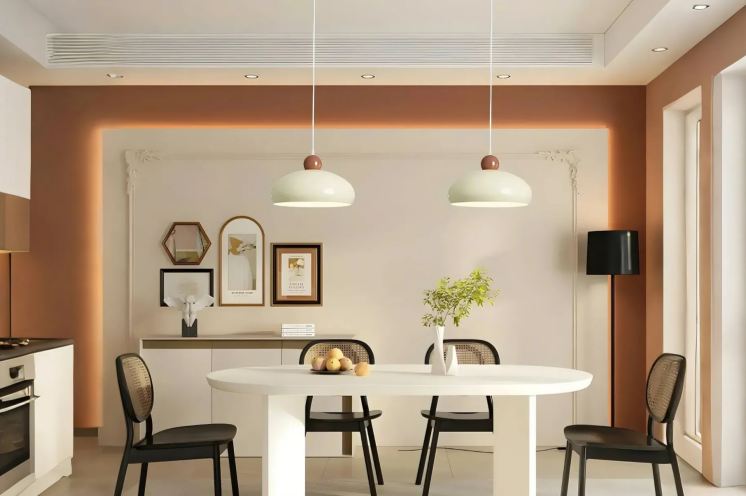
Dining Room: The dining room can use pendant lights as ambient lighting. Choose a central pendant light with 20-50W LEDs for use over the dining table to create a warm and relaxing atmosphere for meals.
-
Living Room: The living room is the most active place for family activities; choose a 15-30W LED for soft ambient lighting. Smaller-wattage pendant lights can also be used as task lighting next to the sofa or over the coffee table.
-
Bedroom: Pendant lights are often used in bedrooms as bedside lamps, so choose a 10-20W LED pendant light to be placed on the side of the bed or an adjustable pendant light to be placed in the center for general illumination.
-
Bathroom: Choose a 15-25W LED pendant light for the bathroom near the mirror, or pick a location you like for decorative lighting. Be careful to choose a waterproof pendant light with a shade rather than an open bulb.
-
Entrance/Hallway: Pendant lights can also be used in entrances or hallways. Choose smaller 10-20W LED pendant lights that match the style of your home for decorative and functional lighting. Make sure the light is evenly distributed for safety and aesthetics.
Additional Pendant Light Selection Tips
-
Pay attention to layered lighting. Combine pendant lights with other lighting sources, such as flush-mount ceiling lights or floor lamps, for a more balanced and aesthetically pleasing space.
-
Consider the overall aesthetics and make sure the style of the pendant light complements the space while still providing plenty of light.
-
Try testing different power levels to determine the best lighting for your room and tasks.
-
Choose a larger-sized pendant light that can accommodate higher-wattage bulbs for better light diffusion.
Buy Pendant Lights from HomeyFad to Make Your Space Bright!
Choose the right wattage pendant light without forgetting to focus on the style and beauty of the pendant light.
HomeyFad meets your needs, and we have a consistent philosophy that guarantees bright and beautiful. Click through to shop; there will always be a pendant light you like!
If you have any questions, please feel free to contact us!
Frequently Asked Questions
Q: Is 60W bright enough for a kitchen?
A: A 60-watt LED bulb can illuminate a small kitchen, but if you have a large kitchen in your home, use 2 or more light sources and mix them up, such as LED strips, LED center pendants, or small lights.
Q: Is a 40-watt pendant light enough for a living room?
A: Although living rooms tend to be larger, a 40-watt LED chandelier can illuminate smaller spaces just as effectively as office lighting. However, a chandelier with a 40-watt bulb will only be suitable for decorative illumination and won't be bright enough.
Q: Do 40-watt bulbs use a lot of electricity?
A: Incandescent bulbs consume more power, but LED bulbs do not. A 4-6 watt LED bulb can achieve the same brightness as a 40-watt incandescent bulb, which is energy efficient.
Q: What is the difference between a chandelier and a pendant light?
A: Chandeliers have a complex design, usually with multiple bulbs, and are suitable for central lighting in living rooms, restaurants and other places.
Pendant lamps are relatively simple and practical in their design and style, but with a variety of styles, they are suitable for kitchen islands, bedrooms and other small spaces.
