
(4)-2.png?w=1920&h=650)
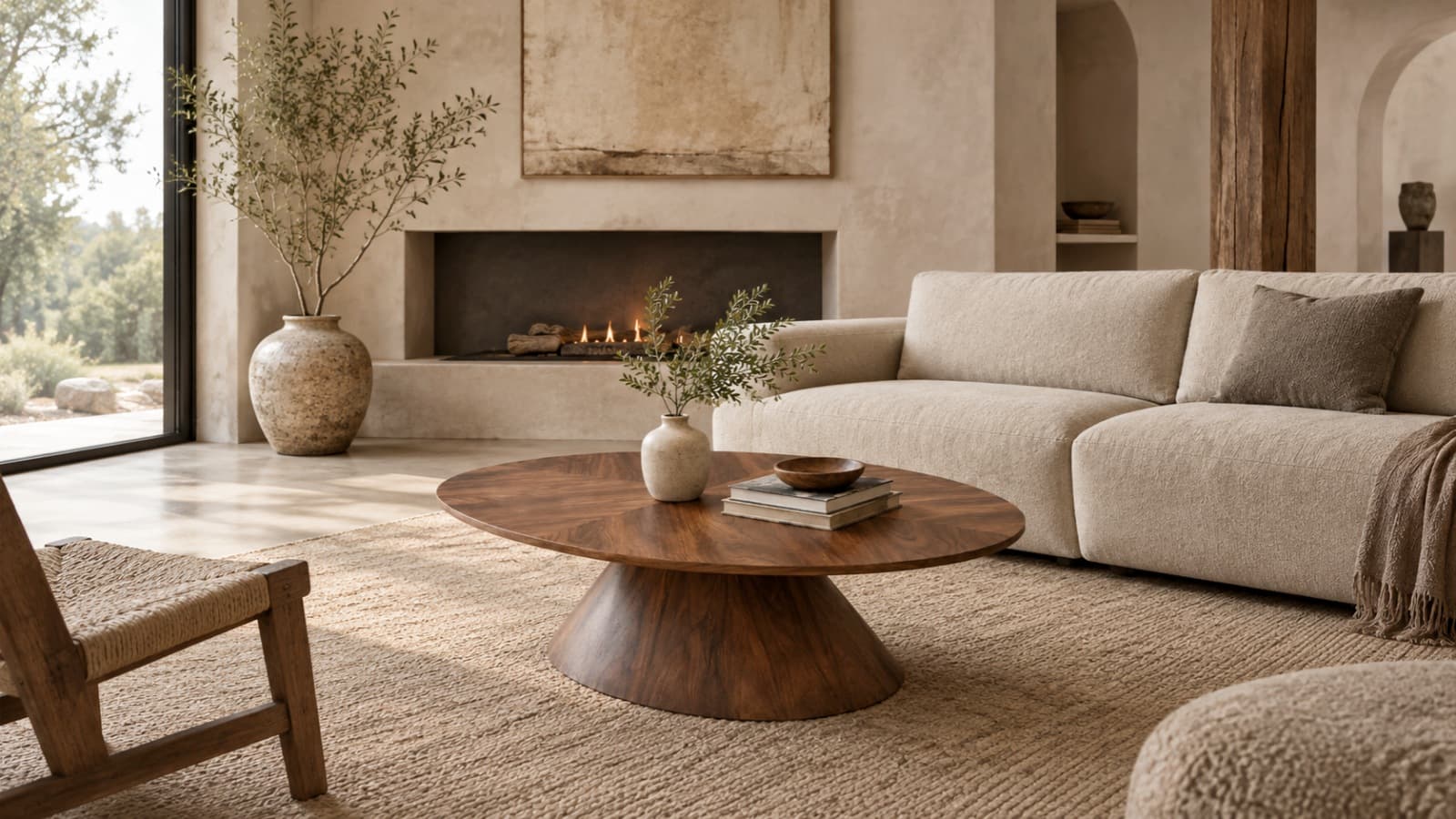
Wabi-sabi won't be going anywhere next year. It's not that kind of thing. It comes from Japanese philosophy—basically the idea that beauty lives in what's imperfect and what's impermanent. A bowl with a crack in it. A table that's gone grey from years outside. A room that looks like it came together slowly, not in one frantic weekend.
For your living room, this means letting go a little. Stop chasing perfection. Natural textures help. Warm light helps. Fewer things are better ones. And the truth is, you can start with whatever's already in your house. Here's how.
What Is a Wabi Sabi Living Room?
Wabi-sabi began in 16th-century Japan during tea ceremonies. It is about seeing beauty in things that aren't perfect. It is about things that do not last. It is about things that come from nature. Small things. Uncompleted things. Peaceful things.
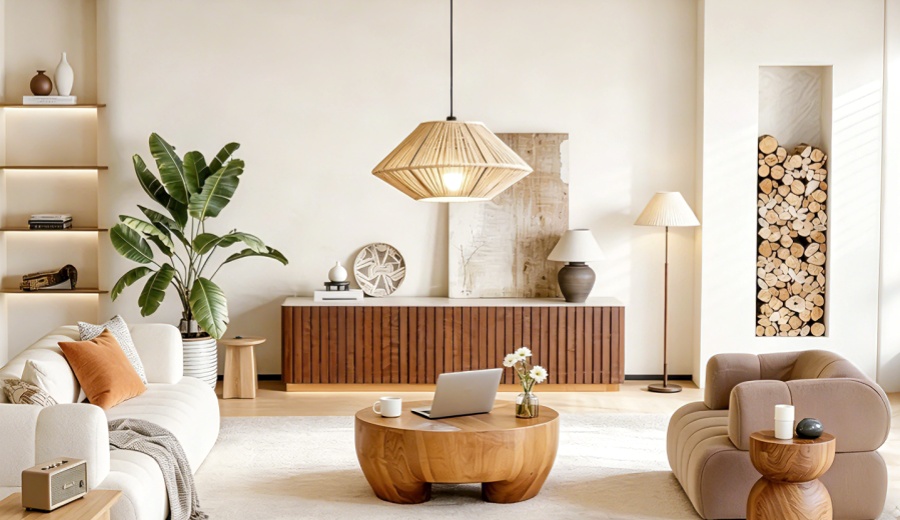
A wabi-sabi living room looks like this: materials that show their age. A few meaningful objects, not shelves full of decor. Soft, warm light.
Three principles guide it all.
-
Kanso: Simplicity. The art of taking things away.
-
Fukinsei: Asymmetry. No matching pairs, no perfect symmetry.
-
Datsuzoku: Release from convention. Especially the pressure to fill every empty space.
What Makes It Different?
You have probably heard of Japandi and minimalism. They look similar to wabi‑sabi in some ways. Japandi and minimalism are not the same.
| Style | Main Focus | Finish | Arrangement |
| Wabi Sabi | Imperfection, time, material character | Varied, matte | Asymmetric but balanced |
| Japandi | Calm, restraint, function | Refined, low-sheen | Ordered and balanced |
| Minimalism | Reduction and clarity | Clean, consistent | Highly edited |
The key difference? This way of decoration embraces age and irregularity. Japandi is cleaner and more controlled. Minimalism is about reduction, not texture.
Here's what wabi-sabi is not. It's not about ignoring something or causing harm. There is a difference between something that has grown old in a way and something that is just broken. It's not about filling a room with fashionable decorations. Too many distressed finishes feel themed. And it's not about matching everything perfectly. That goes against the whole idea.
8 Wabi Sabi Living Room Ideas
You do not have to change your living room to get this look. You only have to make smart changes. Let's look at them.
Idea 1: Start With One Piece You Keep
Look around your living room. Is there a leather chair that's got soft over time? A wood table with visible grain? A ceramic piece you've had for years? Start there. Use that piece as your anchor; no need to buy a whole new set. When something has history, the room feels more collected. More real.
Idea 2: Break One Matching Pair
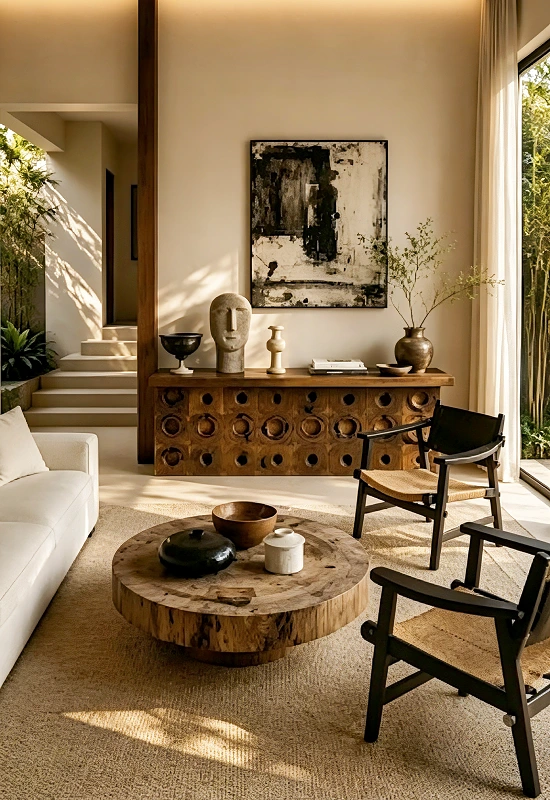
If you have got two identical lamps on either side of the sofa, then you need to replace one. Put a ceramic object there instead. Or let an accent chair balance a side table instead of a matching set. One small change creates what designers call "controlled irregularity." It sounds fancy. It just means things don't look perfectly mirrored anymore.
Idea 3: Pair Clean Furniture With Irregular Surfaces
Don't make everything look aged or handmade. That gets old fast. Too many distressed finishes feel themed. Instead, let one clean piece sit next to something with texture. Wood grain. Creased leather. Woven fiber. An irregular ceramic bowl. The contrast between smooth and textured is what makes it work.
Idea 4: Add One Object With Real Meaning
A handmade bowl. An older book. A ceramic piece with an uneven glaze. One object that actually means something to you. Give it space. Don't surround it with filler. One meaningful object carries more weight than a shelf full of coordinated accessories. Less really is more here.
Idea 5: Use Light to Reveal Texture
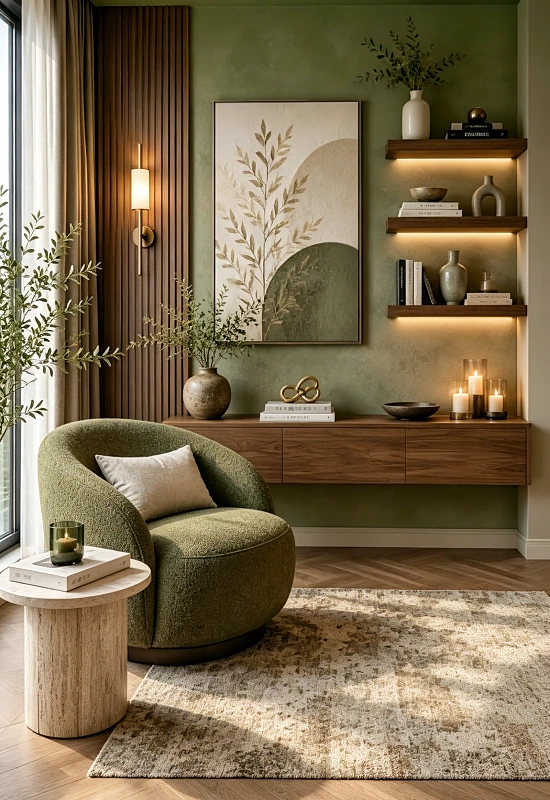
You'd be surprised how much lighting matters. Soft daylight brings out the grain in leather and the patterns in stone. At night, use lamps so the light falls across textured surfaces. Skip the bright overhead fixtures. They wash everything out. Warm light reveals what makes your materials interesting.
Idea 6: Furniture That Works
Seating: Comfort comes first. Look for materials that develop character over time. Leather that softens. Linen that wrinkles in a good way.
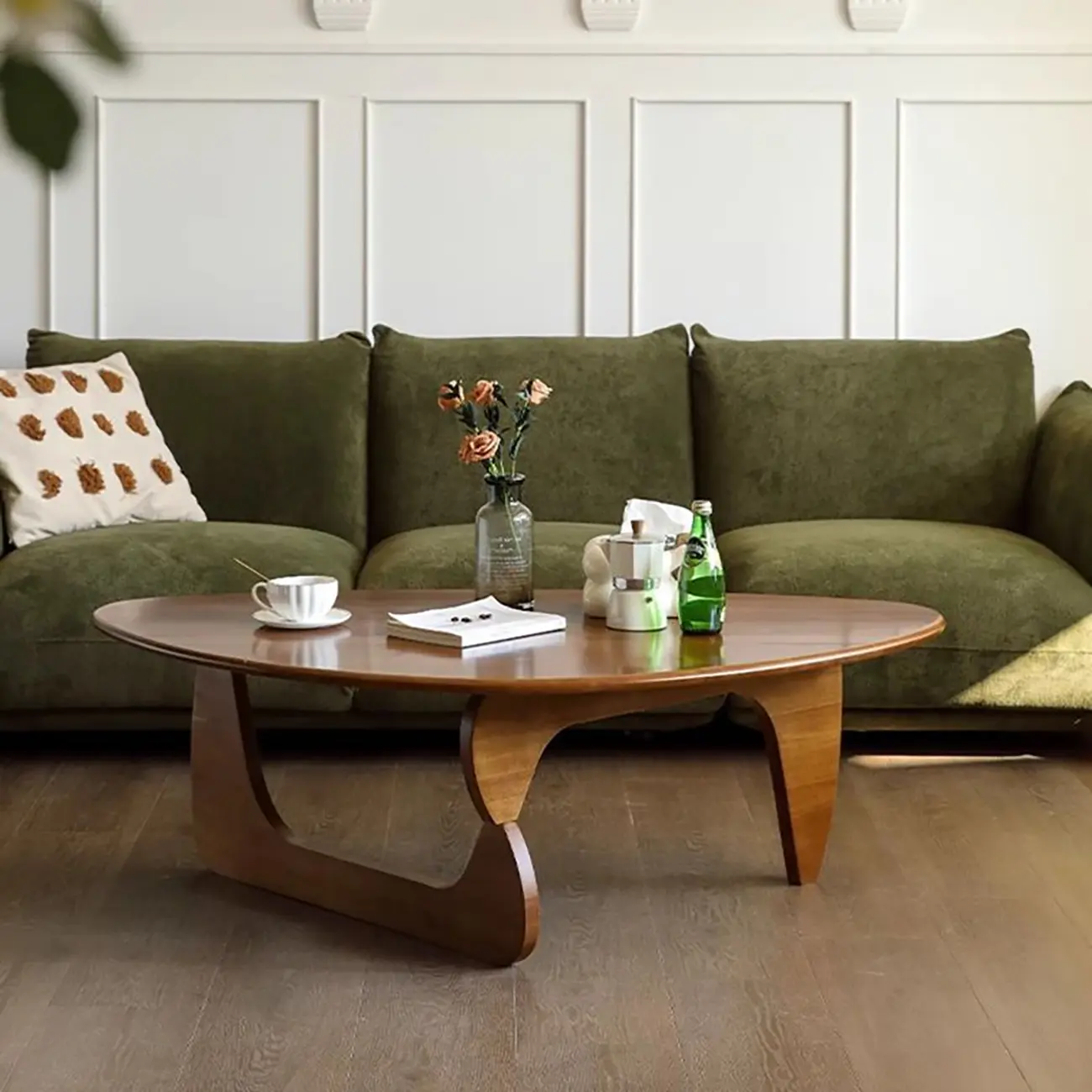
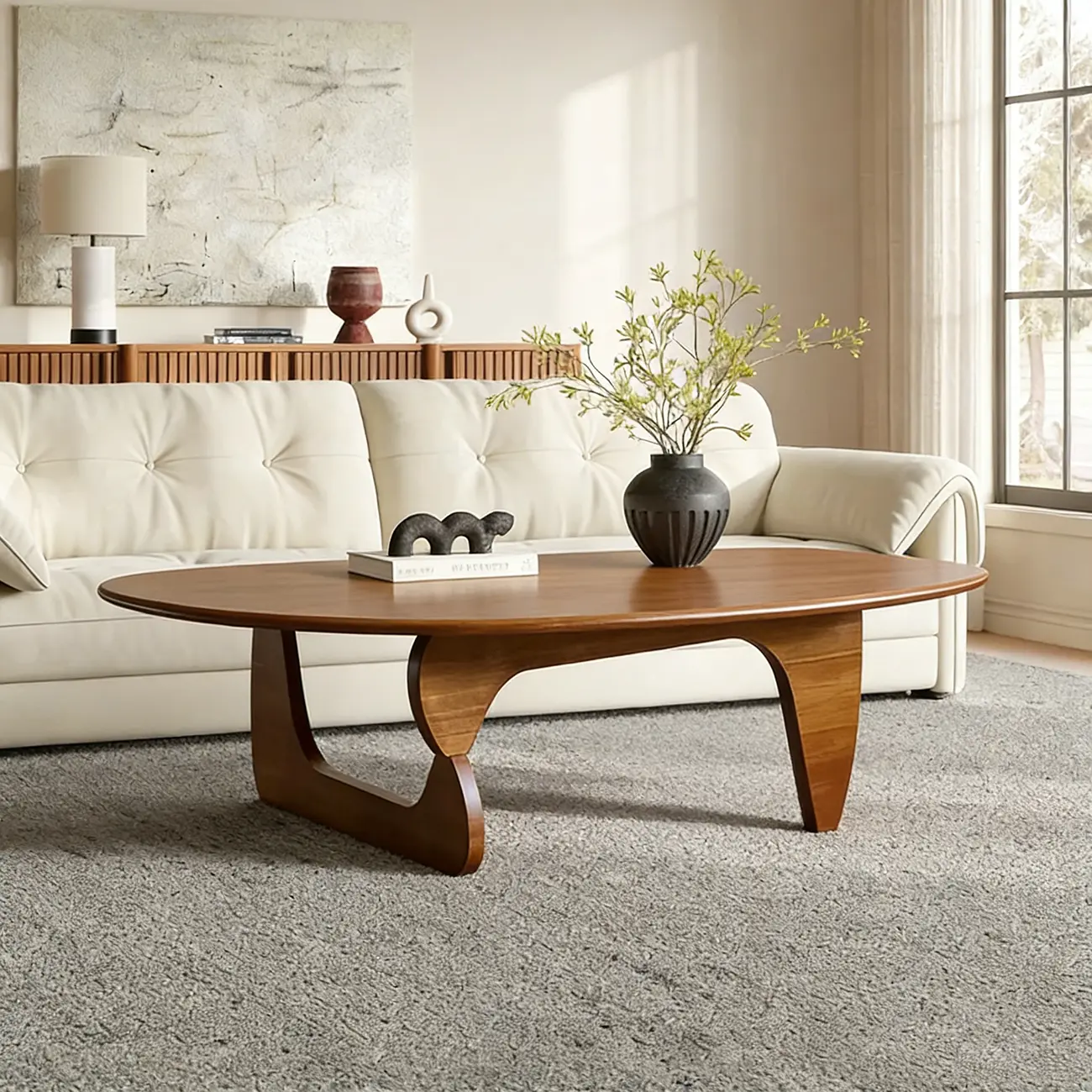
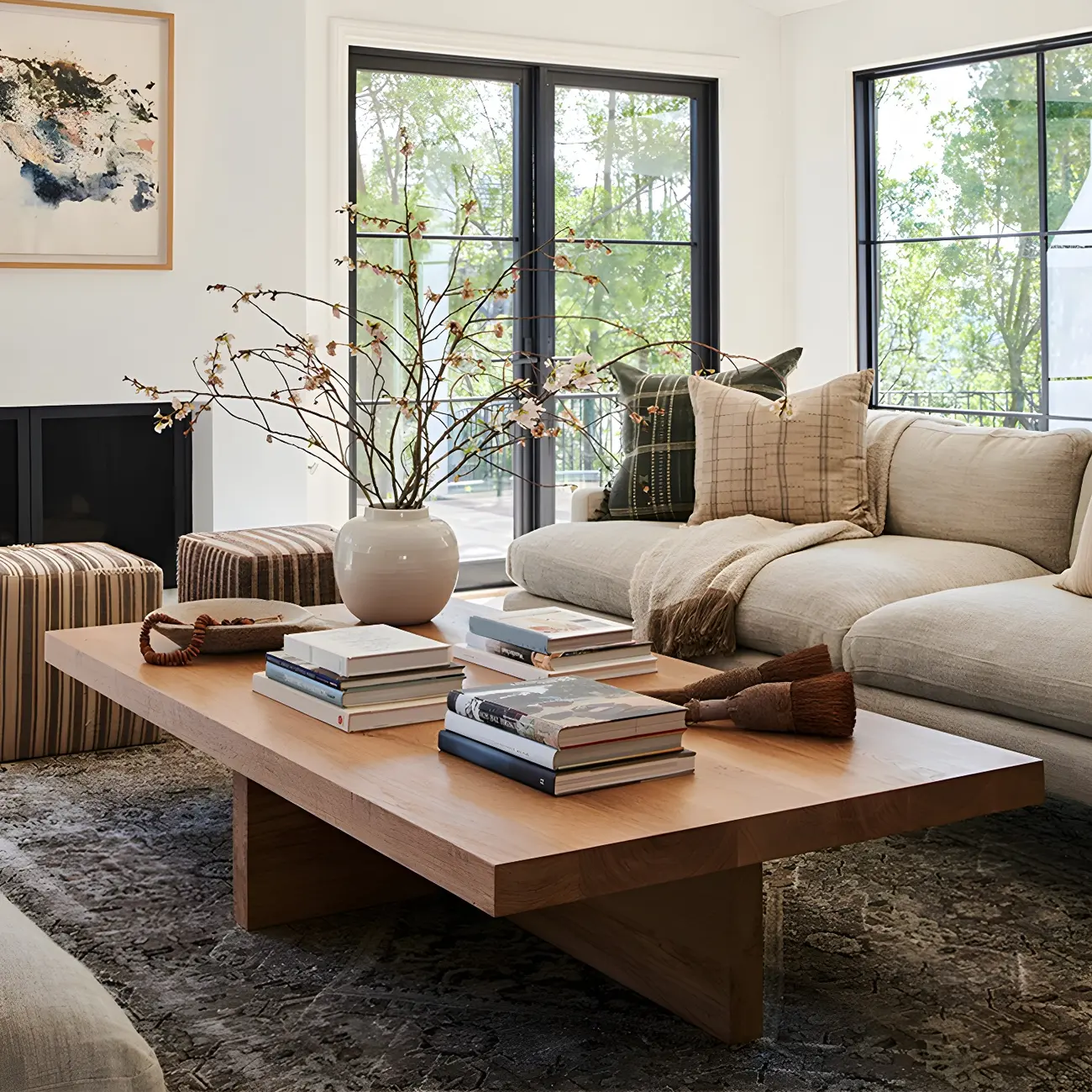
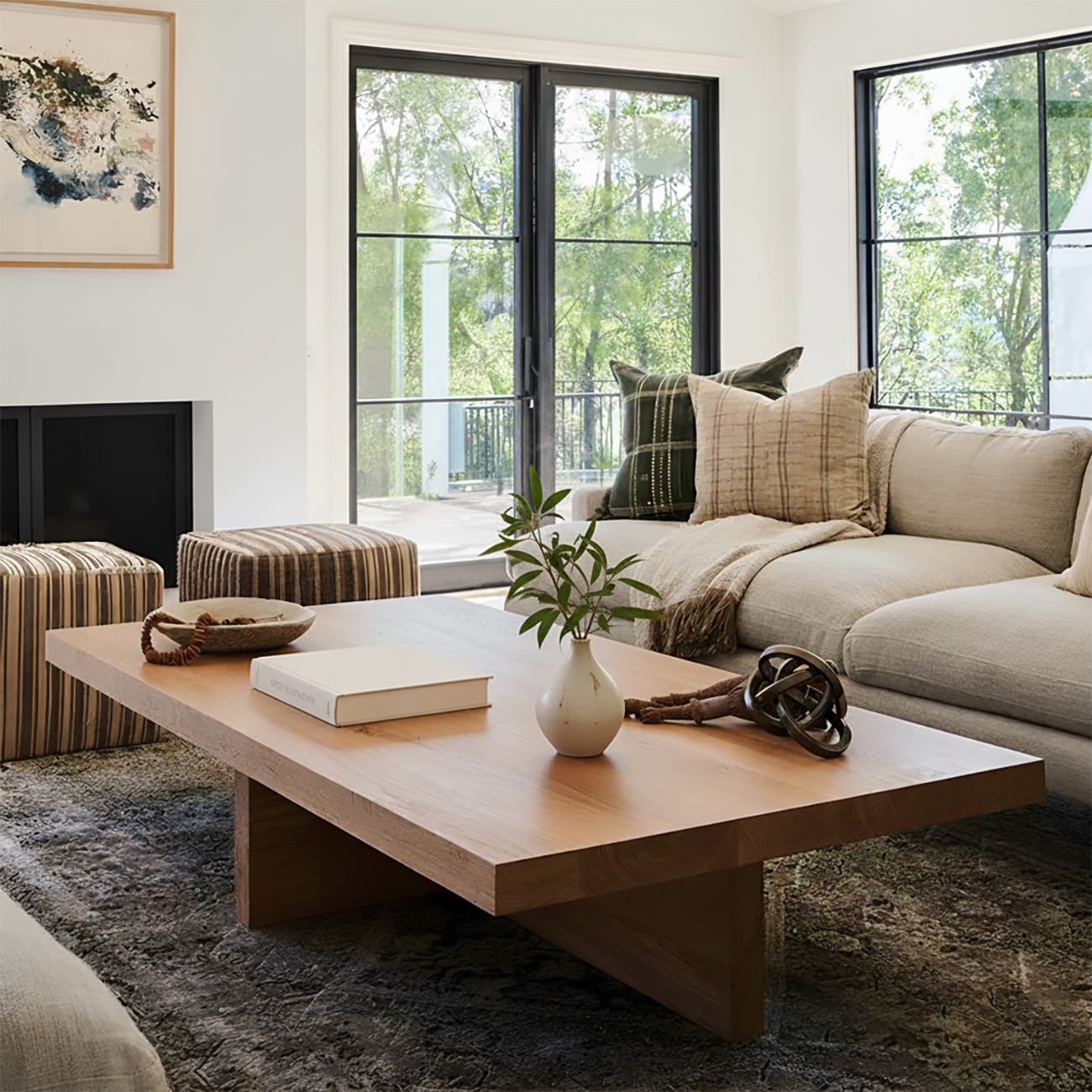
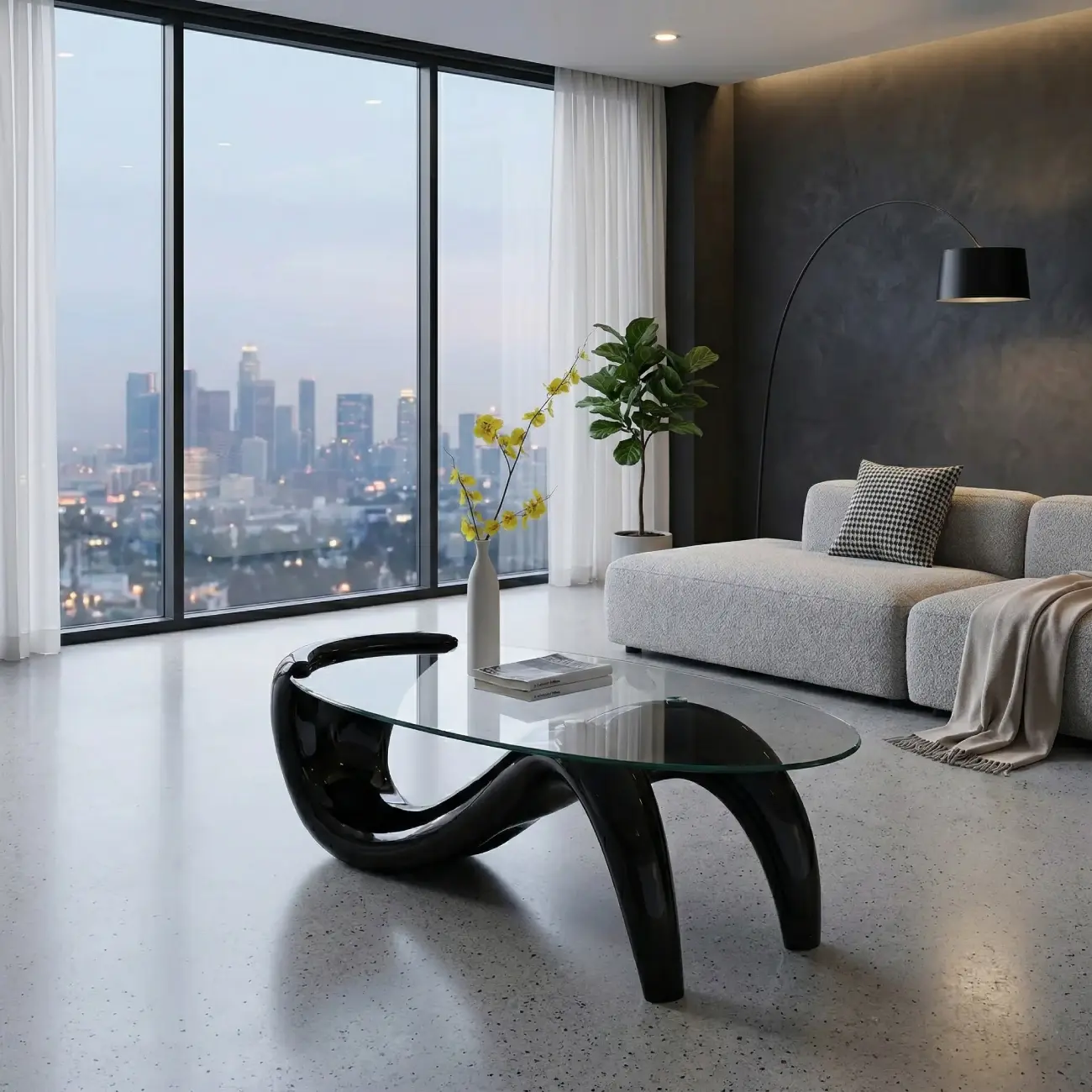
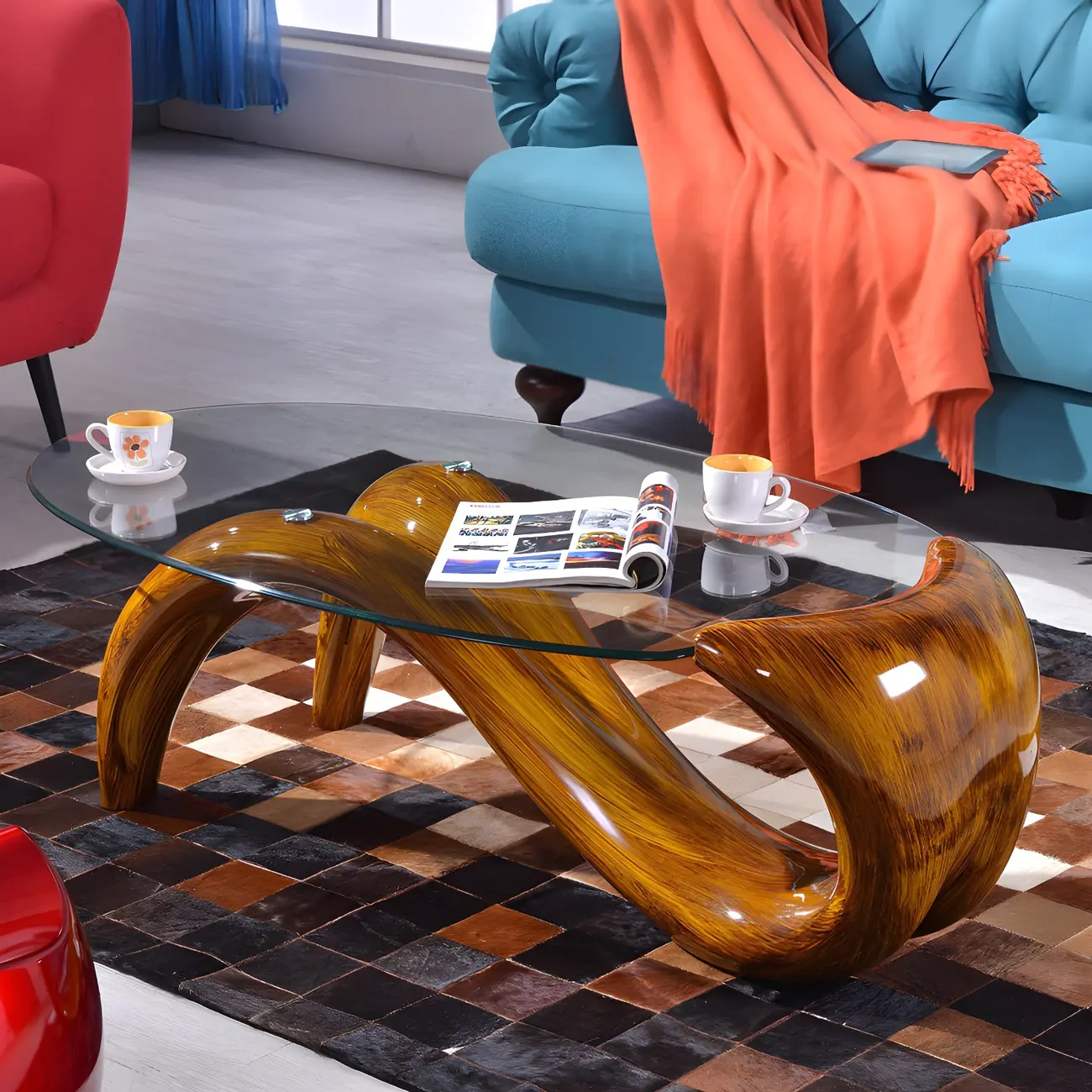
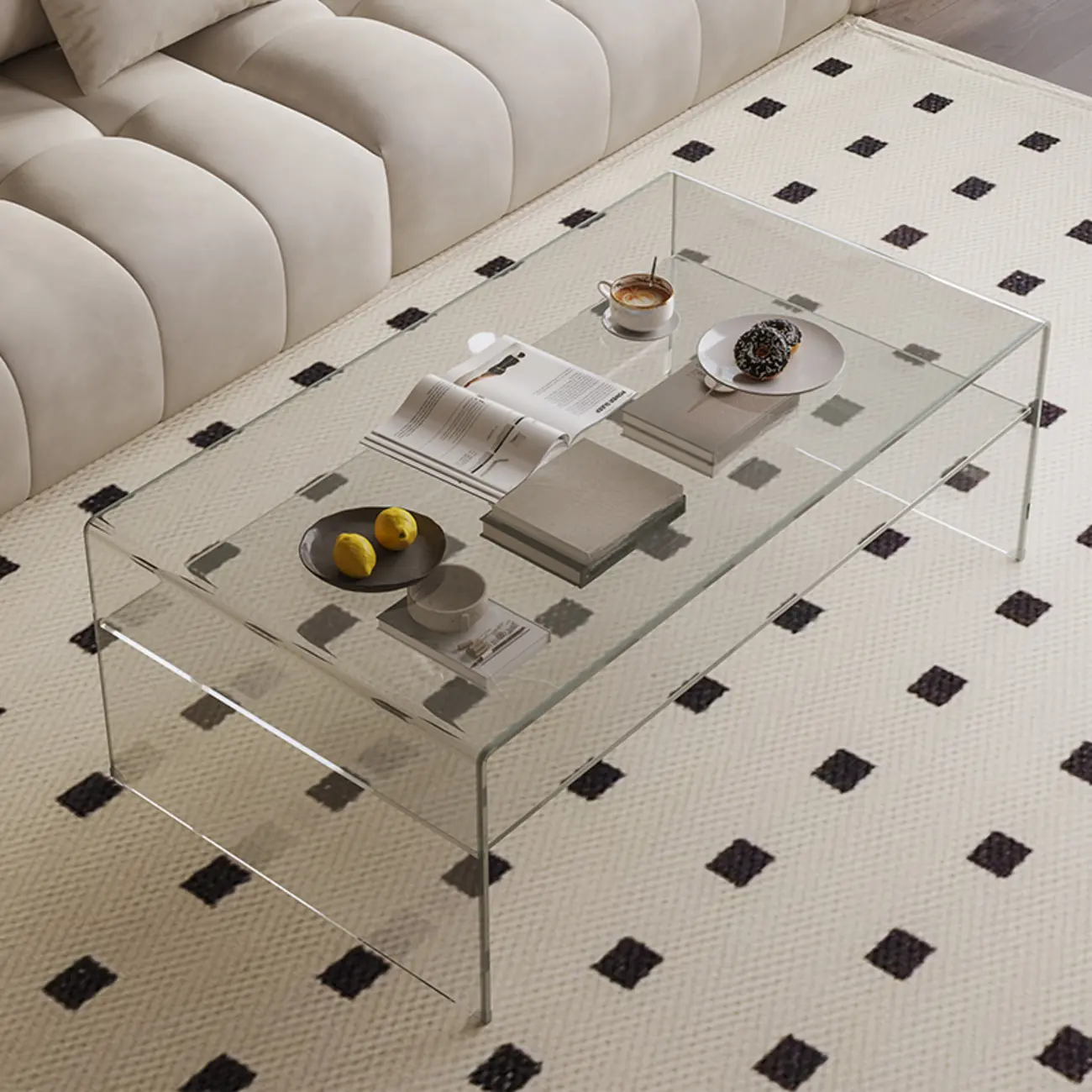
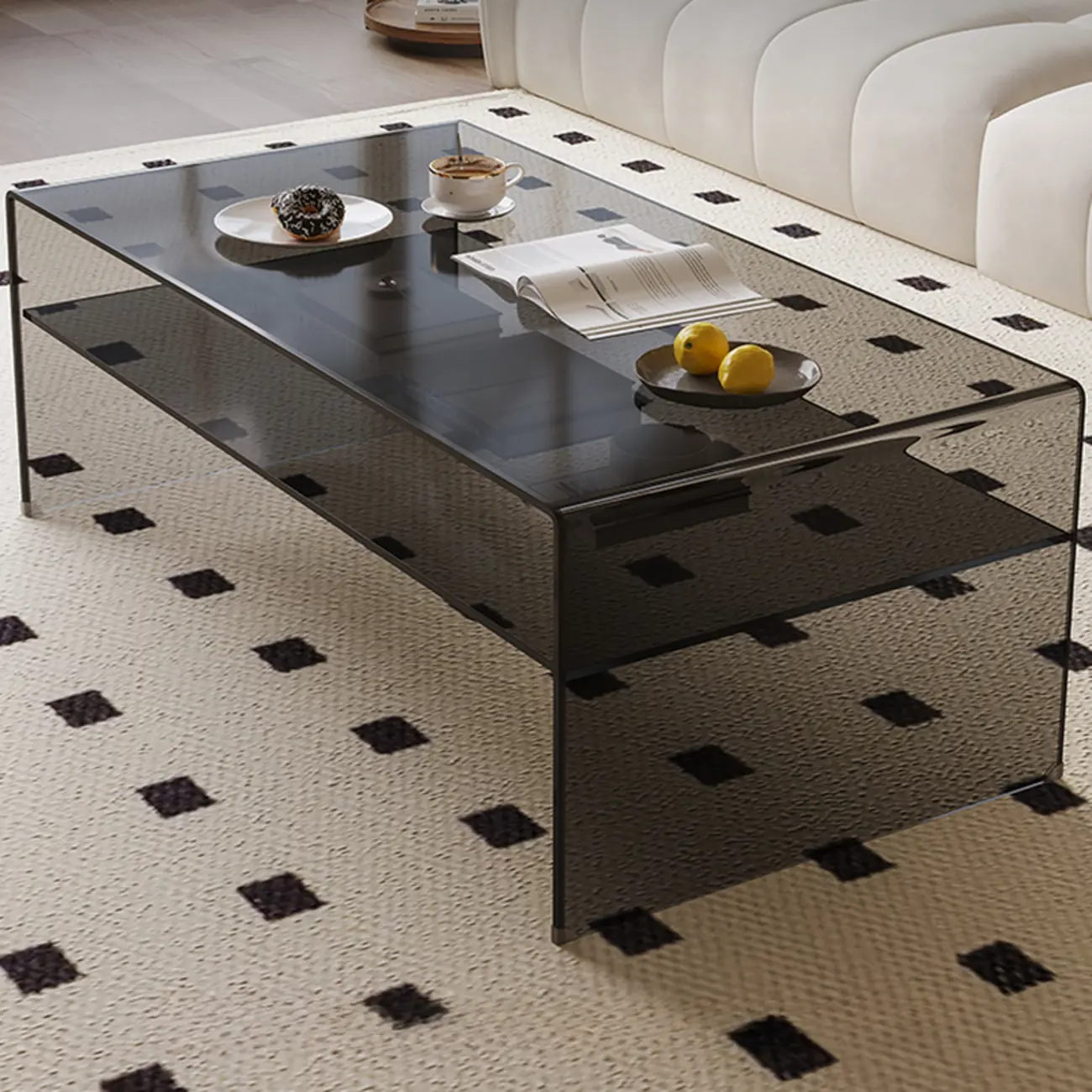
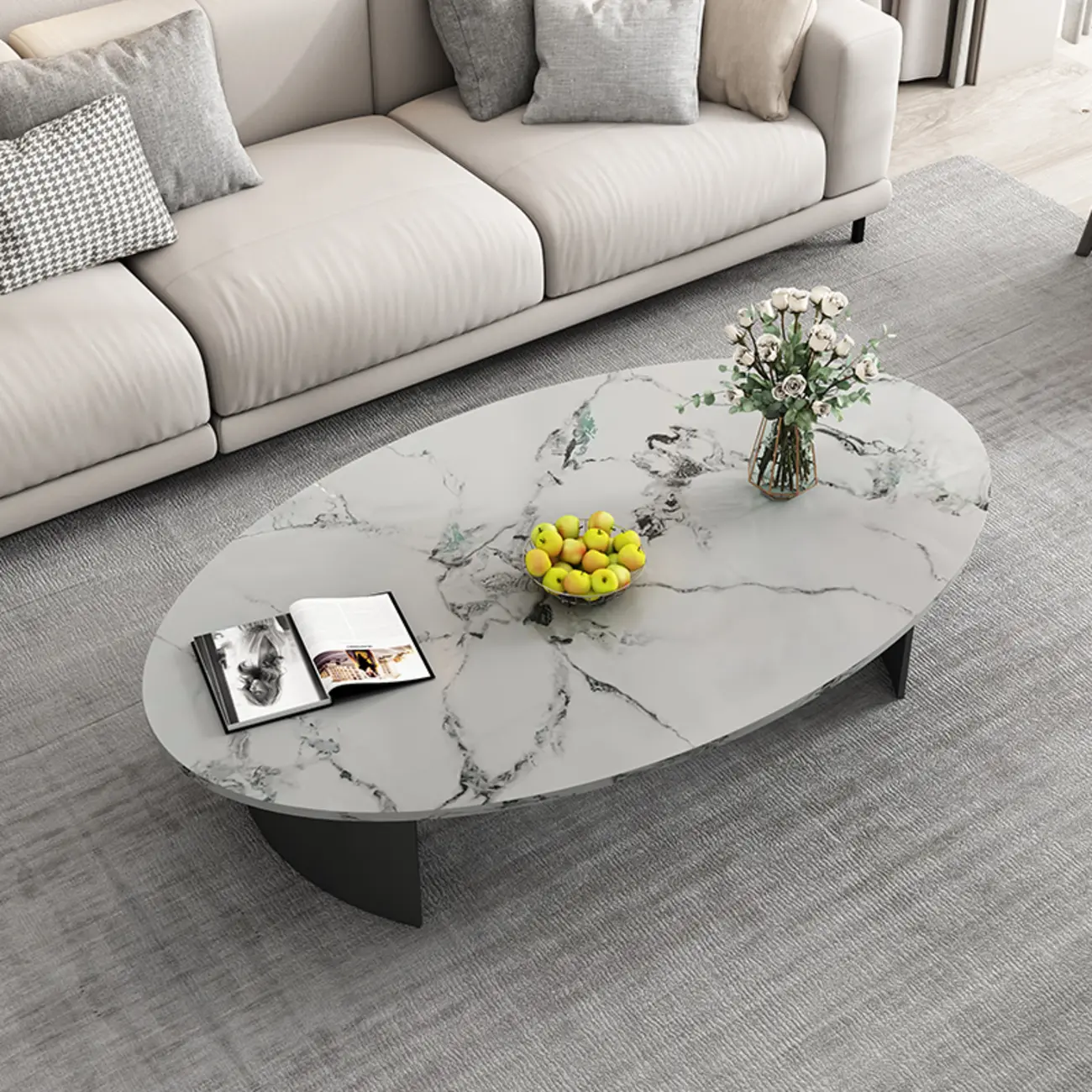
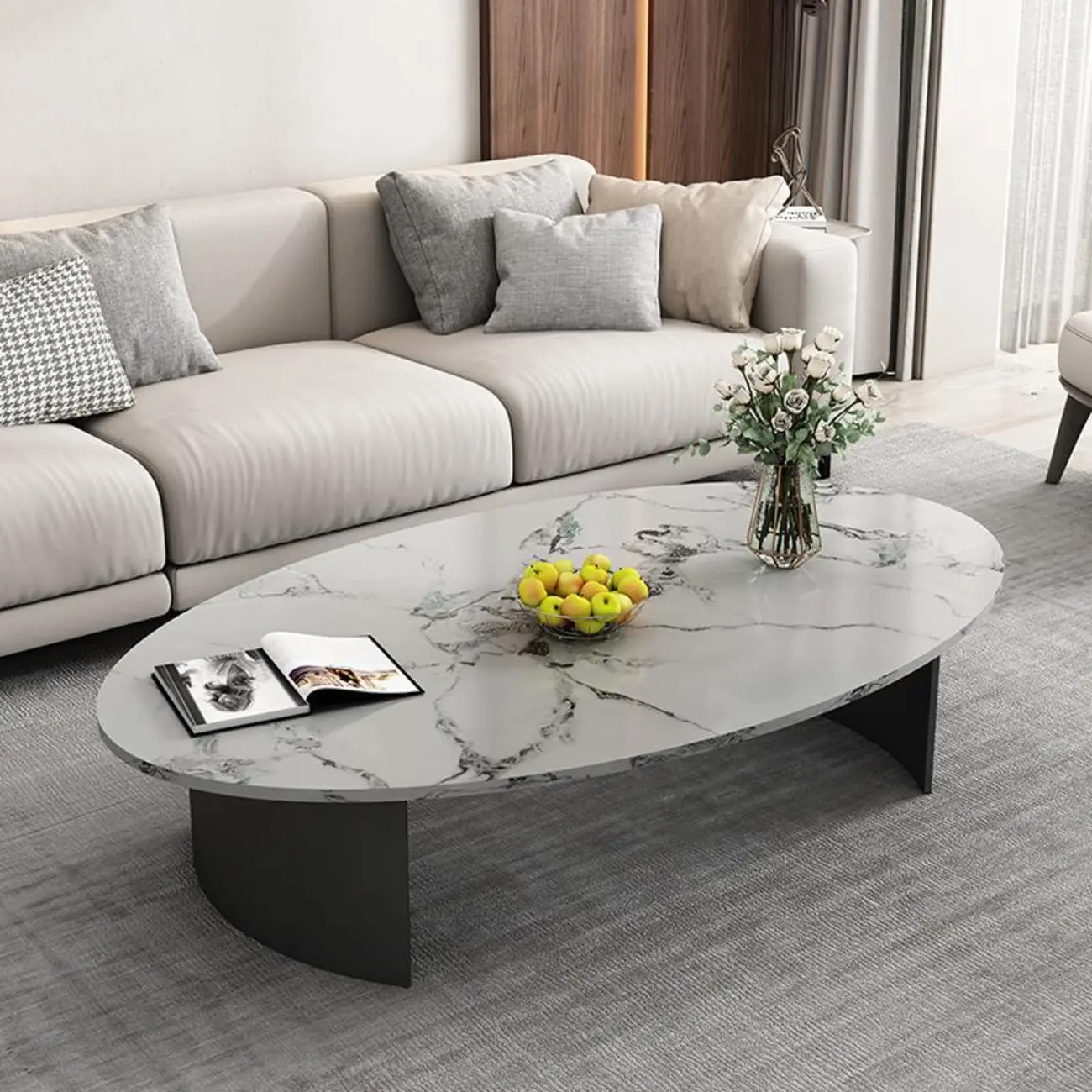
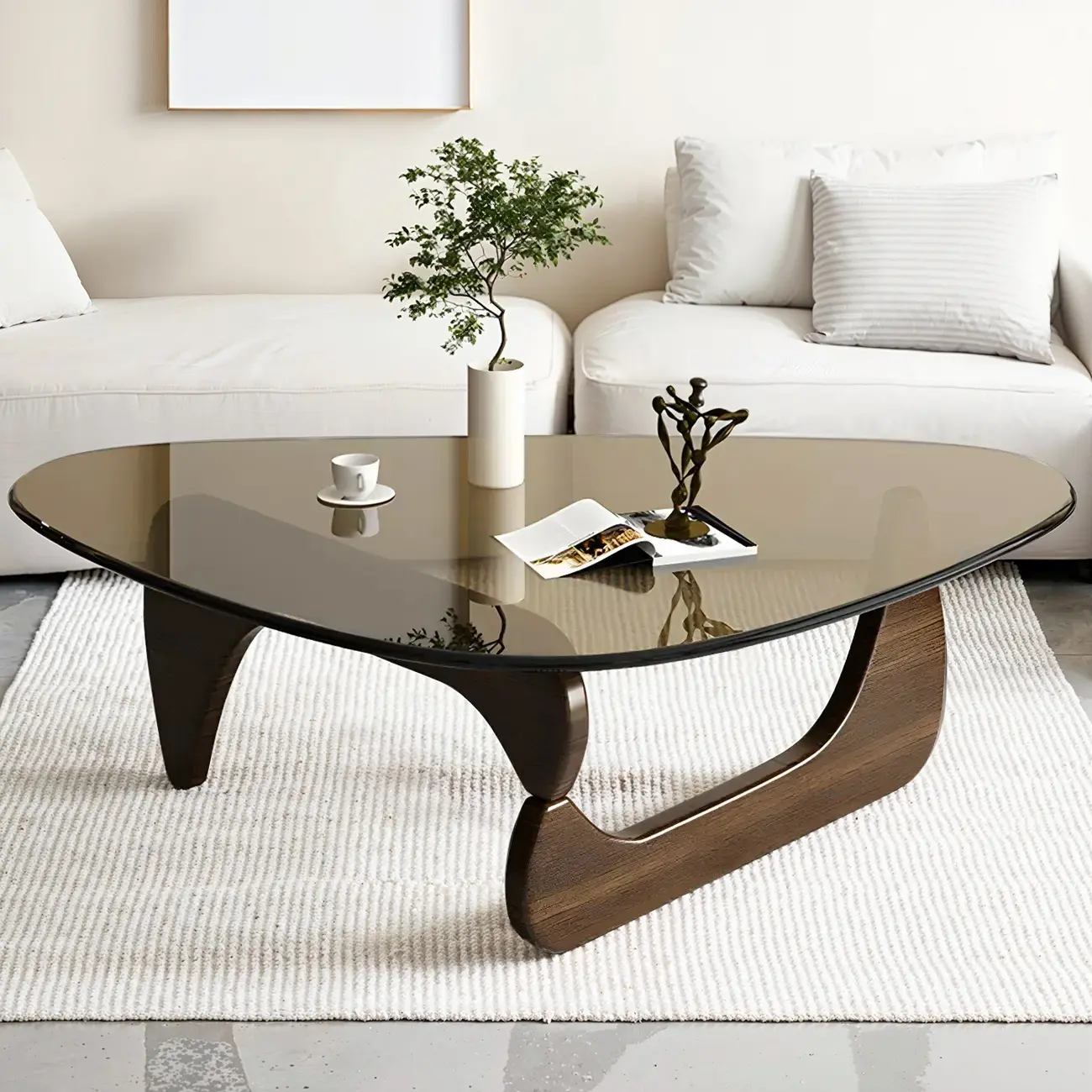
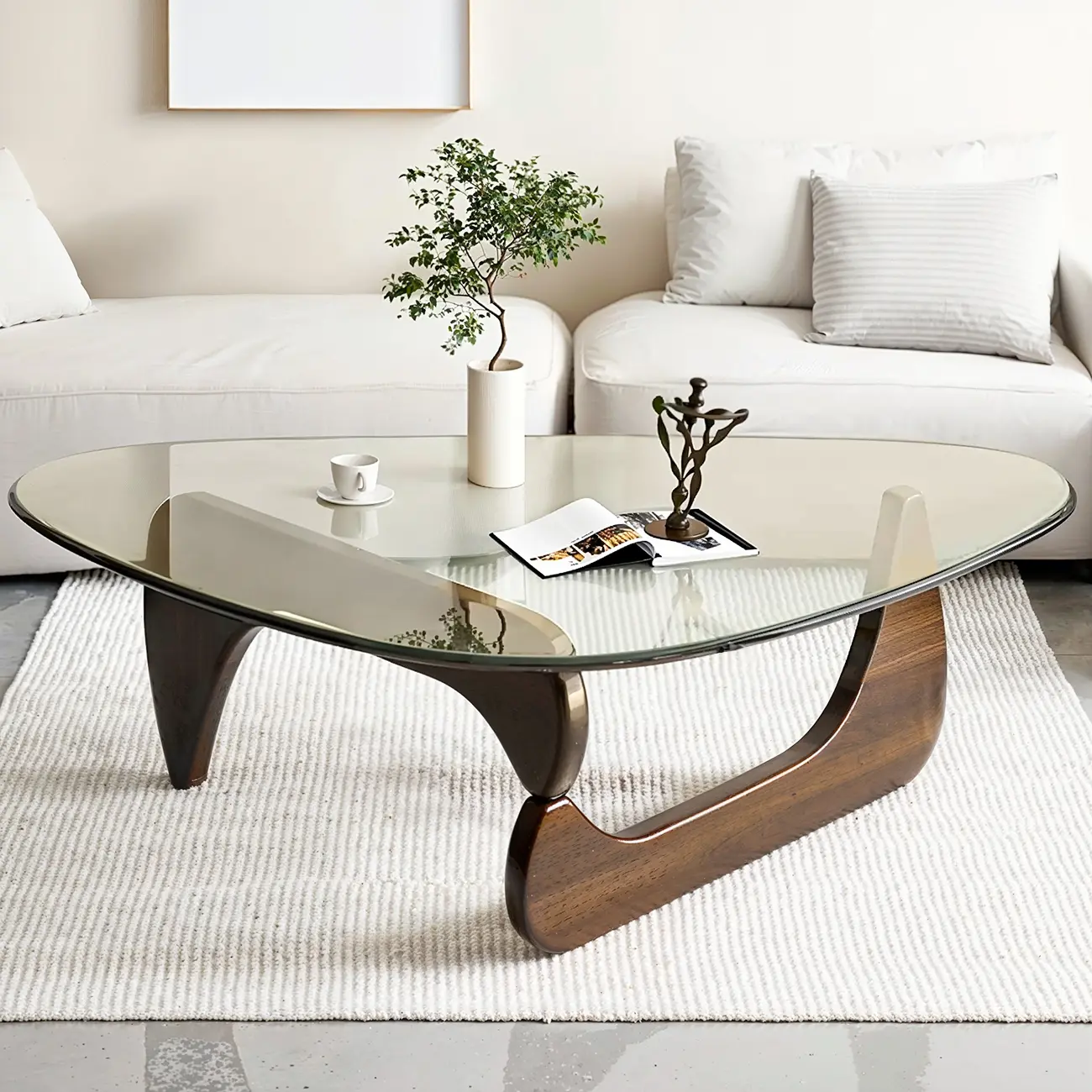
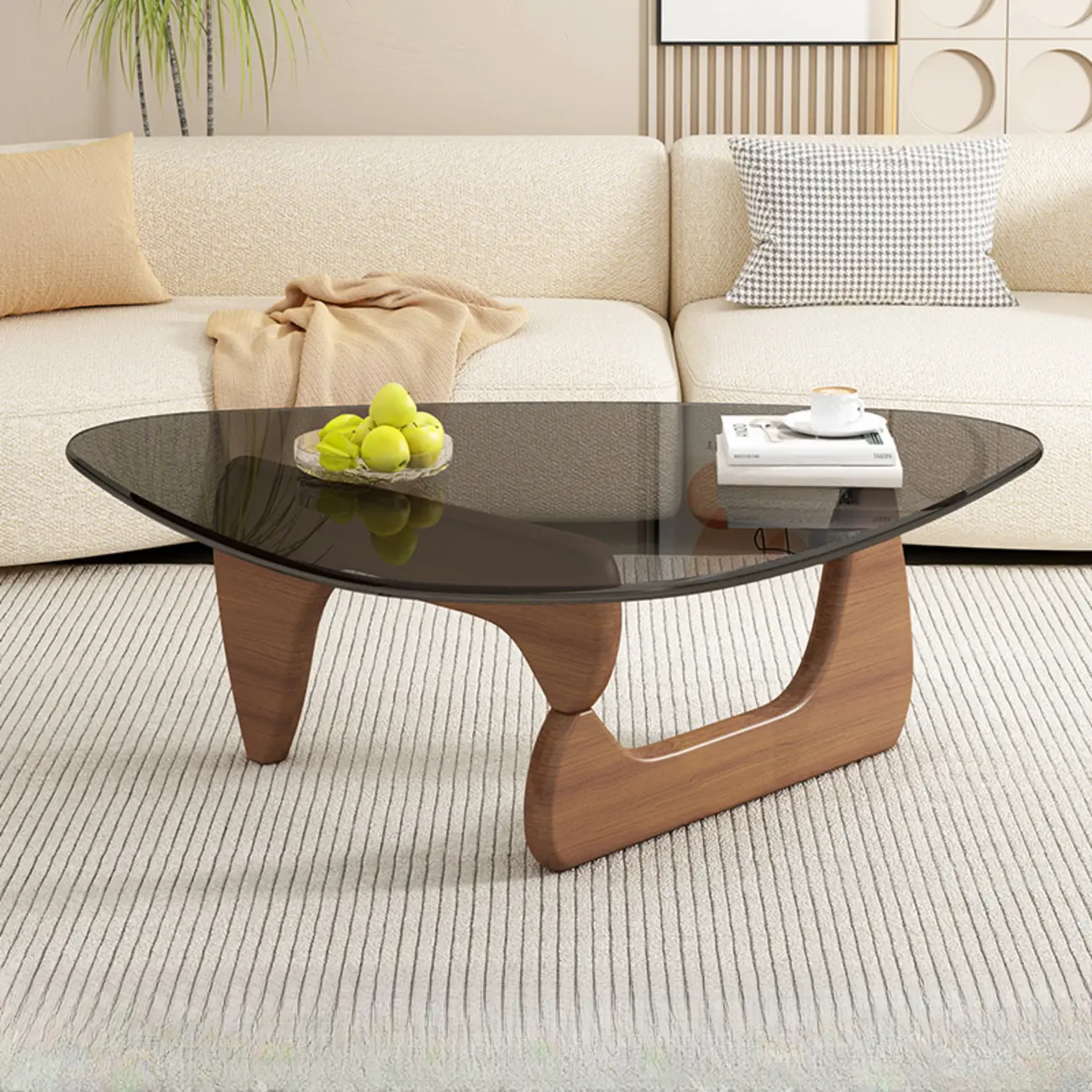
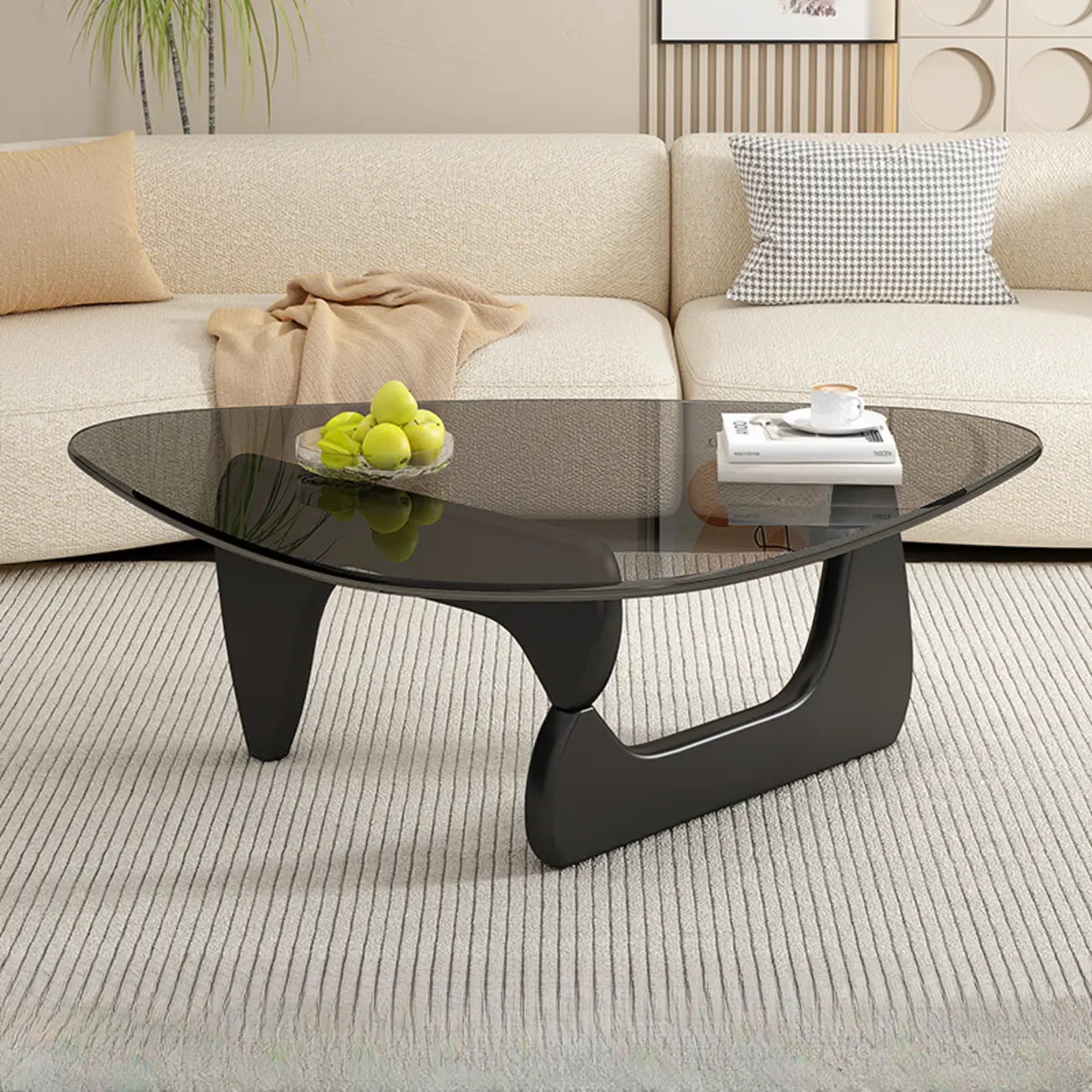
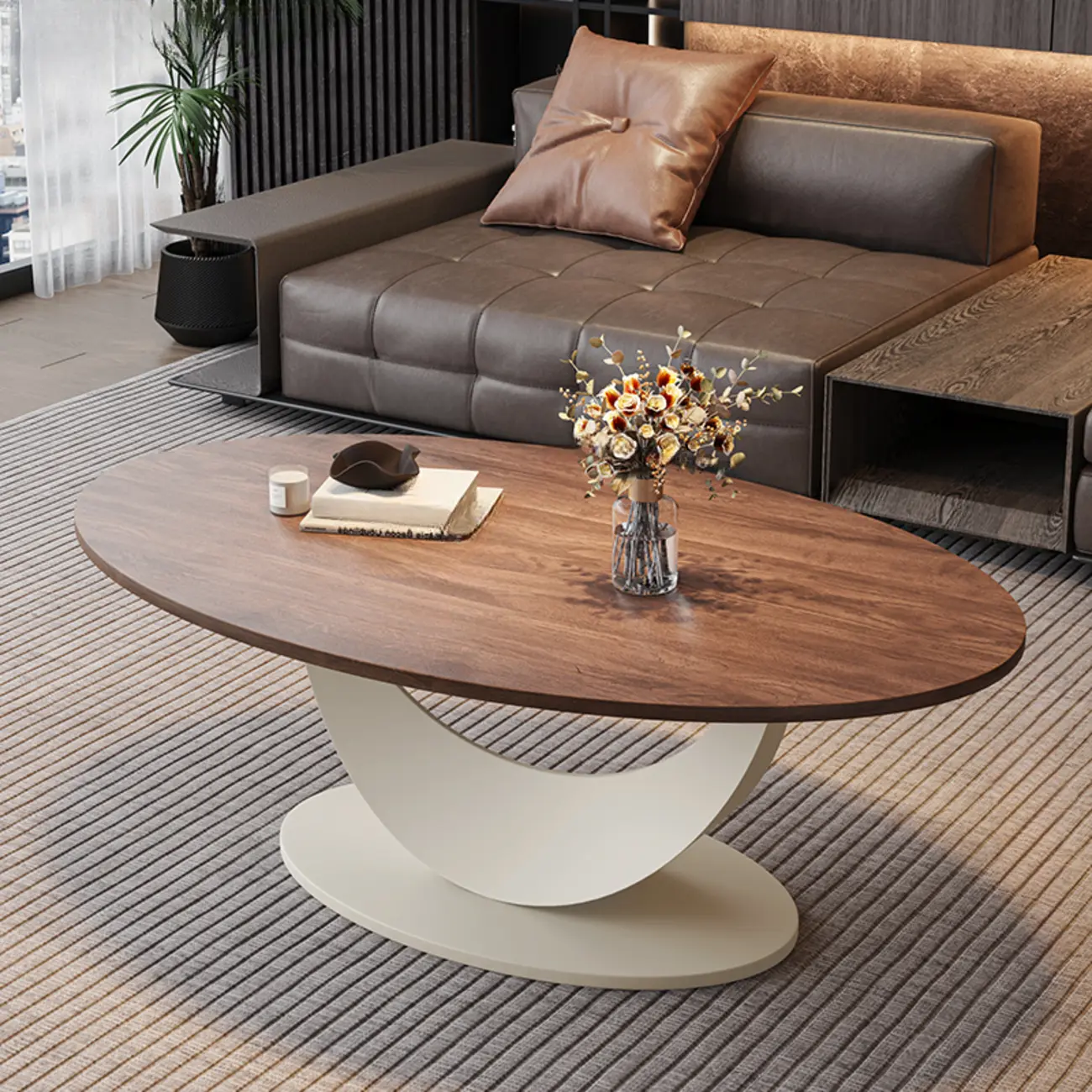
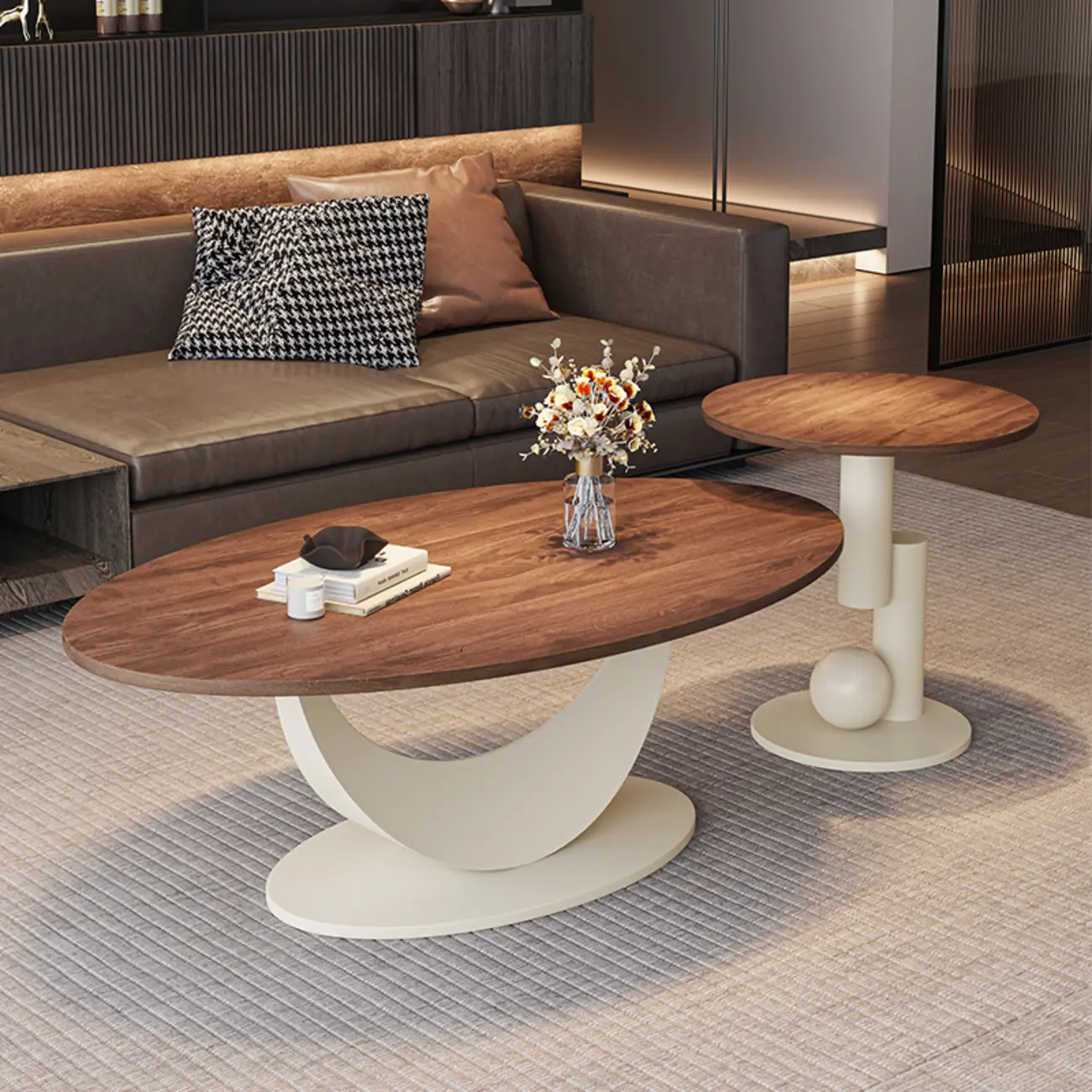
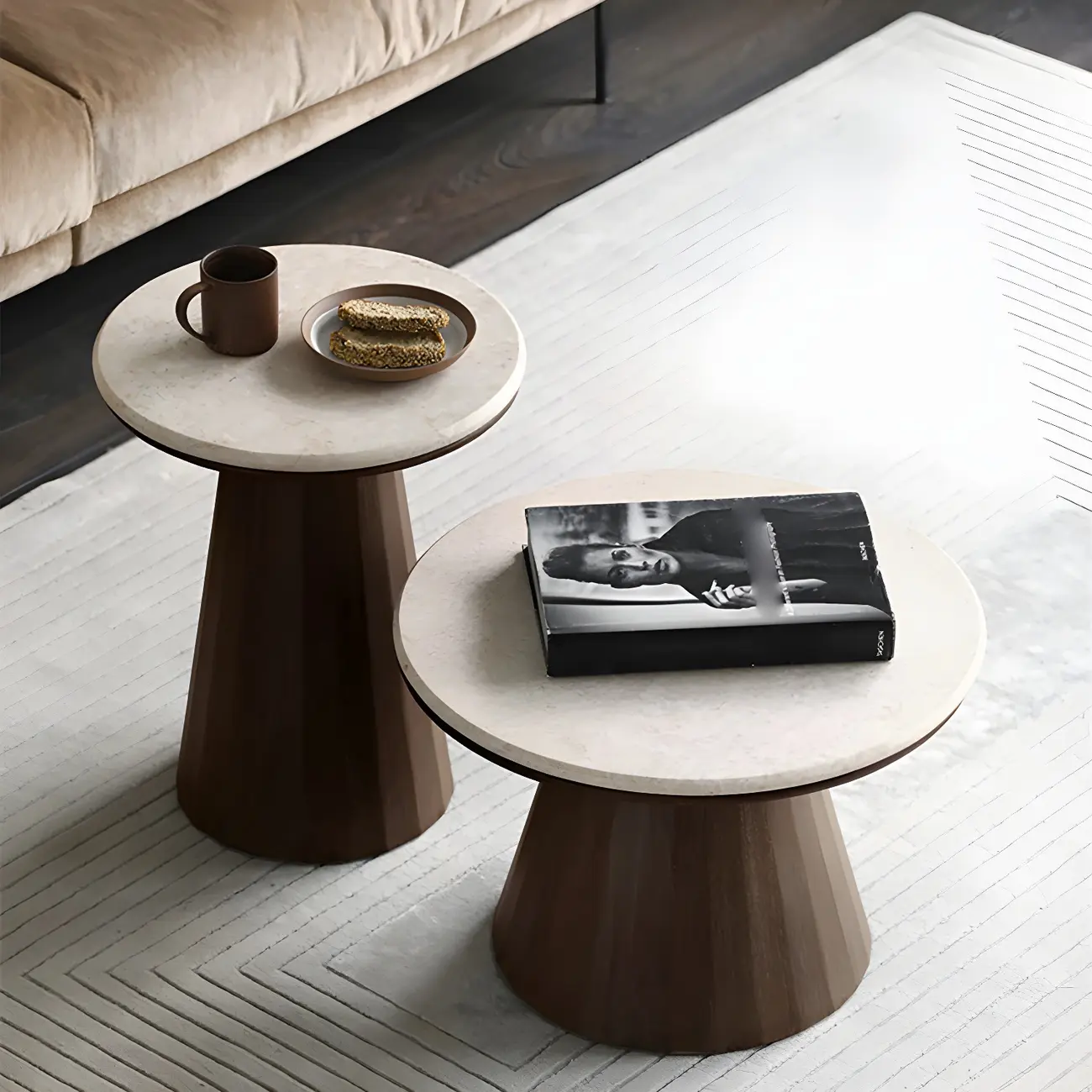
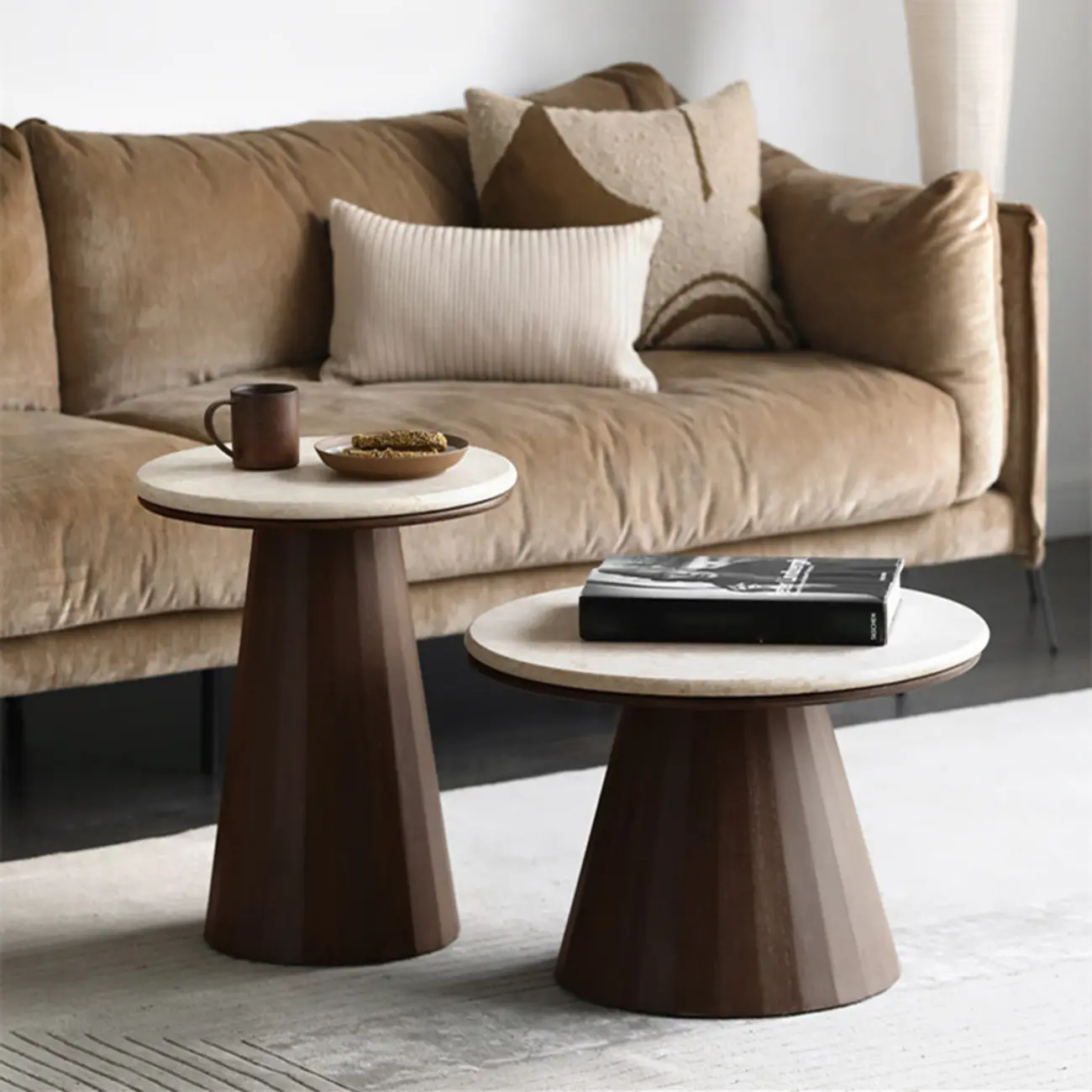
Coffee Table: Matte finish. A shape that works with your layout. Enough surface area for the way you actually use the room.
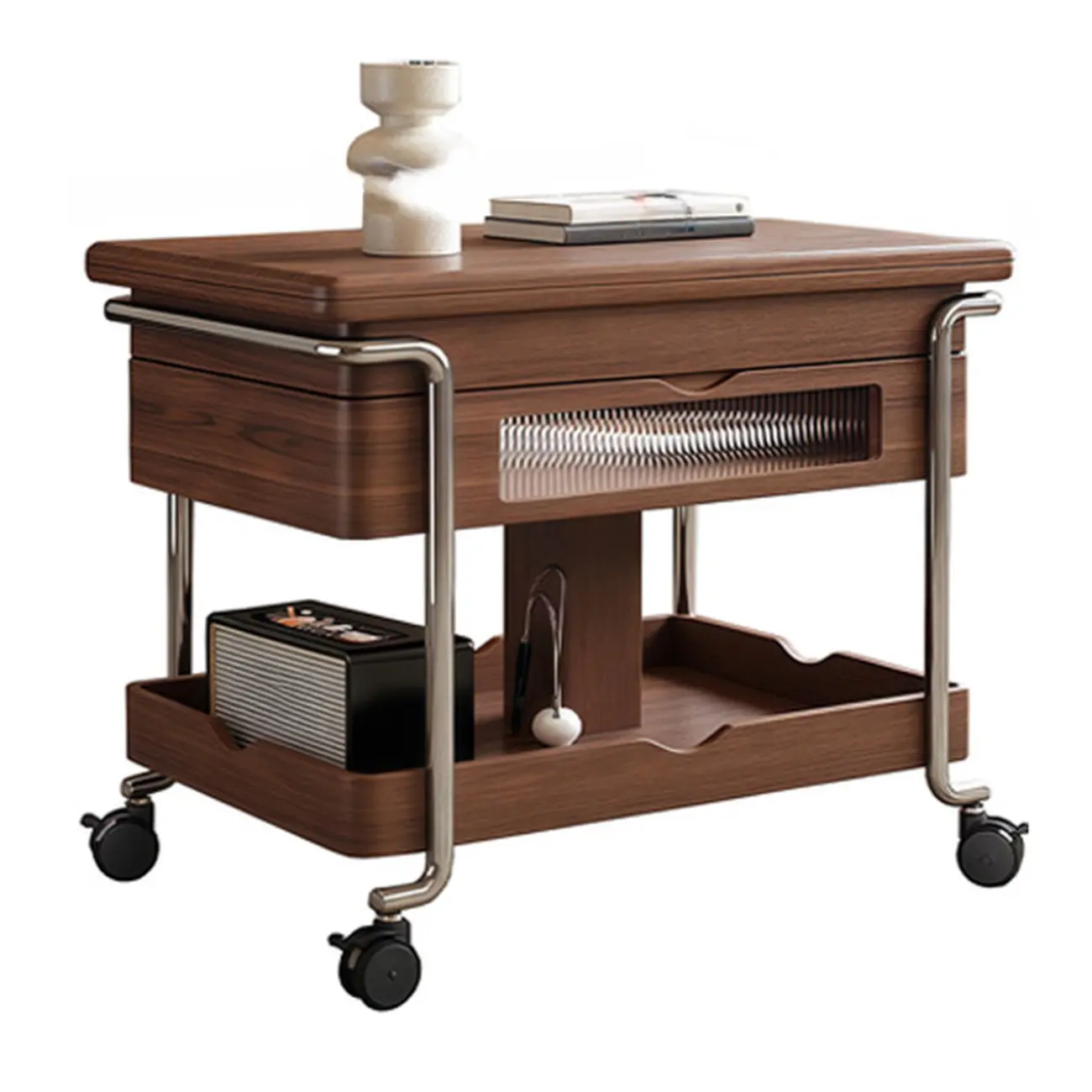
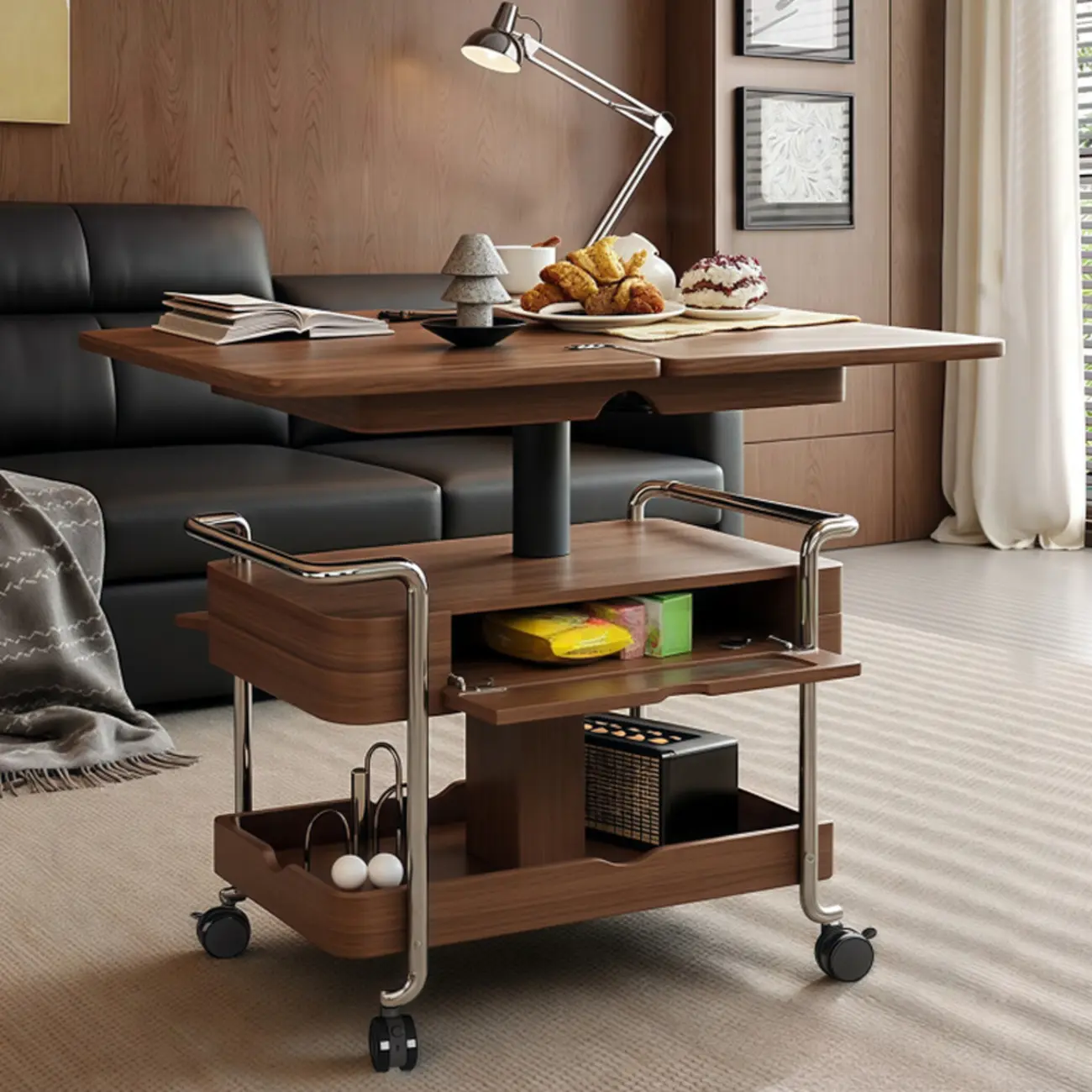
Storage: Give smaller items a defined place. Remote controls, chargers, everyday stuff. Contained storage keeps technology from taking over the room.
Idea 7: The Color Palette
| Color | Use |
| Bone White | Base for walls |
| Raw Clay | Accent vessels, lamp |
| Sand | Walls and linen |
| Weathered | Wood sofa frame, table, credenza |
| Charcoal | Strict accent, used sparingly |
| Stone | Grey rugs, linen, grounding tone |
Idea 8: Lighting and Textiles
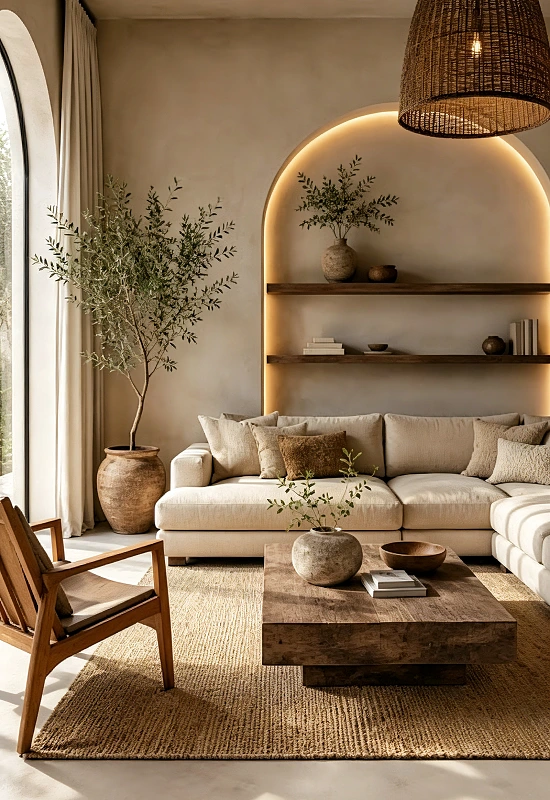
A paper lantern hung low over the seating and a ceramic table lamp with a linen shade. All bulbs at 2700K or warmer. For textiles, go with raw linen cushions in oatmeal and sand. Add a woven jute or undyed wool rug. Natural wool thrown on the sofa. These textures layer together without feeling busy.
When to Break the Rules
Wabi-sabi is a way of thinking, not a list of rules. If a design choice makes your life difficult, then ignore it. Here is how to bring the style into life.
Situation: Better Decision
-
Small living room: Choose dimensions that preserve walkway
-
Kids or pets: Use durable, tactile materials
-
Mobility needs: Choose seat height that makes standing comfortable
-
TV-centered room: Use sturdy media furniture and contain smaller items
-
A small living room? Don't force extra-deep, super-low seating just for the look. You still need to walk through the space. Choose pieces that fit your layout and keep your walkway clear.
-
Kids or pets? Then avoid the couch covers. Choose materials that can deal with spills and still look nice. Fabrics that last longer are better than ones you're worried about touching.
-
Do you need to move easily? Low seats look nice in pictures. If getting up is hard, pick a seat height that fits your body. Comfort is more important than how it looks.
-
TV-centered room? You don't need to hide your TV to be wabi-sabi. Just give the smaller items around it a defined place.
Wabi Sabi Living Room Examples
Sometimes you just need to see it. Here are twelve real looks you can pull ideas from. Each one works on its own.
1. Floating Oak Shelf With Clay Vessels
A thick weathered-oak shelf mounted asymmetrically. Three unglazed clay vessels on top. No books. No candles. Just simple forms with texture.
2. Low Walnut Platform Sofa With Linen
A low, solid walnut sofa frame. Raw linen cushions in oatmeal. No buttoning. No fringe. Just clean lines and natural fabric that softens over time.
3. Tadelakt Accent Wall in Soft Sand
One wall finished in tadelakt—a polished plaster that feels like stone. Soft sand color. It adds warmth and texture without a single piece of decor.
4. Paper Shoji Screen Filtering Light
A tall paper screen stands near a window. Afternoon light comes through, soft and diffused. It changes the mood of the whole room without blocking the view.
5. Built-In Low Credenza in Weathered Oak
A long, low credenza built into the wall. Weathered oak with one or two raw-edged drawers. Closed storage keeps things tidy. The top holds one clay vessel.
6. Reading Bench With a Sheepskin
A simple wooden bench sits under a window. A single sheepskin is draped over it. That's the whole setup. It invites you to sit and do nothing for a while.
7. One Low Sofa Only
A compact living room with just one low sofa. Nothing else. No coffee table. No side chairs. The empty space does the work.
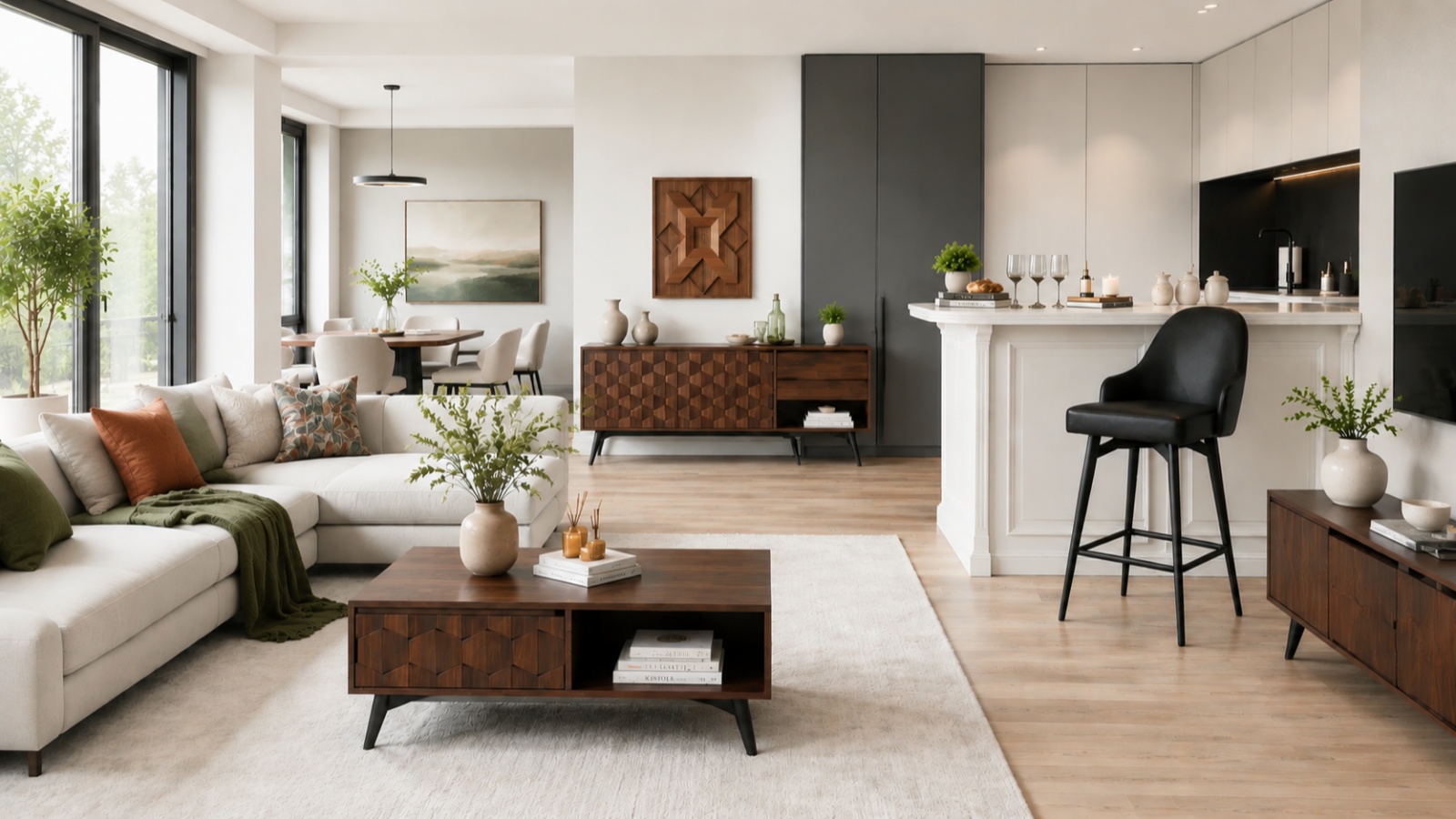
8. Open-Plan With a Low Horizon
Looking from the dining nook into the living area. Everything sits low. The eye travels across the room without hitting anything tall or heavy. Calm and open.
Find The Perfect Furniture Piece For Your Home at HomeyFad
Wabi-sabi is not about looking for things. It is about making your living room feel peaceful, used, and genuine. You do not need to buy everything. Begin with the things you already have. Break one matching pair. Add one textured piece. Let the light show off the materials you already own.
And if you're looking for furniture that fits this vibe, check out HomeyFad. They've got quality pieces with natural materials and thoughtful design. Perfect for a wabi-sabi living room that only gets better with time.
FAQs
Q: Can dark colors work with wabi-sabi?
A: Yes. They can, as these add depth next to wood, leather, and stone. Just keep the glossy stuff out.
Q: What rug works in a wabi-sabi living room?
A: Go for texture. Wool, jute, or a low-contrast woven design. Quiet patterns.
Q: Do I have to replace all my furniture?
A: Not at all, just pick one piece to keep. Break one matching pair. Add one thing that means something. That's enough to start.
-12.png?w=1306&h=735)
.jpg?w=1000&h=721)
-.jpg?w=800&h=563)

-.jpg?w=800&h=543)

 Add Us On Google